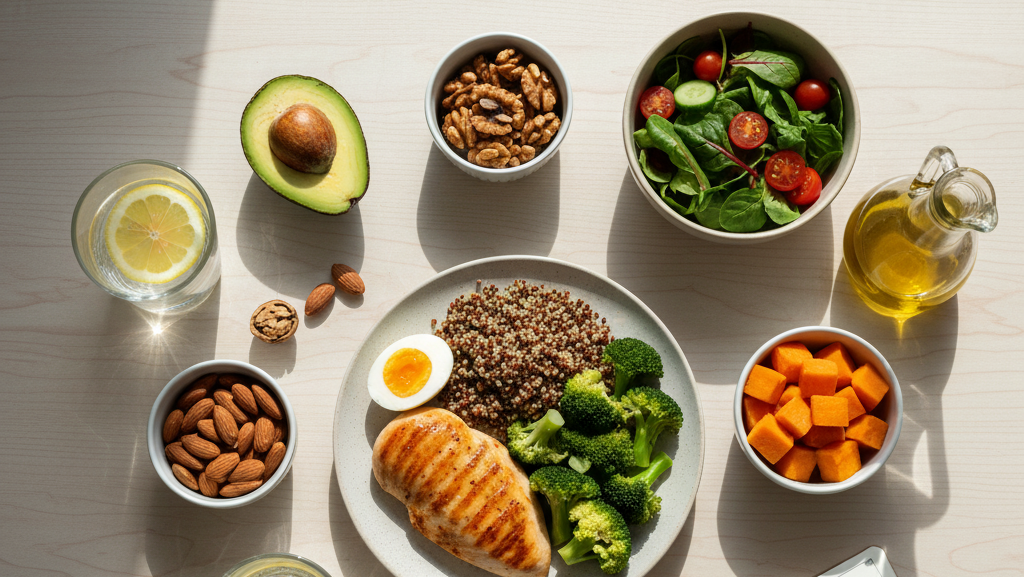
Smart diet choices power visible abs — learn practical meal strategies, macros, workouts, and tools to build a six-pack the sustainable way.
Table of Contents
Diet for Six-Pack Abs
Want abs that show both strength and discipline? Getting a visible six-pack is less about one magic exercise and more about how you fuel your body every day. With the right nutrition strategy, consistent strength training, and smart recovery, you can lower body fat and preserve the muscle definition you’ve worked for. This guide breaks down practical diet rules, macro targets, workout pairings, and tool-based solutions to help you progress safely and sustainably.
Why Diet Matters for Six-Pack Abs
Abs are built in the gym but revealed in the kitchen. You can train core muscles all you want, but unless your body fat drops to a level where abdominal definition is visible, those muscles will stay hidden.
Nutrition controls energy balance — calories in versus calories out — and determines whether you lose fat, gain muscle, or maintain. Focused dieting helps you preserve muscle while losing body fat, which is essential for that chiseled midsection.
Calories & Macros: The Foundation
Start with your energy baseline: estimate your daily calorie needs and set a modest deficit for fat loss. Avoid extreme cuts; slow, steady progress preserves muscle and performance.
- Calculate maintenance calories (TDEE) and subtract 10–20% for fat loss.
- Prioritize protein to support muscle recovery and fullness.
- Adjust carbs and fats to match training intensity and personal preference.
Read also: “Calorie & Macro Calculator”
Protein, Carbs, and Fats — What to Prioritize
Protein is non-negotiable when you’re trying to keep or build abdominal muscle while leaning out. Aim for a high-protein approach and distribute protein throughout the day.
- Protein: Prioritize lean sources — chicken, fish, legumes, eggs, dairy, and protein powders.
- Carbohydrates: Time carbs around workouts to support performance and recovery.
- Fats: Keep healthy fats for hormones and satiety — olive oil, nuts, avocado.
Read also: “Protein Intake Calculator”
Practical Meal Strategies for Visible Abs
Simple, repeatable nutrition strategies beat complicated rules. Small habits add up to big results when you’re chasing a six-pack.
- Plan meals with a protein source, fibrous vegetables, and a controlled portion of carbs or fats.
- Use whole, minimally processed foods to increase nutrient density and satiety.
- Practice portion control — measure until you learn intuitive portions that match your goals.
- Hydrate consistently; thirst can mimic hunger and affect training intensity.
Read also: “Hydration Calculator”
Train Smart: Abs Workouts & Progressive Overload
Diet lowers body fat, but targeted training builds the abdominal structure you want to reveal. Progressive overload and varied movement patterns create a balanced core that looks great and functions well.
Core-Focused Exercises
- Hanging knee raises — control the motion, avoid swinging.
- Weighted planks — increase time or add weight gradually.
- Ab wheel rollouts — emphasize controlled range and bracing.
- Cable woodchops — build rotational strength and oblique definition.
- Farmers carries — full-body tension that strengthens the midline.
Structure core training 2–4 times per week with variety. Combine low-rep weighted core moves with higher-rep stability work for best results.
Progressive Overload & Full-Body Strength
Don’t overlook compound lifts. Squats, deadlifts, presses, and rows recruit the core and build the muscle mass needed to support a lean physique. Increase load, reps, or volume gradually to keep improving.
- Track your workouts and aim for small weekly improvements.
- Cycle intensity: heavier weeks followed by lighter recovery weeks.
- Use gym tools — barbells, kettlebells, cables, and machines — to diversify stimulus.
Proper Form, Recovery Tips, and Avoiding Burnout
Form is the bridge between training hard and training smart. Proper technique reduces injury risk and ensures the abs are loaded as intended.
- Focus on bracing and breathing during heavy lifts; a tight core transfers force and protects the spine.
- Limit excessive daily ab isolation — recovery is how muscle grows and strengthens.
- Sleep matters: aim for consistent, quality rest to support hormones and recovery.
Include rest days, mobility work, and deload weeks. These aren’t setbacks — they’re part of a long-term plan that keeps you making progress without burning out.
Read also: “Body Fat Percentage Calculator”
Use Tools to Stay Accountable
Tracking helps you remove guesswork. Tools can guide calorie targets, monitor progress, and keep you honest with portions and training load.
- Macro and calorie calculators to set realistic targets.
- Body-fat calculators to track progress beyond the scale.
- Macro trackers or food logs for consistency during deficit phases.
- Weekly photos and strength logs to measure visual and performance changes.
Read also: “Calorie & Macro Calculator”
Conclusion
Getting six-pack abs is about steady, consistent action: a sensible calorie approach, high-quality protein, smart strength work, and disciplined recovery. Use the calculators and trackers on TotalHealthTools to personalize your plan, measure progress, and stay motivated. Small daily wins add up — start with one habit today and build from there.