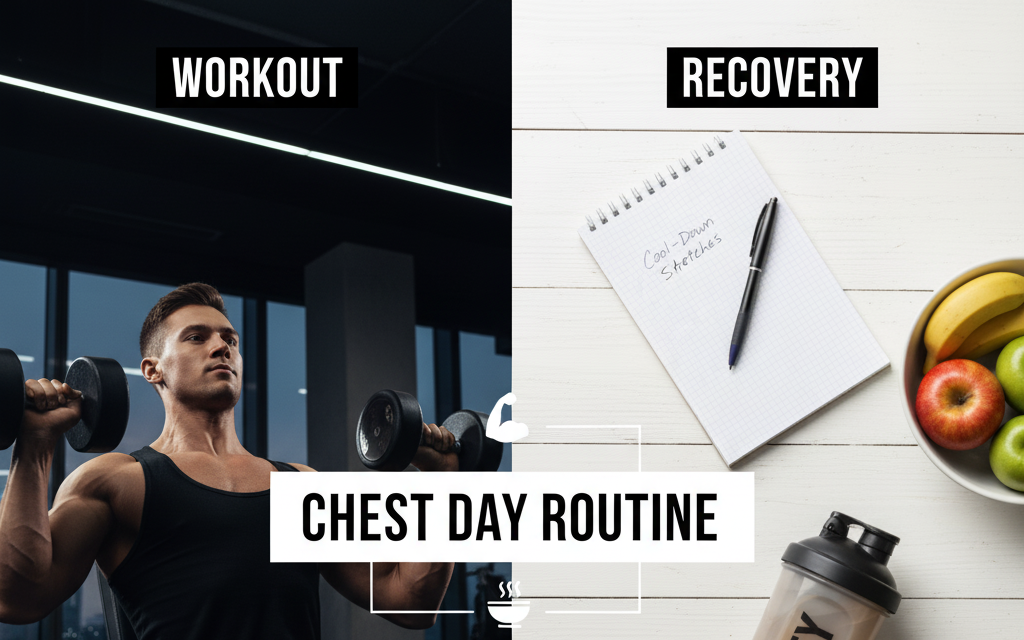
Efficient chest day routine from warm-up to cool-down with form tips, progressive overload, and recovery tools for muscle growth and strength training.
Table of Contents
Chest Day Routine: Warm-Up to Cool-Down
Ready to own your chest day? Whether you’re chasing muscle growth, building strength, or tightening your workout routine, a structured chest session makes every minute count. This guide walks you through a coach-style, practical routine — starting with an effective warm-up, moving into focused chest exercises with form cues and progressive overload tips, and finishing with a recovery-focused cool-down. Use gym tools and tracking to get consistent progress without wasting reps.
Why Structure Matters: Goals, Tools, and Progressive Overload
Structured routines help you target the chest muscles efficiently while reducing injury risk. Prioritize compound movements, progressive overload, and recovery. Gym tools like barbells, dumbbells, resistance bands, and cables each have a role: heavy loads with a barbell, unilateral balance with dumbbells, and isolation with cables. Track lifts and nutrition to support muscle growth and strength training.
Read also: “Calorie & Macro Calculator”
Read also: “Protein Intake Calculator”
Read also: “Fitness Tools and Guides”
Warm-Up: Activate and Mobilize (8–12 minutes)
Don’t skip the warm-up — it primes muscles, improves range of motion, and prepares joints for loading. Keep it active and specific to the chest and shoulders.
- 5 minutes light cardio (bike, row, or brisk walk) to raise heart rate.
- Dynamic shoulder mobility: arm circles, band pull-aparts, and Y-T-W raises (1–2 sets each).
- Activation set: 2 sets of 8–12 band or push-up plus variations to engage scapula and pecs.
- Progressive warm-up sets for your first compound lift (e.g., 2–3 ramp-up sets of bench press with increasing weight).
Warm-Up Tips
Focus on slow controlled movements and breathing. Use resistance bands to open the chest and ensure the shoulder blades can retract and protract smoothly before heavy pressing.
Main Chest Workout: Strength and Hypertrophy (40–50 minutes)
A balanced chest routine includes a heavy compound, an incline or accessory compound, and isolation work. Adjust volume based on your experience and recovery capacity.
- Barbell Bench Press — 4 sets x 4–8 reps. Aim for progressive overload; add small increments when form is solid.
- Incline Dumbbell Press — 3 sets x 8–12 reps. Targets upper chest and front delts with unilateral stability work.
- Flat Dumbbell Press or Machine Press — 3 sets x 8–12 reps. Use controlled tempo; pause briefly at the bottom for muscle tension.
- Cable or Dumbbell Flyes — 3 sets x 10–15 reps. Focus on range and squeeze at peak contraction for isolation.
- Bodyweight Dips or Push-Ups — 2–3 sets to failure or moderate intensity for metabolic finish and endurance.
Form and Technique Tips
Keep these cues front of mind like a coach watching your set:
- Retract and pinch shoulder blades before each rep — a stable base protects the shoulders.
- Elbows should track roughly 45 degrees from your torso on bench presses to reduce shoulder stress.
- Feet planted and core braced to maintain a neutral spine and transfer force efficiently.
- Control the eccentric (lowering) phase — a 2–3 second descent improves muscle recruitment.
- Breathe out on the concentric (press) and in on the eccentric; consistent breathing supports performance.
Progressive Overload & Tracking
Progressive overload is the cornerstone of strength training. Track weights, sets, reps, and tempo. Small weekly increases — even 1–2.5% — add up. Use gym tools like a training log or an app and combine with proper nutrition to fuel muscle recovery and growth.
Cool-Down and Recovery (8–12 minutes)
Finish strong with a deliberate cool-down to help restore muscle length, reduce soreness, and support mobility. This is when recovery work pays dividends.
- Light cardio 3–5 minutes to normalize heart rate.
- Static pec stretch (30–45 seconds each side) — doorway pec stretch or lying pec stretch.
- Thoracic mobility and shoulder rotations to relieve postural strain from pressing.
- Foam rolling the chest and lats for 1–2 minutes to promote blood flow and tissue quality.
- Refuel: prioritize protein within the next 60–90 minutes and hydrate.
Recovery Tips
Recovery includes sleep, nutrition, and active rest. Schedule chest sessions 48–72 hours apart depending on intensity. Integrate lighter upper-body days or focus on legs and conditioning to maintain frequency without overworking the same muscles.
- Aim for consistent, quality sleep to support muscle repair.
- Use TotalHealthTools calculators to tailor nutrition: calorie and macro balance helps recovery — try the Calorie & Macro Calculator.
- Rotate heavy and volume weeks to avoid plateaus and reduce injury risk.
Coach’s Quick Checklist Before You Lift
- Warm-up complete and movement patterned.
- Weight selected allows for full range of motion with good form.
- Spotter or safety setup in place for heavy sets.
- Tracking method ready (notebook, app, or whiteboard).
Conclusion
A smart chest day is more than reps — it’s preparation, precision, and recovery. Warm up deliberately, prioritize form during compound lifts, use progressive overload, and finish with a calming cool-down. Track your progress and use the right tools, from resistance bands to nutrition calculators, to stay consistent. Now step into the gym with a plan and make the session count.