Learn how to balance macros for weight loss without starving — practical macro tips, strength training routines, and recovery tools to keep muscle and energy.
Balance Macros for Weight Loss
Dropping weight doesn’t mean you have to live hungry. When macros (protein, carbs, fats) are balanced around your workouts and lifestyle, you lose fat, keep strength, and feel energized. This guide walks you through setting realistic macros, using TotalHealthTools to dial in numbers, and pairing your nutrition with smart strength training and recovery. Think of it as a coach’s playbook: practical, motivating, and built so you won’t sacrifice performance for results.
Balancing your macronutrients—protein, carbohydrates, and fats—is one of the most effective and sustainable ways to support weight loss. While many diets focus on eliminating entire food groups or drastically reducing calories, a balanced macro approach helps you nourish your body, maintain energy, and build healthier habits without feeling deprived. Macros determine how your body uses food for fuel, muscle repair, and hormone regulation, making them essential for long-term success. When you understand how each macro contributes to your goals and how to balance them properly, weight loss becomes more manageable and sustainable.
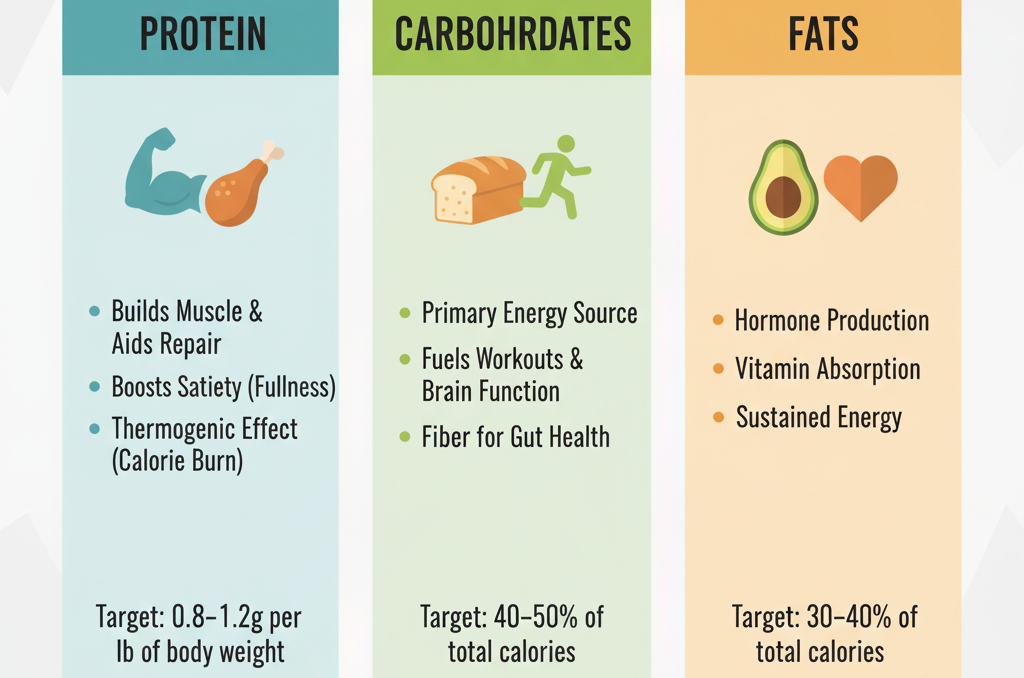
Protein is the foundation of a weight-loss-focused macro plan. It plays a crucial role in building and maintaining muscle mass, supporting metabolism, and keeping you full for longer. Muscle burns more calories at rest than fat, so increasing protein intake helps boost your metabolic rate. Protein also reduces cravings and emotional eating by stabilizing blood sugar levels. Lean sources like chicken, fish, eggs, tofu, beans, and Greek yogurt are excellent options. Including protein in every meal ensures that your body gets the support it needs for repair and recovery, especially if you’re exercising regularly.
Carbohydrates often get a bad reputation, but they are essential for energy, especially during workouts. The key is choosing complex carbs over refined ones. Complex carbohydrates—like whole grains, fruits, vegetables, beans, and oats—digest more slowly, keeping your blood sugar stable and providing steady energy throughout the day. They also supply fiber, which improves digestion and helps control hunger. Instead of cutting carbs completely, aim for balanced portions that fuel your body without spiking insulin levels. This approach helps prevent energy crashes, cravings, and overeating later in the day.
Healthy fats are equally important for weight loss. They support hormone balance, brain function, and nutrient absorption. Fats also keep you full and satisfied, helping reduce snacking and overeating. Sources like avocados, nuts, seeds, olive oil, and fatty fish provide heart-healthy fats that benefit overall wellness. The key to incorporating fats into a weight-loss plan is moderation. Since fats are calorie-dense, small amounts go a long way, and pairing them with protein and complex carbs helps create balanced, satisfying meals.
Finding the right macro balance depends on your lifestyle, activity level, and specific goals. While a common starting ratio for weight loss is 40% carbs, 30% protein, and 30% fats, this can vary from person to person. Some people feel better with slightly more protein, while others perform well with more carbs—especially if they do intense workouts. Experimenting with your macro ratios and paying attention to how your body responds is key. Tracking your meals for a few weeks can help you understand your eating patterns and adjust your portions more accurately.
Balancing macros also teaches you portion control naturally. Instead of focusing on strict diets, you learn how to build meals that keep you energized, satisfied, and progressing toward your goals. When you consistently eat balanced meals, your cravings decrease, digestion improves, and your metabolism works more efficiently. Over time, this leads to steady, sustainable weight loss. By understanding how to balance protein, carbs, and fats, you create a flexible eating style that supports your health not just for a short-term goal— but for life.
Why macronutrient balance matters
Calories drive weight loss, but macros shape the outcome. Prioritizing protein preserves muscle and supports recovery during a calorie deficit. Carbs fuel higher intensity workouts and help performance. Healthy fats stabilize hormones and satiety. Together, they help you lose fat without feeling depleted or flat — which means you can keep training hard and enjoy the process.
Calculate your starting macros
Start with an honest baseline: estimate your maintenance calories (TDEE) and create a small deficit (typically 10–20%). Use tools to remove the guesswork and create targets that fit your training goals.
- Find your maintenance: use the TDEE calculator to estimate calories.
- Set a sensible deficit: aim for sustainable fat loss, not extreme cuts.
- Track and adjust: re-evaluate every 2–4 weeks based on progress and energy.
Read also: “Calorie & Macro Calculator”
Protein: the priority for muscle growth and preservation
Protein is your non-negotiable. Many strength training coaches recommend roughly 0.7–1.0 grams per pound of bodyweight (about 1.6–2.2 g/kg) depending on your activity level and goals. Protein helps with recovery, keeps you full, and supports muscle growth even in a deficit. Spread protein across meals to maximize synthesis and performance during workouts.
Carbs: fuel for workouts and intensity
Carbs are not the enemy. They provide the quick energy needed for heavy lifts, sprints, and high-volume training. If energy dips in the gym, slightly increase carbs around your training window — before and after — to sustain intensity and aid recovery. Prioritize whole-food carbs for fiber and micronutrients.
Fats: essential and satiating
Dietary fat supports hormone balance and long-term satiety. Keep fats moderate (around 20–35% of calories) and include sources like olive oil, nuts, avocados, and fatty fish. Lowering fat too much can make meals less satisfying and harder to stick with over time.
Meal design that prevents hunger
Eating to lose weight while avoiding constant hunger comes down to food choices, volume, and timing. Use these coach-tested strategies to stay full and on track.
- Prioritize protein at every meal — eggs, lean meats, dairy, legumes, or protein shakes.
- Fill most plates with low-calorie, high-volume foods: vegetables, leafy greens, and broth-based soups.
- Include fiber-rich carbs like oats, sweet potato, and whole grains for longer fullness.
- Use healthy fats in small amounts to improve flavor and satiety — a thumb-sized portion per meal is a simple guide.
- Drink water and use the hydration calculator to make sure thirst isn’t being mistaken for hunger.
Training to compliment your macros
Nutrition and training are partners. Strength training preserves muscle and increases metabolic efficiency while cardio can support calorie burn. Focus on progressive overload and proper form to get the most from your workouts without risking injury.
- Sample 3-day split (compact, effective):
- Day 1 — Push (Chest, Shoulders, Triceps): bench press, overhead press, dips. 3–4 sets x 6–12 reps.
- Day 2 — Pull (Back, Biceps): deadlifts or rows, pull-ups, barbell curls. 3–4 sets x 6–12 reps.
- Day 3 — Legs & Core: squats, lunges, Romanian deadlifts, planks. 3–4 sets x 8–15 reps.
- Include 1–2 low-impact cardio sessions for conditioning and extra calorie burn, if desired.
Focus on movement quality: slow down reps when learning, prioritize full range of motion, and use spotters or machines when needed. This keeps workouts productive and reduces injury risk.
Recovery tips: sleep, mobility, and tools
Recovery is the secret ingredient. Without adequate sleep and mobility work, performance and fat loss stall. Aim for consistent sleep, active recovery days, and post-workout nutrition to support muscle repairs.
- Target consistent 7–9 hours of sleep — check your routine with the sleep calculator.
- Use foam rolling and mobility drills on off-days to maintain range of motion.
- Track progress with tools: use the protein intake calculator and macro trackers to stay accountable.
Read also: “Workout Plans for Strength & Fat Loss”
Practical adjustments and troubleshooting
If you feel overly hungry or performance drops, small changes go a long way. Increase fiber and protein first, then add carbs around workouts. If you’re not losing weight after a few weeks, reduce calories slightly or increase daily activity. Always track trends — not daily fluctuations.
- Feeling tired in the gym: add 20–50g carbs pre-workout.
- Constant hunger: boost protein and vegetable volume.
- Plateauing on the scale: check adherence, sleep, stress, and adjust calorie deficit by 5–10%.
Conclusion
Balancing macros for weight loss is about preserving muscle, fueling training, and staying satisfied — not starving. Use calculators and tracking tools to set realistic targets, prioritize strength training and proper form, and focus on recovery. Make small, sustainable changes and treat this as a long-term plan. You’ve got this — set a target, measure progress, and keep moving forward.