Learn practical tips to start intermittent fasting, design workout routines, track macros, and stay consistent for strength, muscle growth, and recovery.
Intermittent Fasting
Intermittent fasting is more than a diet trend — it’s a flexible tool that can support fat loss, strength training, and better workout focus when used correctly. Whether you’re new to fasting or want to make it a sustainable habit, this guide breaks down practical steps to begin, schedule workouts around eating windows, and use simple tools to track progress. Think of this as a coach’s playbook: clear, actionable, and made to fit into your real life so you can build muscle, recover smarter, and stay consistent.
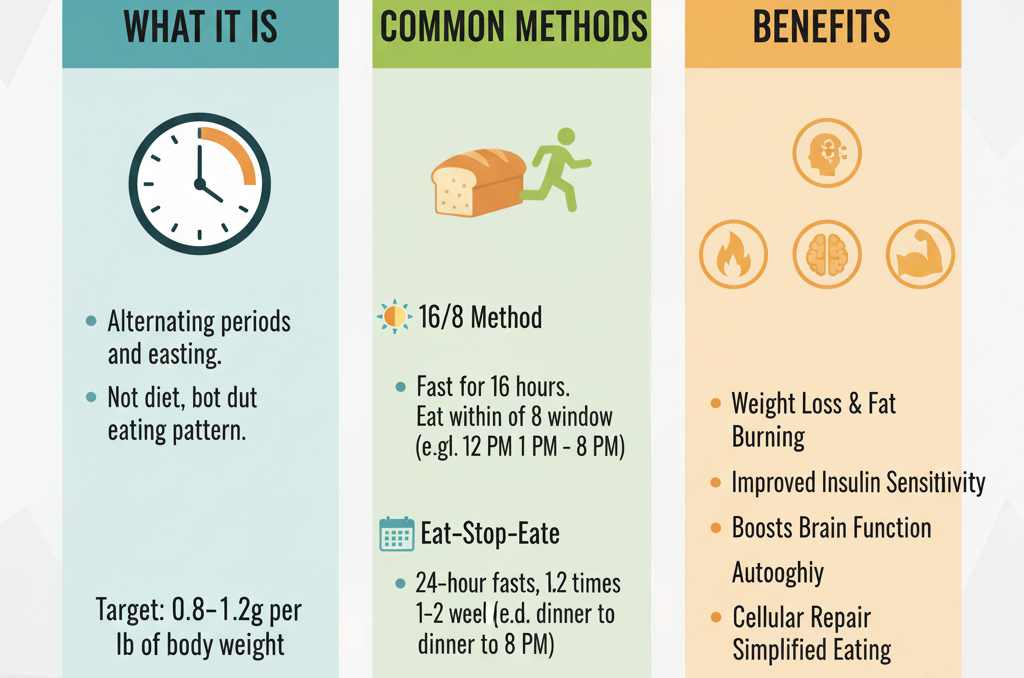
Intermittent fasting (IF) has become one of the most popular approaches to improving health, boosting energy, and supporting weight loss—and for good reason. Instead of focusing on what you eat, intermittent fasting focuses on when you eat, allowing your body to cycle between periods of eating and fasting. This simple shift gives your digestive system a break, improves metabolic function, and encourages your body to burn stored fat for fuel. Intermittent fasting is not a diet filled with restrictions; it’s a flexible eating pattern that can easily adapt to different lifestyles. Whether your goal is fat loss, better digestion, reduced bloating, improved mental clarity, or more stable energy throughout the day, IF can be a powerful tool when done correctly and consistently.
Intermittent Fasting: Benefits
One major benefit of intermittent fasting is improved insulin sensitivity. When you avoid constant snacking and late-night eating, your insulin levels have time to drop. This allows your body to access stored fat more easily, which supports weight loss. Many people notice reduced cravings and more balanced blood sugar after practicing IF for a few weeks. It also helps regulate appetite hormones like ghrelin and leptin, making it easier to control hunger and avoid overeating. Because fasting naturally shortens your eating window, you often consume fewer calories without feeling deprived or following a strict diet plan.
Another advantage of intermittent fasting is increased energy and mental clarity. When your body is not constantly digesting food, it can focus on other important functions like repair, detoxification, and cellular renewal. During fasting periods, your body produces ketones—an alternative fuel source that many people find provides sharper focus and improved productivity. This is one reason why intermittent fasting is popular among athletes, entrepreneurs, and individuals seeking better performance in both physical and mental tasks. Many people also report fewer energy crashes throughout the day once they adapt to a fasting routine.
Intermittent fasting also supports longevity and cellular health. During fasting periods, your body goes through a process called autophagy—a natural cellular “cleanup” system that removes damaged cells and promotes regeneration. This process is linked to improved immune function, reduced inflammation, and better overall health. While autophagy can occur during sleep or calorie deficit, IF helps trigger it more consistently. Over time, this contributes to improved metabolic health and may help lower the risk of chronic diseases.
There are several ways to practice intermittent fasting, making it suitable for various lifestyles. The 16:8 method—fasting for 16 hours and eating within an 8-hour window—is one of the most popular and easiest to follow. Other methods include the 14:10 method for beginners, the 5:2 approach (five normal eating days and two lower-calorie days per week), and alternate-day fasting for more advanced practitioners. The key is choosing a schedule that fits naturally into your day so it feels effortless rather than restrictive.
Why Intermittent Fasting Can Work with Fitness Goals
Intermittent fasting simplifies when you eat, which can reduce decision fatigue and make calorie control easier. For people focused on strength training and muscle growth, pairing smart fasting windows with targeted nutrition and recovery gives structure to progress.
Used properly, fasting can improve workout focus and help you lean out while maintaining strength through consistent lifting, progressive overload, and proper protein intake. It’s a tool — not a miracle — so practical setup and tracking matter.
How to Start: Simple Steps for Success
Start small and build habits. The goal is to create a sustainable routine that complements your workouts and life schedule.
- Pick a fasting schedule: Begin with a 12:12 (12 hours fasting / 12 hours eating) for 1–2 weeks, then move to 16:8 if it feels good.
- Plan your main meals: Put your biggest meal around your most intense workout to fuel performance and recovery.
- Hydrate and prioritize electrolytes: Water, black coffee, and tea are fasting-friendly. Add electrolytes if workouts are intense.
- Track calories and protein: Use a calorie and macro tool to ensure you’re getting enough protein for muscle growth.
- Be consistent: Aim for the same eating window each day to reinforce the habit.
Quick Start Checklist
- Choose your fasting window (12:12 → 16:8 → 18:6 as needed)
- Set workout times around your energy peaks
- Use a macro tracker to hit protein targets
- Sleep and recovery are non-negotiable
Designing Your Workout Routine While Fasting
If your goal is strength and muscle growth, keep workouts focused on compound lifts and progressive overload. Fasting doesn’t mean you should avoid heavy training — but timing and recovery matter.
Sample Weekly Split (Eat Window in Afternoon/Evening)
- Day 1 — Upper Strength: Bench press, bent-over row, overhead press, pull-ups (3–5 sets of 4–6 reps)
- Day 2 — Lower Power: Squats, Romanian deadlifts, lunges (3–5 sets of 4–6 reps)
- Day 3 — Active Recovery: Mobility, light cardio, foam rolling
- Day 4 — Hypertrophy Push: Incline press, shoulder raises, tricep work (8–12 reps)
- Day 5 — Hypertrophy Pull & Arms (bicep workouts): Rows, lat pulldowns, curls (8–12 reps)
- Day 6 — Leg Day Routine: Lunges, leg press, hamstring curls, calf raises
- Day 7 — Rest or Light Activity
Time your toughest sessions to end just before your main meal when possible. That way you can refuel immediately with protein and carbs to support muscle recovery and growth.
Progressive Overload & Proper Form
Progressive overload is the engine of muscle growth — adding weight, reps, or improving technique each week. Track your lifts with a notebook or app and prioritize form over ego. Use gym tools like resistance bands, kettlebells, and adjustable dumbbells to vary stimulus and reduce injury risk.
- Increase load by 2.5–5% when you complete target reps easily.
- Record sets, reps, and perceived exertion to plan progressions.
- Use slow, controlled reps on accessory moves to improve muscle activation.
Read also: “Workout Plans for Strength and Size”
Nutrition, Tools & Tracking
Nutrition during your eating window determines how well you maintain strength and build muscle. Focus on hitting daily protein targets and balancing carbs and fats around workouts.
- Protein goal: aim for 0.7–1.0 grams per pound of bodyweight depending on training intensity.
- Use a calorie-macro calculator to set realistic targets for fat loss or muscle gain.
- Break your meals into a pre-workout snack and a post-workout meal when training fasted.
Read also: “Calorie & Macro Calculator”
Read also: “Protein Intake Calculator”
Recovery Tips & Staying Consistent
Recovery is where gains happen. If you’re serious about consistency, treat sleep, mobility, and stress management like training sessions you can’t skip.
- Sleep: Aim for 7–9 hours — quality sleep supports hormone balance and muscle repair.
- Active recovery: Short walks, mobility drills, and foam rolling boost circulation and reduce soreness.
- Deload weeks: Schedule a lighter week every 4–8 weeks to prevent burnout and keep progress steady.
- Use tools: Track progress with macro calculators, training logs, and hydration trackers to remove guesswork.
Read also: “Hydration Calculator”
Practical Tips to Keep Going
- Start with realistic fasting windows and increase gradually.
- Align your biggest meal with your heaviest training session.
- Prepare meals ahead so you don’t break your window out of convenience.
- Use a macro tracker to ensure you’re getting enough protein for muscle growth.
- Celebrate small wins — consistency is built one week at a time.
Read also: “Fitness Tools to Track Progress”
Conclusion
Intermittent fasting is a flexible strategy that can support strength training and muscle growth when paired with progressive overload, proper nutrition, and smart recovery. Start small, schedule workouts around your energy peaks, and use tracking tools to stay accountable. With consistent habits and the right tools, you’ll build strength and make fasting a sustainable part of your fitness journey.