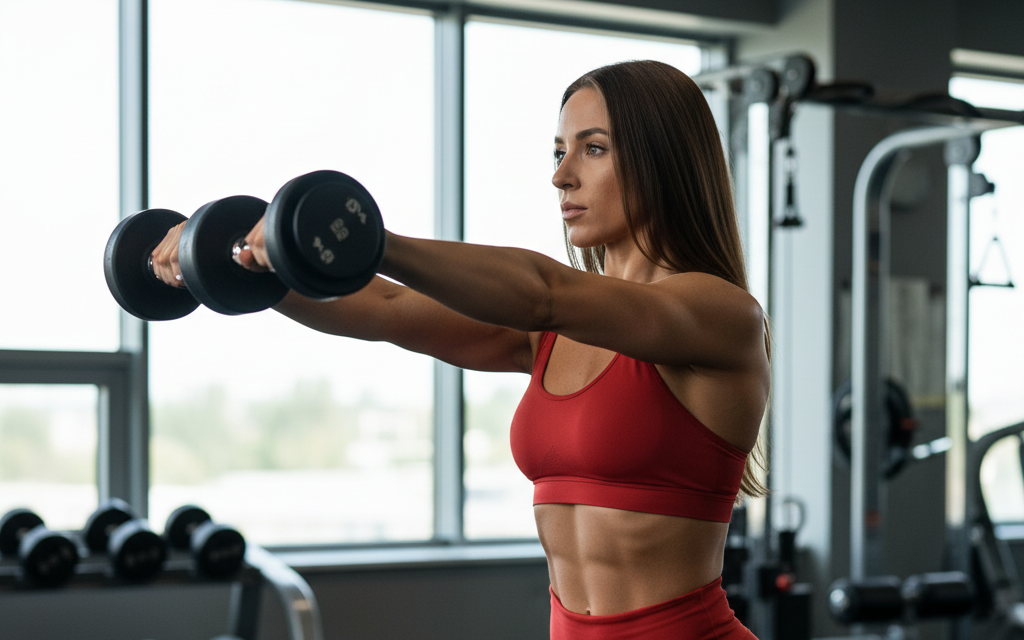
Improve posture with targeted shoulder and trap training, practical workouts, recovery tips, and gym tools to build strength and confidence.
Table of Contents
Improve Posture with Shoulder & Trap Training
Good posture starts with strength: your shoulders and traps play a huge role in how you stand, sit, and move. In this guide you’ll get practical, coach-style instruction on exercises, proper form cues, progressive overload strategies, and recovery tips that make posture gains real and sustainable. Whether you’re new to strength training or looking to fix rounded shoulders from long hours at a desk, these workout routines and gym tools will help you build the muscular support and mobility your spine needs.
Why Shoulder & Trap Training Helps Posture
Strong posterior shoulder muscles and upper traps counteract the forward rounding that comes from sitting and phone use. Training these muscles improves shoulder stability, reduces fatigue, and supports an upright thoracic spine.
This is fitness and strength training that targets muscle growth in the right areas while also improving movement quality — not a quick fix but a reliable approach when paired with consistency and smart recovery.
Key Muscles to Target
- Posterior deltoids: Prevent rounded shoulders and help external rotation.
- Upper and middle trapezius: Elevate and retract the shoulder blades for vertical posture.
- Rhomboids and rotator cuff: Stabilize the scapula and shoulder joint during movement.
Warm-Up & Mobility (Before Every Session)
Start every workout with 5–10 minutes of light cardio and dynamic mobility to wake up the thoracic spine and shoulder blades.
- Arm circles, band pull-aparts, and wall slides — 2 sets of 10–15 reps.
- Scapular push-ups — 2 sets of 8–12 reps to groove protraction/retraction.
- Thoracic rotations — 8–10 each side to improve mid-back mobility.
Sample Shoulder & Trap Workout Routines
Below are two progressive routines: one for beginners and one for intermediate lifters. Use gym tools like dumbbells, resistance bands, and cables to vary stimulus and maintain joint health.
Beginner Routine (2x per week)
- Seated Dumbbell Shoulder Press — 3 sets of 8–12 reps. Focus on vertical line and controlled descent.
- Face Pulls (band or cable) — 3 sets of 12–15 reps. Pull to forehead level with external rotation emphasis.
- Bent-Over Rear Delt Fly — 3 sets of 10–15 reps. Light weight, full shoulder blade squeeze.
- Shrugs (dumbbells) — 3 sets of 10–15 reps. Control both up and down phases.
- Plank with Scapular Retraction — 3 sets of 20–40 seconds. Build endurance in the stabilizers.
Intermediate Routine (2–3x per week)
- Standing Overhead Press (barbell or dumbbells) — 4 sets of 6–10 reps. Add progressive overload monthly.
- Cable Face Pulls — 4 sets of 12–15 reps. Pause at full retraction for 1 second.
- Single-Arm Bent-Over Row (focus on scapular pull) — 3 sets of 8–12 reps each side.
- Y-T-W Raises on Incline Bench — 3 rounds, 8–12 reps per position to improve scapular control.
- Farmer Carry — 3 walks of 30–60 seconds. Great for posture under load and grip strength.
Technique & Form Cues
Quality beats heavy lifts when posture is the goal. Use these simple cues during every set:
- Retract and depress your shoulder blades before pushing or pulling.
- Lead movements with the elbows to engage the back and posterior delts.
- Keep a neutral spine and avoid overarching the lower back on overhead presses.
- Use full range of motion but control eccentric (lowering) phases to build strength and tendon resilience.
Progressive Overload & Programming
Progressive overload is how you build muscle and strength over time. Aim to increase one variable every 1–3 weeks: weight, reps, sets, or improved tempo.
- Track workouts in a log or app so you know when to add load.
- Cycle intensity — heavier weeks followed by a lighter week to recover.
- Include at least two sessions per week focused on posterior shoulder work for consistent gains.
Recovery Tips & Injury Prevention
Recovery tips are simple: sleep, nutrition, and mobility. They’re not glamorous but they determine how well you adapt to training.
- Prioritize 7–9 hours of sleep for muscle repair and posture improvements.
- Use foam rolling and soft-tissue work on the upper back and chest to release tightness.
- Incorporate light stretching of the pecs and front shoulders to reduce anterior tightness.
- If using heavy loads, build up with accessory work and a proper warm-up to protect joints.
Daily Posture Habits
Exercise alone won’t fix posture unless you pair it with better daily habits. Small consistent changes add up fast.
- Practice “chest up, shoulder blades down” posture checks hourly if you sit for long periods.
- Use ergonomic cues: monitor at eye level, chair support, and frequent breaks to stand and move.
- Carry loads close to the body when lifting to reduce forward shoulder stress.
Recommended Gym Tools
The right tools make it easier to target traps and posterior shoulders while keeping technique clean.
- Dumbbells and kettlebells — for unilateral control and carries.
- Resistance bands — excellent for warm-ups, face pulls, and banded pull-aparts.
- Cable machine — ideal for face pulls and constant tension movements.
- Foam roller and lacrosse ball — for recovery and releasing tight pecs.
Conclusion
Improving posture with shoulder and trap training is about consistent, smart work: targeted exercises, clean technique, progressive overload, and solid recovery. Use the routines and cues above, add small daily posture habits, and leverage gym tools to support your progress. Start small, stay consistent, and you’ll notice a stronger, more confident posture over time.