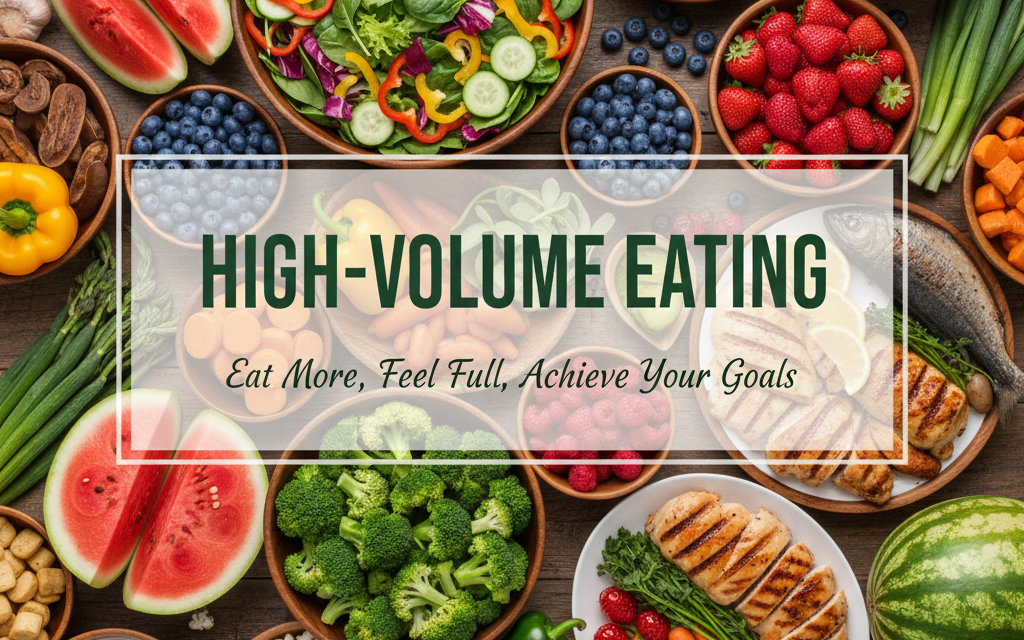
High-volume eating strategies to lose fat without hunger. Practical workouts, strength training tips, and recovery tools for sustainable fat loss.
Feeling hungry while trying to lose fat is the single biggest reason people give up. High-volume eating offers a smarter way: eat more food by volume and fewer calories by density. In this article you’ll get practical meal strategies, workout plans for home and gym, strength training progressions, and recovery tools to keep performance high while losing fat — all delivered like a supportive coach who wants you to win.
What Is High-Volume Eating and Why It Works
High-volume eating means prioritizing foods that fill your plate and stomach without packing a lot of calories. Think vegetables, broth-based soups, lean proteins, and fibrous carbs. This approach improves satiety and makes sticking to a calorie goal far easier long term.
When paired with a sensible strength training plan and a focus on progressive overload, high-volume eating helps you preserve muscle and lose fat. It’s not a gimmick — it’s about smart food choices and consistency.
High-Volume Food Foundations: What to Eat
Focus on whole foods that add bulk. These will help you eat larger portions, feel satisfied, and keep energy steady through workouts.
- Vegetables: Leafy greens, cruciferous veggies, zucchini, peppers — very low calorie but high volume.
- High-fiber carbs: Oats, beans, lentils, sweet potato in sensible portions for fullness and nutrient density.
- Lean proteins: Chicken, turkey, fish, tofu, low-fat dairy — important for muscle preservation and satiety.
- Broth and soups: Volume with minimal calories when vegetable- or lean-protein-based.
- Low-calorie beverages: Water, herbal tea, sparkling water between meals to blunt immediate hunger.
For evidence-based tips on satiety and healthy eating, see resources like Healthline and research summaries on NCBI.
Designing a High-Volume Meal Plan
Your plate should prioritize volume first, protein second, and energy from carbs and fats third. This structure supports workouts and recovery while keeping overall calories manageable.
- Start each meal with a salad or steamed veggies — this gives immediate volume and slows how quickly you eat.
- Aim for 20–40 grams of protein per main meal to support muscle maintenance.
- Include a fibrous carb or legume for sustained energy and gut health.
- Use healthy fats sparingly — they’re calorie-dense but necessary for hormones and taste.
Check also: “Protein Intake Calculator”
Strength Training to Preserve Muscle While Losing Fat
Calories in a deficit can lead to weight loss, but without resistance training you risk losing muscle. A plan that includes progressive overload and varied workouts will keep strength and shape intact.
Progressive Overload: The Key to Muscle Preservation
Progressive overload means gradually increasing the demand placed on your muscles. That could be adding more weight, doing more reps, reducing rest time, or improving technique.
- Track your best sets each week — use small increments to increase weight (2–5%).
- When reps reach the top of your target range (e.g., 12 out of 12), increase weight next session.
- Deload every 4–8 weeks to reset the nervous system and prevent burnout.
Check your one-rep max occasionally to measure progress and scale training loads appropriately with a tool like the site’s One Rep Max Calculator.
Home Workouts That Support High-Volume Eating
Not everyone can get to a gym, and a home-based strength plan can be highly effective. The goal is to maintain intensity and ensure progressive overload even with limited equipment.
Home Workout Structure
- 3 full-body sessions per week (e.g., Monday, Wednesday, Friday).
- Focus on compound movements: push, pull, hinge, squat, and carry.
- Use tempo, supersetting, and unilateral work to increase difficulty if weights are light.
Sample Home Workout (Beginner to Intermediate)
- Warm-up: 5 minutes dynamic mobility (arm circles, hip swings, bodyweight squats).
- Goblet Squat — 3 sets of 8–12 reps (hold a heavy kettlebell or dumbbell).
- Push-ups — 3 sets to near-failure (knees or incline if needed).
- Single-leg Romanian Deadlift — 3 sets of 8–10 reps per side (bodyweight or dumbbell).
- Inverted Rows (under a sturdy table or TRX) — 3 sets of 6–10 reps.
- Farmer Carry — 3 rounds of 30–60 seconds for core and grip.
- Cool-down: foam rolling or a few minutes of stretching.
Progression tips: add reps, slow the eccentric portion, or reduce rest between sets to intensify without new equipment.
Gym Workouts: Maximize Strength and Muscle
The gym provides variety and heavier loads so you can push progressive overload harder. Pair gym sessions with the high-volume eating strategy to minimize hunger and support recovery.
Gym Workout Structure (4-Day Upper/Lower Split)
- Upper A: Bench, Row, Overhead Press, Accessory Arms
- Lower A: Squat, Romanian Deadlift, Lunges, Core
- Upper B: Incline Press, Pull-Ups/Lat Pulldown, Dumbbell Work
- Lower B: Deadlift Variation, Front Squat or Leg Press, Glute Focus
Keep main lifts in the 4–8 or 6–12 rep range depending on goals, and use accessory work for hypertrophy and balanced muscle development.
Chest Exercises for Strength and Shape
Chest training helps with pressing strength and upper-body appearance. Mix flat and incline pressing, and include both barbell and dumbbell options to target different fibers and improve stability.
- Barbell Bench Press — focus on bracing, a tall posture, and a controlled bar path.
- Dumbbell Incline Press — allows a greater range of motion and unilateral balance.
- Chest-Supported Rows or Cable Flyes — for controlled contractions and tension.
Pay attention to proper shoulder positioning: retract the scapula, keep the elbows at a safe angle (not flared), and avoid overextending at the top.
Bicep Workouts: Small Muscle, Big Impact
Biceps are often trained for appearance and direct pulling strength. They also support compound movements when fatigue sets in.
- Barbell or EZ-bar Curls — heavier sets of 6–10 reps for strength.
- Incline Dumbbell Curls — greater stretch and time under tension for hypertrophy.
- Hammer Curls — build brachialis for fuller-looking arms and elbow flexion performance.
Use controlled eccentrics; avoid swinging the body to maintain tension on the biceps. Two focused direct biceps exercises per week are enough for most lifters.
Leg Day Routine: Build Strength, Burn Calories
Leg days are powerful fat-burning sessions because your largest muscles require energy. Keep form strict and progress methodically.
- Back Squat or Front Squat — 3–5 sets of 4–8 reps.
- Romanian Deadlift — 3 sets of 6–10 reps for hamstrings and posterior chain.
- Walking Lunges or Bulgarian Split Squats — 3 sets of 8–12 reps per leg.
- Leg Press / Hack Squat — optional volume work for quads.
- Calf Raises — 3 sets of 12–20 reps focused on full range.
Key cues: keep the knees tracking the toes, maintain neutral spine on hinges, and breathe into your diaphragm to brace the core effectively.
Recovery Tools to Support High-Volume Eating and Training
Fat loss is not just training and calorie control; recovery amplifies results. Better recovery means higher-quality workouts and less hunger from stress-driven eating.
- Sleep — aim for consistent sleep times and 7–9 hours nightly.
- Hydration — drinking enough water supports digestion and feeling full between meals.
- Mobility & soft tissue work — foam rolling, banded mobility sessions, and targeted stretching reduce pain and improve performance.
- Active recovery — walking, light cycling, or yoga on rest days encourages circulation and caloric burn without stress.
Use a recovery checklist and tools like the site’s Sleep & Recovery Calculator to tailor rest needs to your training load.
Muscle Growth While Losing Fat: How to Balance the Two
Maintaining or even building a little muscle during a calorie deficit is possible, especially for beginners or those returning from a break. The keys are sufficient protein, heavy training stimulus, and smart calorie management.
- Eat adequate protein at each meal — generally 0.7–1.0 grams per pound of body weight is a reasonable target for many people.
- Prioritize compound lifts early in workouts when energy is highest.
- Use progression models that include both strength (low reps, heavy loads) and hypertrophy (moderate reps, time under tension).
For practical protein timing and absorption tips, check reliable sources like ACE Fitness. Proper protein intake links directly to both satiety and muscle maintenance while in a deficit.
Avoid Common Mistakes With High-Volume Eating
High-volume eating can be very effective, but people sometimes sabotage results with a few common errors. Watch out for these pitfalls and fix them quickly.
- Over-relying on “low-calorie” processed foods: Many so-called diet products are low in calories but low in nutrients and leave you unsatisfied.
- Ignoring protein targets: Volume without protein leads to muscle loss and plateaus.
- Under-challenging workouts: If you don’t stress your muscles, the deficit will cost you muscle mass.
- Too aggressive a calorie deficit: Severe cuts spike hunger and reduce performance; aim for a modest deficit you can sustain.
Weekly Action Plan: Combine Nutrition, Training, and Recovery
Here’s a simple 7-step action plan you can start this week to implement high-volume eating alongside effective training.
- Plan four meals with a large vegetable serving at each. Volume first, protein second.
- Choose a training split — full body 3x/week or upper/lower 4x/week depending on schedule.
- Track one key lift and aim for a 2.5–5% increase or 1–2 extra reps weekly when possible.
- Include at least two sessions of higher-intensity leg or compound work to burn calories and preserve muscle.
- Use a sleep routine — wind down 60 minutes before bed, avoid screens, and set a consistent wake time.
- Hydrate consistently; drink a full glass of water before each meal to aid satiety.
- Weekly check-in: measure performance (lifts, energy levels) rather than obsessing over the scale.
Sample One-Day Meal Plan (High-Volume)
Here’s a simple day that keeps portions large but calories controlled, with built-in protein to support recovery.
- Breakfast: Large spinach and mushroom omelet with 3 egg whites +1 whole egg, a cup of oats with berries.
- Snack: Greek yogurt with sliced cucumber and a handful of cherry tomatoes.
- Lunch: Big salad (mixed greens, roasted vegetables), 6 oz grilled chicken breast, ½ cup quinoa, lemon vinaigrette.
- Snack: Lentil soup or a vegetable broth-based soup with shredded turkey.
- Dinner: Baked white fish with roasted cauliflower and a sweet potato (moderate portion).
- Evening: Herbal tea and a serving of cottage cheese or casein snack if needed for fullness.
Home vs Gym: What’s Best for Fat Loss?
Either environment can work. The key differences are equipment access and progressive overload. Gyms provide heavier loads and machines for variety, which can accelerate strength gains. Home setups demand creativity but can still progress effectively with tempo changes, unilateral work, and incremental load increases.
Either way, pairing your training with high-volume meals makes adherence far easier by reducing the psychological burden of feeling deprived.
Tracking Progress Without Obsessing Over the Scale
Rely on performance markers: strength increases, more reps, tighter form, clothes fitting better, and photos every 3–4 weeks. Use tools for macro calculations if you want precision, like the site’s Calorie & Macro Calculator or TDEE Calculator.
Recovery Tools: More Detail on Methods That Work
Recovery tools aren’t optional — they’re performance multipliers. Here are practical tools and how to use them weekly.
- Sleep: If you miss sleep, reduce workout intensity the following day and prioritize protein and carbohydrates around the workout for recovery.
- Foam rolling & mobility: Spend 10–15 minutes after training on tight areas (quads, lats, glutes).
- Active recovery: Keep it low-intensity; a brisk 20–30 minute walk improves blood flow and appetite regulation.
- Contrast showers and compression: Useful after intense lower-body sessions to reduce soreness and support recovery.
For deeper reading on safe exercise programming and recovery, reputable sources such as Mayo Clinic provide useful guidelines.
Common Questions Answered
Here are quick answers to common concerns about combining high-volume eating with fat loss and training:
- Will I feel deprived? No. High-volume foods keep portions large so you see food on your plate and feel satisfied.
- Can I still build muscle? Yes — especially if you’re new to training or structured about protein and progressive overload.
- What about cravings? Address them with high-volume swaps (e.g., fruit, Greek yogurt, air-popped popcorn) and structured treats so you don’t feel restricted.
Practical Strength Training Progression Plan (12 Weeks)
Use this simple progression to keep strength rising while in a mild calorie deficit. Focus on consistency and incremental increases.
- Weeks 1–4: Establish baseline technique, moderate volume (3 sets per main lift), and focus on form. Use rep ranges 8–12.
- Weeks 5–8: Increase intensity — add 5–10% weight or 1–2 reps per set. Include an extra set on compound lifts if recovery allows.
- Weeks 9–12: Introduce a heavier microcycle with lower reps (4–6) for main lifts, then higher rep accessory work (10–15) to maintain volume.
Deload week after 12 weeks to recover and then repeat or reassess goals based on performance and measurements.
Motivation and Mindset: Stay Consistent Without Feeling Deprived
High-volume eating reduces the constant feeling of hunger, but mindset still matters. Think in terms of sustainable habits, not short-term extremes. Celebrate small wins: more reps, better sleep, clearer energy, improved workout sessions.
Keep a simple log for training and nutrition. Review weekly and adjust based on energy, hunger, and performance rather than day-to-day weight fluctuations.
Conclusion
High-volume eating is an empowering, sustainable way to lose fat without constant hunger. Combine it with a structured strength program focused on progressive overload, sensible recovery tools, and consistent habits, and you’ll protect muscle while improving performance. Start simple, track progress, and approach the process like a coachable athlete — steady progress beats dramatic swings every time.