Boost your workouts with natural, caffeine-free energy foods. Practical pre/post-workout snacks, recovery tips, and tools to fuel strength and muscle growth.
Feeling wired on coffee but want steady energy for workouts and life? You can power performance, recovery, and muscle growth with the right foods and timing — no caffeine required. As a coach, I focus on practical food choices that support strength training, progressive overload, and consistent workout routines. This guide gives easy snack ideas, pre- and post-workout fuel, and tool-based tips to keep energy stable during leg day, bicep workouts, or full-body sessions.
Why food matters for fitness and energy
Your body runs on fuel. Complex carbs, quality protein, healthy fats, and hydration combine to maintain steady blood sugar and muscular performance. That balance helps you push through workouts, recover faster, and build muscle without relying on stimulants.
Key nutrients that support sustained energy
- Complex carbohydrates — oats, brown rice, sweet potatoes: steady, long-lasting fuel for workouts and endurance.
- Lean protein — eggs, Greek yogurt, chicken, legumes: supports muscle growth and recovery.
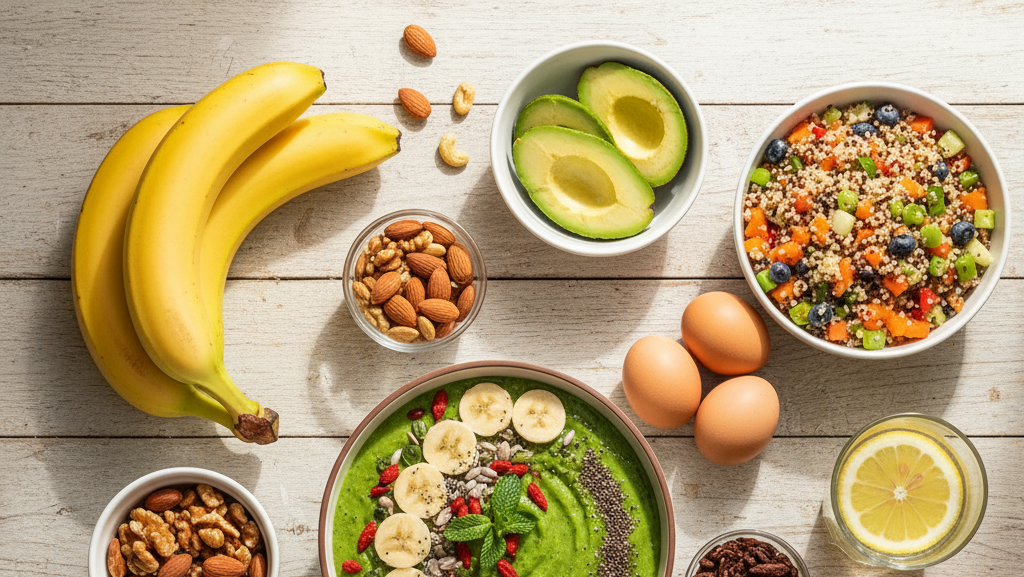
- Healthy fats — avocado, nuts, seeds: help sustain energy and keep you fuller between meals.
- Natural electrolytes & fluids — water, coconut water: essential for performance and recovery.
- Micronutrient-rich choices — spinach, berries, beets: support overall stamina without buzz.
Pre-Workout Fuel for Strength Training
For strength-focused sessions like bicep workouts or heavy compound lifts, aim for a snack 30–90 minutes before training that pairs carbs with a bit of protein. That combo powers your central nervous system and muscles without causing a crash.
- Banana + a spoon of almond butter (quick carbs + a touch of fat)
- Greek yogurt with honey and berries (protein + carbs)
- Oatmeal with a scoop of protein powder and cinnamon (sustained release carbs)
Warm up dynamically and prioritize proper form — a well-fueled nervous system helps you maintain technique and push progressive overload safely.
Post-Workout Recovery Foods for Muscle Growth
After a tough set of squats or a high-intensity circuit, your body needs protein and carbs to kickstart recovery and support muscle growth. Aim to eat within 45–90 minutes when possible.
- Grilled chicken, quinoa, and roasted veggies — balanced macronutrients for repair
- Cottage cheese with pineapple — casein protein + carbs
- Protein smoothie with milk, banana, spinach, and a tablespoon of nut butter
Pairing carbohydrates with a quality protein source helps replenish glycogen and provide amino acids for repair — important if you’re following structured workout routines or looking to increase strength.
Snack Ideas for Leg Day Routine and Long Sessions
Leg day demands a lot of energy. Choose snacks that provide steady glucose and electrolytes so you can maintain intensity throughout sets and circuits.
- Sweet potato wedges and turkey slices (complex carbs + lean protein)
- Trail mix with nuts, seeds, and dried fruit (portable and calorie-dense)
- Coconut water and a rice cake with peanut butter (hydration + quick carbs)
Space your snacks strategically: a lighter snack 30–60 minutes before, and a fuller meal 60–90 minutes after heavy sessions for optimal recovery.
Hydration & Recovery Tips
Hydration is a silent energy booster. Dehydration reduces strength and endurance, so sip water before, during, and after workouts. For long or sweaty sessions, consider electrolyte options like coconut water or a low-sugar sports drink.
- Weigh yourself pre and post-workout to estimate fluid loss for rehydration planning.
- Use a foam roller and mobility work after sessions to speed recovery and reduce soreness.
- Prioritize sleep and consistent meal timing to support energy levels and muscle growth.
Tools to track fueling and progress
Use simple gym tools and calculators to tailor energy intake to your goals. Tracking calories, macros, and hydration can make caffeine-free fueling consistent and effective.
Read also: “Calorie & Macro Calculator”
How to build a caffeine-free energy plan
Create a weekly plan that aligns meals with workouts and recovery. Small habits stack into big results: consistent protein, timed carbs around workouts, and quality fats for satiety.
- Plan pre-workout snacks based on intensity — lighter for mobility days, denser for heavy lifting.
- Schedule post-workout meals with a 3:1 carb-to-protein ratio when glycogen replenishment is needed.
- Rotate energy-dense snacks (nuts, smoothies) on long training days or double sessions.
Use progressive overload in your training and pair it with progressive fueling — slowly increase portions and meal timing as volume rises.
Quick sample day for steady energy (no caffeine)
- Breakfast: Rolled oats with banana, walnuts, and Greek yogurt.
- Pre-lunch workout snack: Rice cake with almond butter and a small orange.
- Post-workout lunch: Salmon, brown rice, and mixed greens.
- Afternoon snack: Cottage cheese with berries or a protein shake.
- Dinner: Chicken, sweet potato, and steamed broccoli.
Adjust portion sizes based on your goals — muscle growth, fat loss, or performance. Tools like the Calorie & Macro Calculator help dial in specifics for your unique needs.
Conclusion
Sustainable energy without caffeine is achievable with smart food choices, proper timing, and consistent recovery. Focus on complex carbs, lean protein, healthy fats, and hydration to power strength training, support muscle growth, and stay energized for every leg day or bicep workout. Start small—swap one caffeine habit for a nutrient-rich snack this week and track progress with the tools at Total Health Tools.