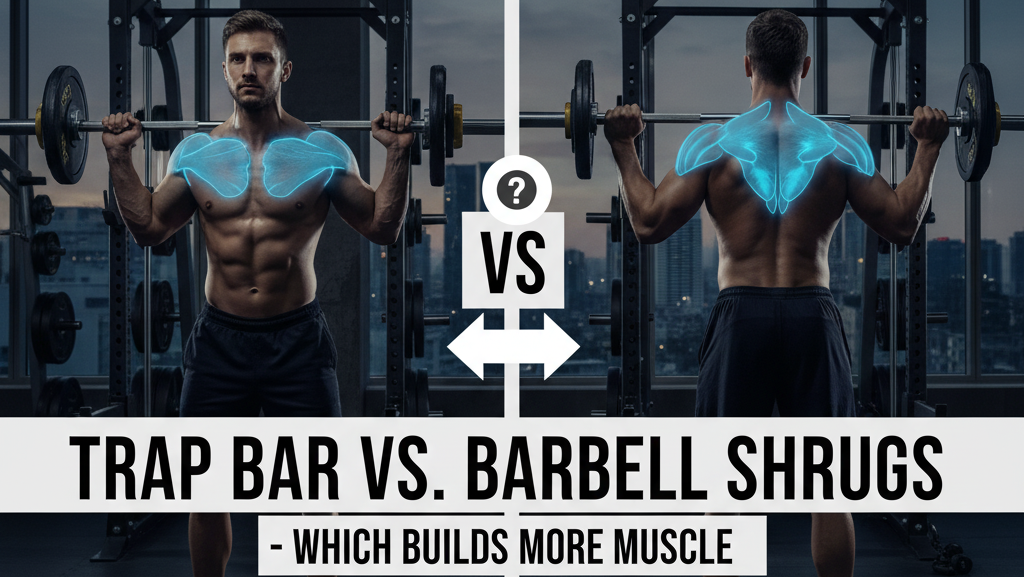
Trap bar vs barbell shrugs — compare muscle activation, form, and recovery to decide which builds traps better for your strength training routine.
Table of Contents
Trap Bar vs Barbell Shrugs: Which Builds More Muscle
If you want bigger, stronger traps, choosing the right shrug variation matters. Trap bar shrugs and barbell shrugs both work the upper traps and neck area, but they differ in range of motion, grip, loading and how the rest of your body stabilizes. In this article I’ll break down the pros and cons, show practical form tips, sample sets and recovery strategies, and help you pick the best tool for your goals—whether you’re chasing size, strength, or a balanced upper-back routine.
Why Tool Choice Matters for Muscle Growth
Muscle growth responds to progressive overload, time under tension, and mechanical tension. Your choice of gym tools—trap bar or barbell—changes how tension is delivered to the traps and how other muscles assist. Small differences in posture, grip, and bar path can change how much the traps actually work in each rep.
Barbell Shrugs: Classic, Direct, Heavy
Barbell shrugs are the traditional choice for targeting the upper traps. With a barbell you can:
- Load heavy and maximize vertical displacement.
- Use a double overhand or hook grip for control.
- Keep feet hip-width and preserve a straight spine while only shrugging the shoulders.
Benefits: Barbell shrugs often let you overload more directly, which is great for raw strength and adding mass when performed with strict form and progressive loading.
Trap Bar Shrugs: Comfortable, Balanced, Functional
The trap or hex bar places the load more centered around your body and typically allows a neutral grip. This changes several variables:
- More natural wrist position, reducing joint strain.
- Potentially fuller range of motion because the handles sit higher than a barbell on the floor.
- Better for lifters with limited shoulder mobility or lower-back concerns.
Benefits: Trap bar shrugs feel more ergonomic and can recruit traps while minimizing compensatory movements from the hips and lower back. They’re a strong choice for hypertrophy-focused routines that emphasize strict, clean reps.
Muscle Activation: Which One Wins?
EMG studies vary, but both variations activate the upper traps strongly. The deciding factors are load, tension, and form. If you can lift heavier with a barbell and maintain perfect shrug-only motion, you might create more absolute overload. If the trap bar allows a better mind-muscle connection and more controlled reps, it can be superior for hypertrophy.
Rule of thumb: Choose the variation you can perform with better posture, consistent progressive overload, and fewer compensations.
Form Cues for Both Shrug Types
- Keep a neutral spine—no shrugging the shoulders into a flexed or rounded back.
- Drive the shoulders straight up toward the ears; avoid rolling the shoulders forward or backward.
- Hold the top for 1–2 seconds to increase time under tension; lower slowly and under control.
- Breathe out on the shrug and breathe in on the descent.
- Use straps for heavy sets if grip fails before traps do.
Programming: Sets, Reps & Progressive Overload
For muscle growth, focus on moderate volume, progressive overload and consistent frequency. Here are two sample approaches depending on your primary goal.
- Hypertrophy focus: 3–4 sets of 8–12 reps with a 1–2 second pause at the top; 60–90 seconds rest between sets.
- Strength focus: 4–6 sets of 4–6 heavier reps, longer rest (2–3 minutes), strict form and accessory work for posture.
Alternate trap bar and barbell shrugs every 4–6 weeks to vary stimulus, avoid plateaus, and manage joint stress.
Sample Weekly Mini-Plan
- Day 1 (Heavy): Barbell shrugs 5×5 — focus on load and maximal contraction.
- Day 3 (Hypertrophy): Trap bar shrugs 4×10 — emphasis on slow eccentrics and pause reps.
- Day 5: Upper-back accessory (face pulls, rows) to balance development.
Recovery Tips and Injury Prevention
Shrugs are short, intense movements but still require recovery. Prioritize sleep, protein, and joint-friendly mobility. Avoid overtraining the traps—two targeted days per week is plenty for most lifters.
- Warm up with light sets and scapular shrugs before heavy work.
- Use lifting straps or chalk if grip limits your load on barbell shrugs.
- Include neck and upper-back mobility drills to support healthy shrug mechanics.
If you feel persistent neck pain or unusual discomfort, reduce load and reassess technique before increasing weight again.
Which One Should You Choose?
Neither tool is universally “better.” Choose based on your goals and constraints:
- Choose barbell shrugs if you want absolute overload and you can maintain strict form.
- Choose trap bar shrugs if you need a more comfortable grip, better posture, or fuller range with less lower-back stress.
- Rotate both into your program to target the traps from slightly different angles and stimulus patterns.
Read also: “Calorie & Macro Calculator”
Practical Gym Tools to Improve Your Shrugs
Small gear changes can help you progress safely and effectively.
- Lifting straps — keep grip from limiting trap overload.
- Chalk — improves grip and control on heavy barbell shrugs.
- Trap bar with multiple handle heights — allows experimenting with range of motion.
- Video or mirror — self-monitor form to avoid rolling or thrusting.
Use the right tool to remove weak links so your traps get most of the work.
Conclusion
Both trap bar and barbell shrugs build muscle when used with smart programming, strict form, and progressive overload. If your priority is absolute load, the barbell can be king. If you want comfort, neutral grip, and consistent reps, the trap bar is an outstanding option. Rotate both, focus on technique, and track progress—your traps will grow with the right effort and recovery plan.