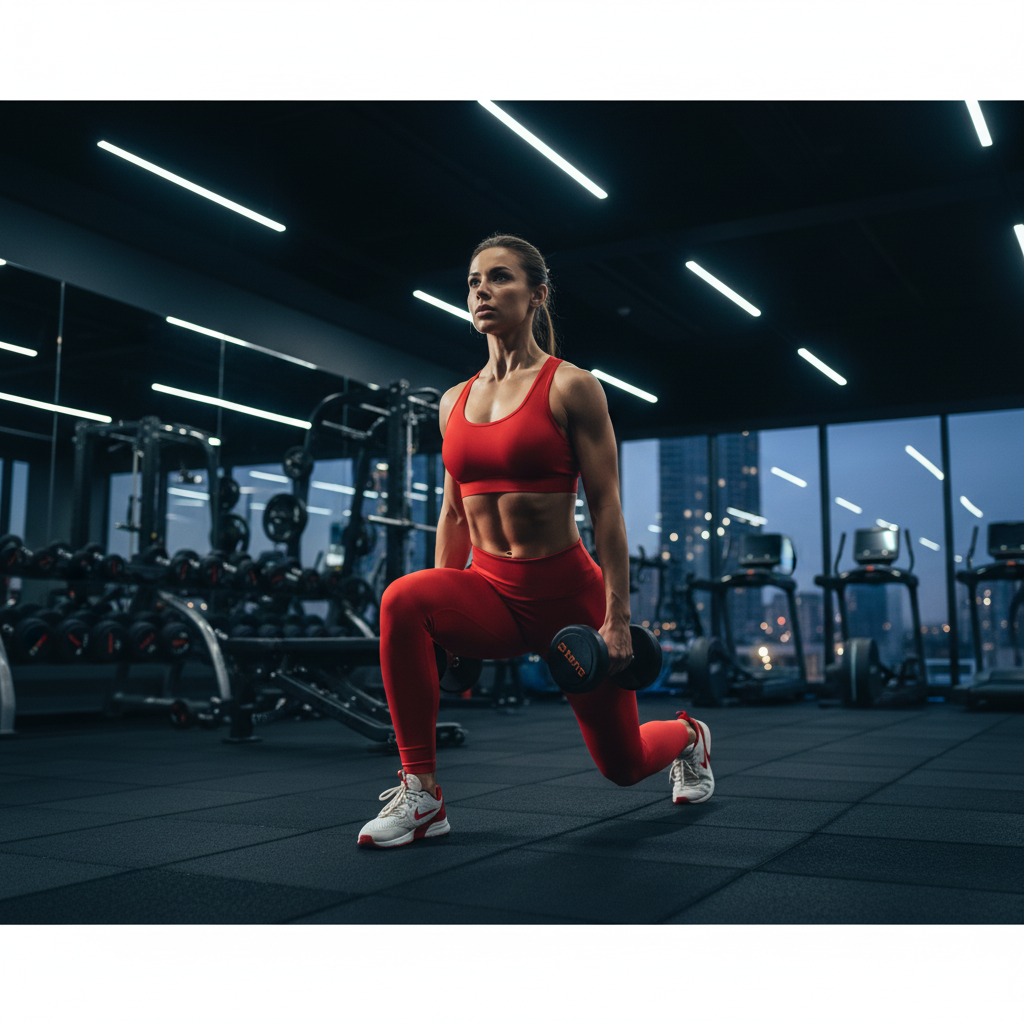
Learn how to balance hamstrings vs. quads for stronger, injury-resistant legs with workouts, form cues, recovery tips, and smart gym tools.
Table of Contents
Hamstrings vs. Quads: Balance Lower Body Strength
Think of your legs like a team: the quads lead the charge, but the hamstrings finish the play. When one is stronger or tighter than the other, movement quality, performance, and even joint comfort can suffer. This guide breaks down practical ways to balance hamstrings and quads using smart strength training, progressive overload, recovery tips, and simple gym tools. No fluff — just coach-like cues you can apply on leg day or in your workout routine.
Why Hamstrings vs. Quads Balance Matters
Your quads (front thigh) and hamstrings (back thigh) perform different but complementary actions: quads extend the knee, hamstrings flex the knee and extend the hip. Balanced strength supports better squats, deadlifts, sprinting, and daily movement patterns.
Imbalances can lead to inefficient biomechanics, overuse patterns, and stagnating muscle growth. Focusing on both sides improves athleticism and long-term progress in your strength training.
Quick Anatomy & Assessment
Understanding the basics helps you pick the right exercises. Quads include the rectus femoris and vastus group; hamstrings include the biceps femoris, semitendinosus, and semimembranosus. They act differently through the hip and knee.
Simple assessment you can do at home or in the gym:
- Single-leg Romanian deadlift: tests posterior chain control and hamstring strength.
- Single-leg squat or pistol progression: tests quad and overall leg stability.
- Compare strength and soreness patterns across exercises to spot dominance.
Principles: Progressive Overload & Balanced Programming
Progressive overload applies to both muscle groups: increase load, reps, or volume gradually. But don’t only add weight — vary tempo and range of motion to challenge hamstrings and quads differently.
Programming tips:
- Train quads and hamstrings 2–3 times per week with different emphases (strength vs. hypertrophy).
- Include both compound lifts (squats, deadlifts) and isolation movements (leg extensions, hamstring curls).
- Use unilateral work (lunges, split squats) to correct side-to-side imbalances.
Best Exercises for Quads and Proper Form
Target your quads with compound and isolation moves while focusing on technique and range of motion.
- Back Squat — keep chest up, knees tracking toes, depth to a comfortable range. Progressive overload through weight and reps.
- Front Squat — emphasizes quads; maintain an upright torso and tight core.
- Bulgarian Split Squat — great unilateral quad builder; step length changes emphasis.
- Leg Extension — isolation to target quad hypertrophy, use controlled tempo to avoid joint stress.
Quad Workout Sample
- Back Squat — 4 sets x 5–8 reps (strength focus)
- Bulgarian Split Squat — 3 sets x 8–12 reps per leg
- Leg Extension — 3 sets x 12–15 reps (slow 2-1-2 tempo)
Best Exercises for Hamstrings and Proper Form
Hamstrings respond to hip-hinging and eccentric loading. Prioritize exercises that lengthen the posterior chain under control.
- Romanian Deadlift (RDL) — hinge from hips, maintain neutral spine, feel stretch in hamstrings.
- Glute-Ham Raise — builds eccentric control and strength through full knee extension.
- Nordic Hamstring Curl — high intensity eccentric; start with assistance if needed.
- Single-Leg Romanian Deadlift — addresses side-to-side differences and improves stability.
Hamstring Workout Sample
- Romanian Deadlift — 4 sets x 6–10 reps
- Glute-Ham Raise or Nordic Curl — 3 sets x 6–10 reps
- Seated or Lying Hamstring Curl — 3 sets x 10–15 reps (slow eccentric)
Integrating Quad and Hamstring Workouts into a Leg Day Routine
Balance intensity across the session. Start with heavy compound lifts, follow with unilateral work, and finish with targeted isolation and tempo-driven sets for muscle growth.
Sample leg day routine:
- Warm-up: 5–10 minutes dynamic mobility, banded walk, glute activation
- Primary lift (squat or deadlift variation) — 4 sets x 4–6 reps
- Accessory (RDL or front squat) — 3 sets x 6–10 reps
- Unilateral work (lunges or single-leg RDL) — 3 sets x 8–12 reps
- Isolation (leg curl or extension) — 3 sets x 12–15 reps
- Cooldown: soft tissue work and light stretching
Recovery Tips & Tool-Based Solutions
Recovery is where strength and muscle growth happen. Use consistency, sleep, protein, and active recovery as your baseline.
Smart tools to speed recovery and maintain mobility:
- Foam roller for quads and hamstrings to reduce tightness.
- Massage gun for targeted soft tissue work after intense sessions.
- Resistance bands for activation and mobility drills before workouts.
- Compression sleeves and heat/ice as personal preference for comfort.
Track training, calories, and protein to support recovery and muscle growth — small adjustments add up. Use our tools to guide your plan.
Read also: “Protein Intake Calculator”
Practical Tips from a Coach
- Start with form, not weight. Master the hinge and squat before chasing PRs.
- Prioritize unilateral moves if one leg feels weaker — imbalance is often strength + stability.
- Use tempo (slow eccentrics) to build hamstring control and reduce quad dominance.
- Progress gradually: increase load 5–10% when your form stays solid for target reps.
- Schedule recovery days and include light movement or mobility sessions between heavy leg days.
Conclusion
Balancing hamstrings and quads isn’t glamorous, but it’s the foundation of durable strength and better performance. Use smart programming — compound lifts, unilateral work, targeted isolation, progressive overload, and recovery tools — to build balanced legs. Start small, track progress with our calculators and tools, and stay consistent. Your legs will thank you with better lifts, fewer nagging issues, and stronger, more confident movement.