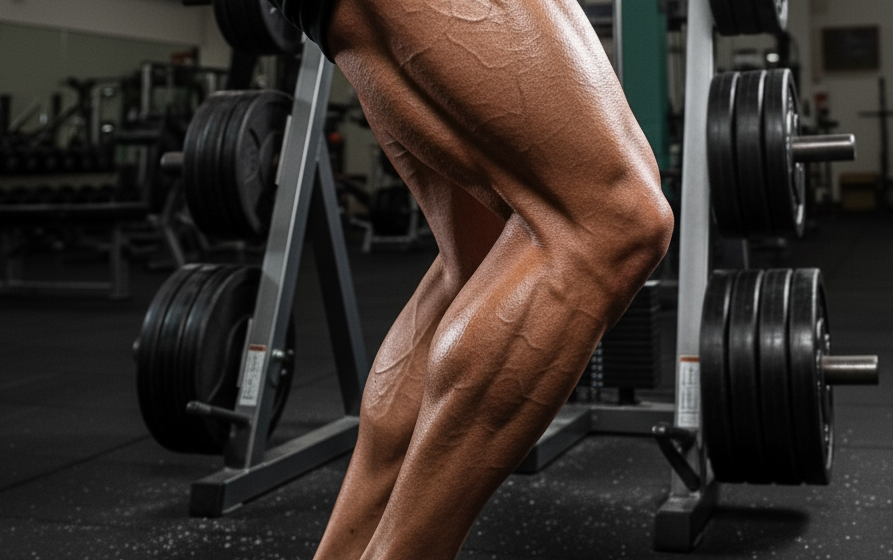
Build stronger calves with 6 proven moves, form tips, progressive overload, and recovery strategies for real muscle growth and performance.
Table of Contents
Calf Workouts That Actually Work
Want calves that look and perform better without wasting time on pointless sets? Calf development responds to consistency, smart programming, and the right tools. In this guide I’ll walk you through six proven calf moves, show how to progress them, and share recovery tips that actually help you grow. Whether you train at home or in the gym, these practical steps and form cues will make your calf workouts more productive and enjoyable.
Why calves are different — and how to train them
Calves are stubborn for a reason: they’re loaded with slow-twitch fibers used to stand and walk all day. That means they tolerate frequent training and benefit from both heavy and high-rep work. To build muscle you need progressive overload, varied rep ranges, and excellent range of motion.
Key training principles (progressive overload)
- Frequency: Train calves 2–3 times per week.
- Volume: 6–12 sets per week per muscle group spread across sessions.
- Rep ranges: Mix heavy sets (6–12 reps) with endurance sets (15–30 reps).
- Tempo: Slow control on the eccentric (down) and a squeeze at the top for 1–2 seconds.
- Tools: Use machines, dumbbells, barbells, and a raised block/step for full ROM.
6 proven moves for calf muscle growth
Below are reliable exercises you can add to your leg day routine. Pick 2–3 per session and rotate to keep progress steady.
- Standing Barbell or Dumbbell Calf Raise
– Best for heavy loading and building thickness. Stand on a raised block, push through the balls of your feet, lift fully, pause, then lower into a deep stretch. Keep core tight and avoid bouncing.
- Seated Calf Raise
– Targets the soleus (important for that lower calf fullness). Use a seated machine or place a dumbbell on your knees. Focus on a full stretch and longer time under tension.
- Leg Press Calf Raise
– Great gym tool for controlled heavy sets. Use the leg press platform, position feet low, and press through toes. The leg press path reduces balance demands so you can go heavier safely.
- Single-Leg Dumbbell Calf Raise
– Fixes left/right imbalances and improves stability. Perform on a step, slow down the eccentric, and add weight when you can complete 12–15 clean reps.
- Donkey Calf Raise (Bodyweight or Weighted)
– Powerful contraction at the top and deep stretch. If you don’t have a machine, lean forward on a bench or rack and have a partner add weight or use a belt.
- Plyometric Option: Jump Rope or Box Jumps
– Adds fast-twitch stimulus for explosive strength and athleticism. Keep sessions short (3–5 rounds) and focus on quick, light landings on the balls of your feet.
How to structure a calf workout (sample routines)
Choose one heavy compound move and one higher-rep accessory per session. Here are two simple templates depending on your goal.
- Strength/Thickness (2–3 sets each)
– Standing Barbell Calf Raise: 4 sets of 6–10 reps
– Seated Calf Raise: 3 sets of 12–15 reps
- Endurance/Shape (2–3 sets each)
– Single-Leg Calf Raise: 3 sets of 12–20 reps per leg
– Jump Rope: 4 rounds of 60 seconds
Progression tips
- Add 2.5–5 lbs (1–2 kg) when you can hit the top of the rep range with perfect form.
- Increase reps before weight for single-leg work to build stability first.
- Periodize training: 4–6 weeks heavy focus, then 2–4 weeks higher-rep emphasis.
Form cues and common mistakes
Quality beats quantity. Use these cues every rep:
- Push through the ball of the foot — don’t let weight shift to the heel.
- Fully extend at the top and squeeze for 1–2 seconds.
- Lower slowly until you feel a full stretch in the calf muscle.
- Avoid bouncing; control the eccentric portion.
- Keep knees stable—not locked—to protect joints and focus tension on calves.
Recovery tips for consistent calf gains
Calves recover fast but still need smart recovery to grow. Prioritize sleep, protein, and mobility work.
- Nutrition: Aim for adequate protein and calories to support muscle recovery.
- Hydration: Proper fluids help performance and recovery.
- Mobility and soft tissue: Foam rolling and calf stretches after training reduce tightness.
- Rest: Space calf sessions to allow at least 48 hours between intense workouts.
Tool-based solutions to boost growth
Using the right gym tools makes a big difference. A calf block/step, seated calf machine, leg press, and adjustable dumbbells all help you hit full ROM and progressive overload. Resistance bands are great for warm-ups and adding tension through different ranges.
Read also: “Calorie & Macro Calculator”
Conclusion
Calf growth comes from consistent, smart training: use the six moves above, vary rep ranges, and prioritize form and recovery. Track progress, add weight methodically, and use gym tools to get the most out of every rep. Start small, stay consistent, and your calves will respond—step by step.