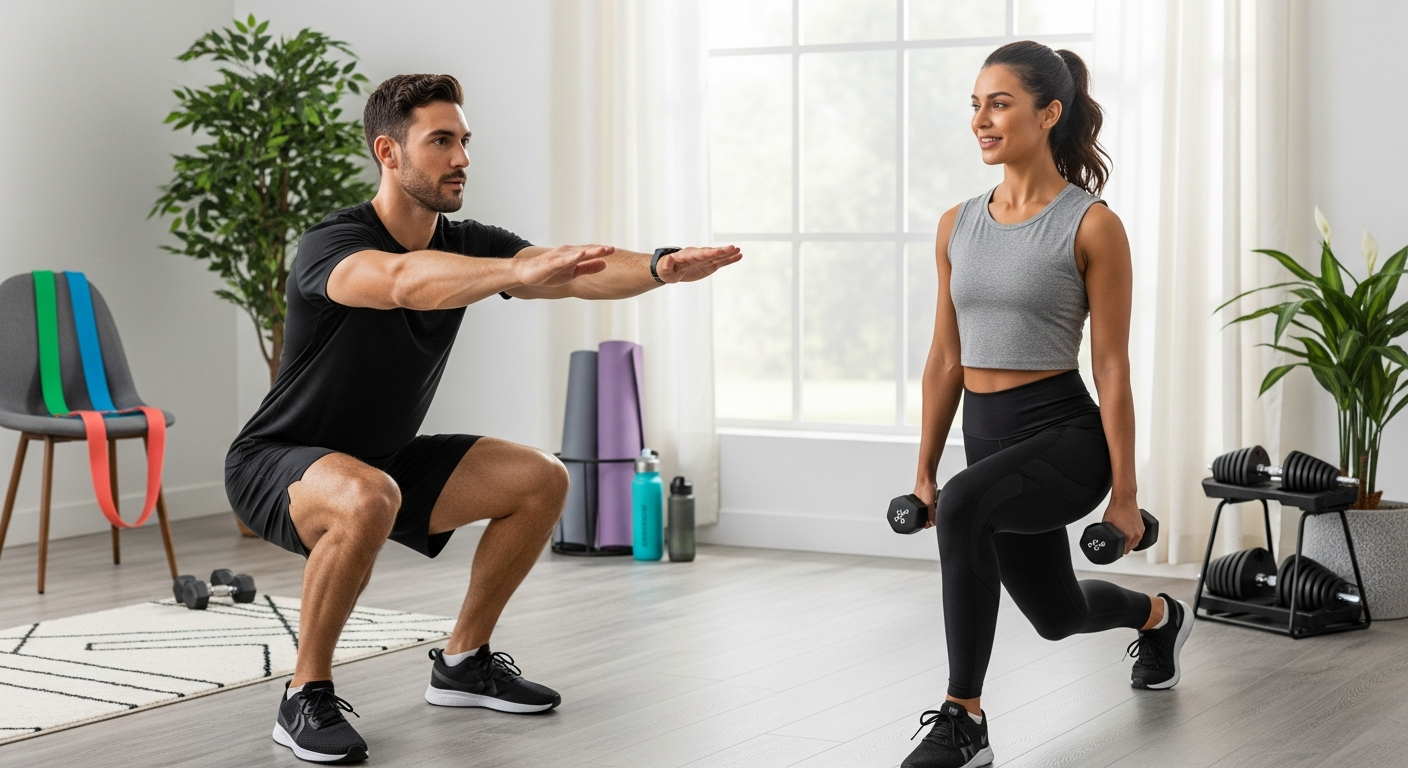
Get fit at home with our full body circuit training routine, including strength, progressive overload, bicep workouts & chest exercises for muscle growth.
Starting a fitness journey at home can feel overwhelming, especially when you’re juggling work, family, and social life. You might wonder how to build muscle, burn fat, and stay motivated without a gym membership. The good news? A well-designed full body home circuit training routine can help you smash your goals, boost strength, and improve endurance—all in under an hour. In this guide, you’ll discover practical workout strategies, proper form cues, progressive overload techniques, recovery tips, and nutritional pointers to keep you on track. Let’s kickstart your transformation together!
Why Choose a Home Circuit Training Routine?
A circuit training routine combines strength exercises and cardio bursts to work multiple muscle groups and elevate your heart rate. Here’s why it’s ideal for home workouts:
- Time-Efficient: Move quickly between exercises for maximum effect in minimal time.
- Minimal Equipment Needed: Bodyweight, resistance bands, or dumbbells are enough.
- Full Body Engagement: Target biceps, chest, legs, back, and core in one session.
- Scalable Intensity: Adjust reps, sets, or rest intervals to match your fitness level.
- Fat-Burning: The mix of strength and cardio boosts calorie burn before, during, and after the session.
Structure of the Full Body Circuit
Before we dive into specific exercises, here’s a simple layout you can follow:
- Warm-Up (5–10 minutes): Dynamic stretches, light cardio, joint mobility drills.
- Circuit Rounds (3–5 rounds): Perform each exercise for 30–60 seconds, resting 15–30 seconds between movements.
- Rest Between Rounds (1–2 minutes): Catch your breath, sip water, and refocus.
- Cool-Down (5 minutes): Static stretches and deep breathing.
This blueprint ensures your body is primed for effort, stays safe, and recovers properly.
Bicep Workouts in Your Circuit
Strong arms enhance functional strength and aesthetics. Here are some effective bicep movements you can include:
- Standing Dumbbell Bicep Curls: Keep elbows close to your torso and squeeze at the top.
- Hammer Curls: Neutral grip to target the brachialis and forearms.
- Resistance Band Curls: Step on the band, curl handles up while keeping shoulder blades retracted.
- Isometric Hold Curl: Hold halfway up for 20–30 seconds to increase time under tension.
Tip: Focus on controlled movements. Avoid swinging the weight to ensure maximum muscle engagement. For more tips on proper arm training, check out this guide from Verywell Fit.
Chest Exercises for Home
A strong chest supports pressing movements and posture. You don’t need a bench to build your pecs:
- Push-Ups: Standard, incline (hands on a chair), or decline (feet elevated) variations.
- Resistance Band Chest Press: Anchor band behind you, press handles forward while bracing core.
- Plyometric Push-Ups: Add a clap or explosive push to boost power.
- Single-Arm Chest Press (Floor): Lie on your back, press one dumbbell up to engage stabilizers.
To refine your form, explore recommendations from the American Council on Exercise.
Progressive Overload Principles
Building muscle and strength hinges on progressive overload—gradually increasing the stress placed on your body. Use these strategies:
- Increase Reps or Sets: Add one or two reps per week, or tack on an extra set when possible.
- Add Resistance: Use heavier dumbbells, thicker bands, or a weighted vest.
- Reduce Rest Time: Challenge your endurance and ramp up intensity.
- Vary Tempo: Slow down the eccentric (lowering) phase to 3–4 seconds.
When you push just outside your comfort zone, your muscles adapt and grow stronger.
Strength Training Strategies
Consistency and structure make or break your progress. Keep these in mind:
- Frequency: Aim for 3–4 circuit sessions per week, with at least one rest day between.
- Volume: Target 12–20 total sets per major muscle group weekly.
- Intensity: Choose weights or resistance that make the last 2–3 reps challenging.
- Recovery: Prioritize sleep, nutrition, and active rest.
Tools like the Sleep Recovery Calculator can help you track rest quality.
Designing Your Home Workout Space
You don’t need a dedicated gym room, but having a clutter-free corner helps. Here’s what you need:
- A sturdy mat or rug for floor exercises and stretches
- Adjustable dumbbells or resistance bands for variable load
- A stable chair or bench for elevated movements
- A water bottle and towel within arm’s reach
- A timer or fitness app to track intervals
Keep your environment motivating with upbeat music and good lighting. A small speaker or earbuds can make a big difference.
Leg Day Routine in the Full Body Circuit
Leg strength is crucial for balance, metabolism, and athletic performance. Mix these movements in your circuit:
- Bodyweight Squats: Feet hip-width, chest up, sit hips back.
- Walking Lunges: Step forward, lower until both knees hit 90 degrees.
- Romanian Deadlifts with Dumbbells: Hinge at hips, keep a slight bend in knees.
- Glute Bridges: Squeeze glutes at the top, hold for 2–3 seconds.
- Calf Raises: Slow up and down for full muscle activation.
By cycling through lower-body moves in a circuit, you’ll build strength and torch calories simultaneously.
Adding Gym Workouts for Variety
If you have occasional gym access, supplement your routine with:
- Leg Press Machine: For heavier quad-focused loading.
- Chest Fly Machine: To isolate pecs with controlled motion.
- Lat Pulldown: To diversify back and bicep engagement.
- Cable Tricep Pushdown: For additional arm development.
Alternating between home and gym workouts prevents boredom and plateaus.
Recovery Tools and Sustainable Habits
Training hard demands committed recovery. Here are essentials to help your body bounce back:
- Foam Rolling: Release tight muscles and improve blood flow.
- Stretching: Focus on hamstrings, quads, chest, and shoulders post-workout.
- Active Recovery: Light yoga, walking, or swimming on off days.
- Sleep: Aim for 7–9 hours nightly using a consistent schedule.
- Hydration: Drink water throughout the day and during workouts.
Use the Water Intake Calculator to find your daily hydration goal.
Muscle Growth Nutrition Tips
Nutrition fuels your workouts and supports gains. Keep these guidelines:
- Protein Intake: Aim for 1.2–2.0 grams per kilogram of body weight.
- Balanced Macros: Include healthy fats and complex carbs for energy and recovery.
- Timing: Consume protein-rich meals or shakes within 1–2 hours post-exercise.
- Whole Foods: Opt for lean meats, legumes, whole grains, fruits, and vegetables.
Check also: “Protein Intake Calculator”
Tracking macros with a reputable tool helps you stay on target. Learn more at Healthline.
Sample Full Body Circuit Training Routine
Here’s a balanced session you can follow three times a week. Rest 60 seconds between exercises and 2 minutes between rounds.
- Warm-Up: Jumping jacks (1 min), arm circles (30 sec each direction), hip openers (1 min).
- Round 1:
- Push-Ups: 12 reps
- Bodyweight Squats: 20 reps
- Dumbbell Bicep Curls: 15 reps each arm
- Glute Bridges: 20 reps
- Plank: 45 seconds
- Round 2:
- Incline Push-Ups (hands on bench): 12 reps
- Walking Lunges: 16 steps total
- Hammer Curls: 12 reps each arm
- Romanian Deadlifts: 15 reps
- Bicycle Crunches: 30 seconds
- Round 3:
- Plyometric Push-Ups: 8–10 reps
- Calf Raises: 20 reps
- Resistance Band Curls: 15 reps
- Single-Leg Glute Bridge: 12 reps each side
- Side Plank: 30 seconds each side
- Cool-Down: Forward fold, quad stretch, chest opener (30 seconds each).
Adjust the routine by swapping exercises or changing resistance to fit your progress.
Common Mistakes and How to Fix Them
- Rushing Through Reps: Slow down to maintain form and maximize muscle engagement.
- Skipping Warm-Up: Leads to poor performance and higher injury risk—never skip it.
- Ignoring Rest: Overtraining stalls gains. Use the Recovery Time Estimator to plan rest days.
- Poor Nutrition: Training hard without fueling properly undermines results.
- Inconsistent Schedule: Stick to set workout days to develop a sustainable habit.
Address these pitfalls early to ensure steady progress and longevity in your fitness journey.
Tracking Your Progress
Seeing gains keeps motivation high. Try these methods:
- One-Rep Max Tests: Use the One-Rep Max Calculator every 8–12 weeks.
- Performance Logs: Note sets, reps, resistance, and rest intervals.
- Photos and Measurements: Take biweekly photos and body measurements.
- Fitness Tests: Use the Pushup-Pullup-Squat Fitness Test as a gauge.
When you review your logs, you’ll spot trends and know exactly where to push harder.
Conclusion
Empowering yourself with a structured full body home circuit training routine can revolutionize your fitness journey. By focusing on proper form, progressive overload, balanced nutrition, and adequate recovery, you’ll build strength, muscle, and confidence—all from the comfort of your home. Remember, consistency beats perfection. Lace up, set up your space, and tackle your workout with determination. You’ve got this!