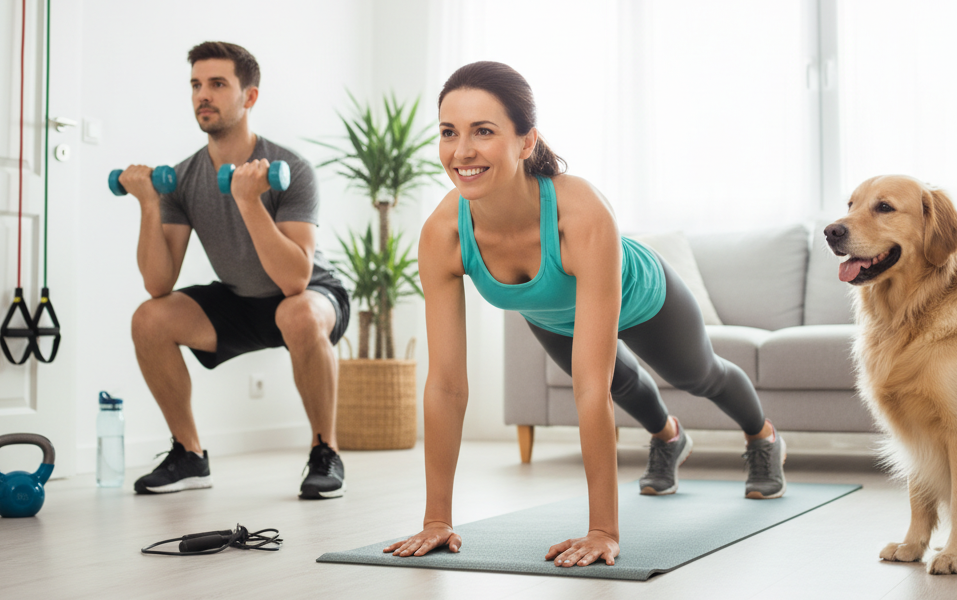
Learn simple home exercises to improve balance, stability, and fitness. Step-by-step routines, strength training tips, and recovery tools for all levels.
Struggling with wobbles and shakes when standing on one foot or stepping off the curb? You’re not alone. Many of us find that daily movement feels less confident without strong balance. The good news is you can build a stable foundation without fancy gym equipment. In this comprehensive guide, you’ll discover at-home moves, strength training tweaks, and recovery strategies to enhance coordination, prevent falls, and feel grounded in every bold step.
Why Improve Balance Matters for Your Fitness Journey
Balance isn’t just for yoga enthusiasts—it’s the backbone of every movement pattern. When your body maintains equilibrium, you can perform lifts, pedal your bike, and even walk up stairs safely. Improved stability reduces injury risk, boosts athletic performance, and strengthens your mind-body connection.
- Enhanced daily function: Easier to reach, bend, and twist.
- Fall prevention: Crucial as we age or increase activity levels.
- Better posture: Engaging core and leg muscles keeps you upright.
- Refined athletic skills: Quicker change of direction and more agility.
According to experts at Healthline, balance training should be a key component of any fitness plan, regardless of age or ability.
Home Workouts: Foundation for Stability
You don’t need a balance beam or bosu ball to start improving stability. Your living room floor and body weight offer plenty of stimulus. Below are beginner-friendly options you can do anywhere.
Core Activation Techniques
Stability begins at your center. By strengthening deep core muscles, you build a sturdy support system for limbs to pivot around. Practice these moves slowly and with control:
- Dead Bug: Lie supine, arms toward ceiling, knees bent. Lower opposite arm and leg while engaging your core. Repeat 10–12 reps each side.
- Plank with Shoulder Tap: In a high plank, tap opposite shoulder with hand, resisting hip rotation. Start with 8 taps per side, add reps as you improve.
- Bird-Dog: On all fours, extend right arm and left leg. Hold for two seconds, return, then switch. Perform 10 reps per side.
Maintain a neutral spine—avoid overarching or tucking your pelvis. Quality over quantity will help you feel balanced more quickly.
Leg Strength Drills at Home
Strong legs equal strong balance. Incorporate unilateral exercises to challenge each side of your body independently:
- Single-Leg Romanian Deadlift: Hinge at the hips standing tall, lifting one leg back as you lower your torso. Keep hips square. Perform 8–10 reps per side.
- Standing Knee Drive: Balance on one foot, bring opposite knee toward chest. Pause, then lower. Aim for 12 reps each leg.
- Heel-to-Toe Walk: Take ten slow steps placing heel to toe. Engage glutes to control the movement.
For an extra challenge, hold light dumbbells or water bottles. This small load forces the stabilizer muscles to kick in even more.
Incorporating Strength Training into Balance Routines
Strength training and stability go hand in hand. By boosting overall muscle strength, especially in the lower body and core, your joints stay protected when shifts in posture occur. Time your resistance sessions around your balance work for optimal neuromuscular adaptation.
Bicep Workouts for Upper Body Stability
While the biceps’ primary role is elbow flexion, a strong upper body can stabilize the center of mass during unsteady tasks. Switching between standing rows and curls on one leg adds a balance component to traditional upper-body moves:
- One-Legged Bicep Curl: Stand on your left leg, slight bend in the knee. Curl a dumbbell or similar object with your right arm. Complete 10 reps, then switch.
- Standing Hammer Curl with Twist: Rotate your torso slightly toward the working arm as you curl to activate obliques and spinal stabilizers.
These small variations teach your body to resist tipping when subjected to uneven forces.
Chest Exercises That Build a Solid Foundation
Strong chest and shoulder muscles contribute to a balanced upper body. Try these movements with a stability twist:
- Push-Ups with Alternating Leg Lift: Perform a push-up; at the top, lift one leg behind you for two seconds. Alternate sides across 8–10 total reps.
- Single-Arm Chest Press (Floor): Lying on your back, press a single dumbbell overhead while keeping your hips level. Do 8–12 reps per arm.
According to ACE Fitness, integrating unilateral resistance work accelerates neuromuscular coordination, which is the key to improved balance.
Progressive Overload: Growing Stronger and More Steady
If you repeat the same moves with identical weight forever, your progress will plateau. Progressive overload means slowly increasing demand on your muscles and stability systems, ensuring continuous adaptation.
Monitoring Your Progress
Keep track of:
- Number of reps/sets
- Duration of holds (for planks, single-leg stands)
- Range of motion improvements
- Level of wobble or assistance needed
Logging this data in a journal or a fitness app helps you know when it’s time to make a move more challenging.
Adjusting Difficulty Safely
Consider these methods to nudge your workouts forward:
- Add Resistance: Light dumbbells, resistance bands, or household items like filled water jugs.
- Decrease Base of Support: Move from double-leg stance to single-leg or narrow-stance positions.
- Increase Unstable Surfaces: Soft cushions, folded towels, or balance pads.
- Extend Hold Times: Lengthening pauses at the top of single-leg or single-arm moves.
Remember to progress gradually—overzealous leaps can lead to strain. Check with reputable sources like the Mayo Clinic for general safety guidelines.
Gym Workouts: Improve Balance with Equipment
A gym setting offers tools to fine-tune balance training. When you combine cable machines, stability balls, and free weights, you can replicate everyday instability in a controlled way.
Leg Day Routine Focused on Stability
Leg day isn’t only about squatting heavy; it’s an ideal time to incorporate unilateral and proprioceptive drills.
- Bosu Ball Squats: Stand on a BOSU dome and squat to parallel. Perform 3 sets of 8–10 reps.
- Cable Single-Leg Press: Attach ankle strap, press backward against cable resistance. 12 reps per side.
- Smith Machine Split Squats: Place back foot elevated, lower into a split squat. Focus on keeping hips level.
These exercises demand that your body make constant minor adjustments, enhancing stability in dynamic scenarios.
Recovery Tools to Support Your Gains
Balance work and strength training create microtears in muscles. Proper recovery tools ensure you bounce back stronger:
- Foam Rolling: Spend 1–2 minutes on calves, quads, and IT bands to release tightness affecting posture.
- Stretch Bands: Gentle ankle and hip stretches help maintain joint mobility.
- Massage Balls: Target small stabilizer muscles around ankles and shoulders.
By promoting myofascial release, you maintain tissue health, which indirectly supports better balance. Learn more strategies at the NCBI repository of recovery research.
Nutrition and Recovery for Muscle Growth and Improve Balance
Your body relies on nutrients and rest to rebuild the muscle fibers challenged during stability and strength work. Without adequate fuel, even the best-designed routines will stall.
- Protein Timing: Distribute 20–30g of protein across meals to optimize muscle repair.
- Hydration: Dehydration impairs coordination. Aim for half your body weight in ounces of water daily.
- Sleep Quality: Growth hormone surges during deep sleep, assisting tissue regeneration.
Tap into these in-depth calculators to dial in your nutrition:
Check also: “Recovery Time Calculator”
Check also: “Pushup-Pullup-Squat Fitness Test”
Putting It All Together: A 4-Week Improve Balance Plan
Here’s a sample phased approach to boost your equilibrium over a month:
- Week 1 – Foundations: Focus on core activation and basic single-leg stands. 15–20 minutes, 3 days per week.
- Week 2 – Resistance Integration: Add light dumbbells to core and leg drills. Include unilateral upper-body moves. 4 sessions.
- Week 3 – Dynamic Stability: Introduce unstable surfaces (cushions, folded towels) and multi-planar movements like lateral lunges on one leg. 4–5 workouts.
- Week 4 – Progressive Overload: Increase weight or time under tension. Combine balance and strength in supersets, for instance, single-leg press into Bosu squat. 5 sessions.
At the end of each week, record your reps, hold times, and wobble level. This practice will highlight improvements and areas to refine.
Common Mistakes and How to Avoid Them
Even motivated individuals can trip up when tackling balance training. Watch for these pitfalls:
- Rushing Progressions: Jumping to unstable platforms too soon can lead to injury.
- Poor Alignment: Slouched posture or locked knees diminishes core engagement.
- Neglecting Recovery: Overworking the same stabilizers may cause tendon irritation.
- Inconsistent Practice: Skipping sessions disrupts neuromuscular adaptation.
Staying mindful of these factors keeps your journey on track and your results sustainable.
Conclusion
Improve balance process at home requires consistent effort, clear progression plans, and well-rounded strength training. By weaving in core activations, unilateral drills, and mindful recovery, you’ll stand taller, move smoother, and feel more confident on any surface. Remember to track progress, adjust load carefully, and fuel your body with proper nutrition to support lasting gains. Start small, stay committed, and watch your stability transform week by week.