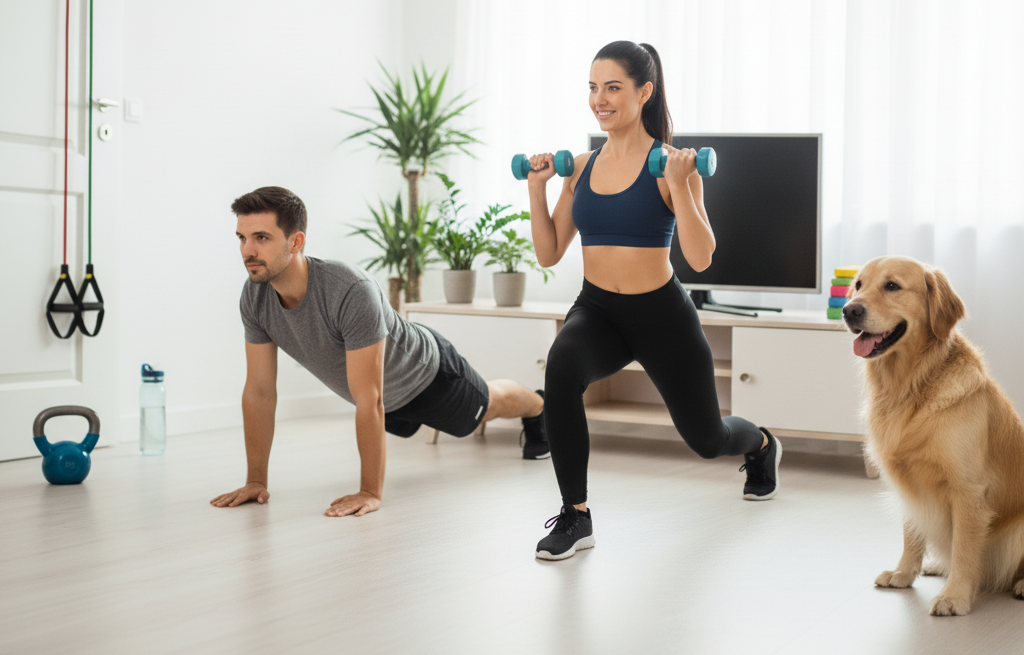
Learn practical steps to build a lasting home workout habit with strength exercises, progressive overload, recovery tools, and muscle growth strategies.
Ever promised yourself you’d stick to a workout routine at home, only to lose steam after a week? You’re not alone. Juggling work, family, and personal commitments makes consistency tough. But imagine having a simple, flexible fitness habit you look forward to—no gym commute required. In this guide, you’ll find friendly, coach-style tips on strength training, progressive overload, recovery tools, and nutrition hacks. Let’s turn your living room into a launchpad for lasting fitness.
Why Home Workouts Matter
Home workouts offer unmatched convenience and affordability. No pricey memberships or crowded locker rooms. You select the time, space, and pace that fit your life. Research from Healthline highlights that building consistent habits hinges on simplicity. A minimalist routine can be your ticket to regular movement.
You’ll also gain confidence adapting exercises to your skill level. Start small, then scale up as you feel stronger. Your home environment becomes a judgment-free zone to refine form, embrace variety, and enjoy real progress.
Getting Started with Strength Training at Home
Essential Equipment
You don’t need a full gym to get in shape. Here’s a starter list:
- Adjustable dumbbells or resistance bands
- Pull-up bar (doorway style or freestanding)
- Yoga mat or carpeted space
- Sturdy chair or bench
Scouring second-hand shops or online marketplaces can yield bargains. Even a single set of dumbbells and a resistance band unlock dozens of movements.
Basic Strength Training Fundamentals
Strength training builds muscle, boosts bone density, and revs up metabolism. Focus on compound moves that engage multiple muscle groups:
- Squats or chair squats
- Push-ups (standard or incline)
- Rows with bands or dumbbells
- Plank holds for core stability
Mastering proper form ensures safety and effectiveness. Keep your spine neutral, hinge at the hips, and brace your core. As you get comfortable, you’ll naturally layer in more challenges.
Progressive Overload for Home Workouts
Progressive overload—gradually increasing stress on muscles—is a cornerstone of muscle growth. You can achieve it in several ways at home:
- Increase weight: Add plates, choose heavier dumbbells, or tighten bands.
- Boost reps: Once 12–15 reps feel easy, bump up the count.
- Adjust tempo: Slow down your eccentric (lowering) phase for more tension.
- Reduce rest: Shortening breaks activates endurance adaptations.
Tracking small improvements week by week builds momentum. A simple notebook or app log can show you just how far you’ve come.
Top Bicep Workouts at Home
Well-developed biceps aren’t just aesthetic—they add strength for pulling and lifting tasks. Try these at home:
- Resistance Band Curl: Stand on the band, curl handles up, squeeze at the top.
- Dumbbell Hammer Curl: Palms facing each other, lift weights in a controlled arc.
- Isometric Hold: Curl halfway and hold for 10–15 seconds, then finish the rep.
- Negative-Only Curl: Use a weight heavier than usual, focus on the slow descent.
Perform 3 sets of 8–12 reps, resting 45–60 seconds. Aim to slightly challenge yourself each session to reinforce progressive overload.
Effective Chest Exercises Without Equipment
You don’t need a bench press to build a strong chest. These bodyweight moves deliver big results:
- Push-Ups: Modify with knees down or hands elevated on a chair.
- Wide Push-Ups: Hands set wider than shoulder-width for outer pec emphasis.
- Diamond Push-Ups: Hands close together under your sternum to target inner chest and triceps.
- Chest Dips on Chairs: Use two sturdy chairs or one bench for dips.
Vary hand placement and elevation to stimulate the muscle from different angles. Aim for 3–4 sets of 8–15 reps, adjusting difficulty as you improve.
Designing a Leg Day Routine
Your lower body houses the largest muscles in your body, so leg day yields massive calorie burn and hormonal response. A sample home leg routine might look like this:
- Bodyweight Squats – 3 sets of 15 reps
- Reverse Lunges – 3 sets of 12 reps per leg
- Glute Bridges – 3 sets of 15 reps
- Step-Ups on Chair – 3 sets of 10 reps per leg
- Calf Raises – 4 sets of 20 reps
Adjust intensity by holding dumbbells or wearing a backpack filled with books. Finish with a wall sit hold for added burn. Consistency here fuels lasting strength gains.
Recovery Tools and Techniques
Effective recovery speeds muscle repair and prevents burnout. Include:
- Foam rolling or massage ball work
- Gentle stretching or yoga poses
- Active rest days: light walks or cycling
- Quality sleep and hydration
Want to estimate how long to rest between workouts? Use our Recovery Time Estimator to tailor rest days based on intensity.
Check also: “Recovery Time Estimator”
Gym Workouts vs. Home Workouts
Comparing home to gym workouts reveals unique perks:
- Home: Zero commute, flexible schedule, privacy.
- Gym: Wider equipment variety, group classes, social motivation.
According to Verywell Fit, mixing both can break plateaus and keep you engaged. If you have occasional gym access, use machines for isolation work, then return home for compound movements.
Progressive Strength Training Programs
A structured plan prevents aimless workouts. Follow a simple weekly split:
- Day 1: Upper Body Push (chest, shoulders, triceps)
- Day 2: Lower Body (quads, hamstrings, glutes)
- Day 3: Rest or active recovery
- Day 4: Upper Body Pull (back, biceps)
- Day 5: Full Body or weaker muscle focus
- Days 6–7: Rest or light activity
Rotate exercises every 4–6 weeks. Swap push-ups for dumbbell presses, lunges for Bulgarian split squats. This variation prevents boredom and overuse injuries.
Nutrition for Muscle Growth and Recovery
Working out consistently is only half the battle. Proper fueling accelerates recovery and muscle gains. Aim for a moderate calorie surplus if building muscle, or maintenance calories if focusing on toning.
Plug your goals into our Calorie & Macro Calculator to find daily needs.
Check also: “Calorie & Macro Calculator”
Protein is critical. Shoot for at least 0.7–1 gram per pound of bodyweight. Track intake easily with the Protein Intake Calculator.
Check also: “Protein Intake Calculator”
Balance carbs for energy and healthy fats for hormone function. Hydration and micronutrients from vegetables and fruits support performance. For deeper dives into balanced nutrition, see guidelines from the Mayo Clinic.
Tracking Progress: Logging and Tech Tools
Monitoring your workouts cements accountability. Here’s how to keep tabs:
- Use a simple notebook or fitness app to log sets, reps, and weights.
- Record body measurements or photos monthly.
- Measure heart rate zones with our Heart Rate Zone Calculator.
- Estimate VO2 max with our VO2 Max Estimator for cardio progress.
Check also: “Heart Rate Zone Calculator”
Seeing numbers change motivates you to push harder. Celebrate small wins—extra reps or a faster mile—and they’ll stack into long-term commitment.
Common Mistakes to Avoid
Even well-meaning beginners stumble on these roadblocks:
- Skipping warm-ups: Dynamic stretches prime muscles and joints.
- Poor form: Always prioritize control over ego lifting.
- Neglecting rest days: Muscles grow during recovery, not during sets.
- Unrealistic plans: Overloading schedules leads to burnout or injury.
- Ignoring nutrition: Inadequate calories or protein stalls progress.
By anticipating pitfalls, you stay on track and enjoy safer, more effective workouts.
Staying Motivated Long-Term
Consistency is built on small daily wins. Here are proven strategies:
- Set specific, achievable goals: “Three 30-minute sessions per week” beats “get fit.”
- Schedule workouts like appointments in your calendar.
- Create accountability: Workout with a friend or share progress online.
- Mix in variety: Swap push-ups for hand-release or diamond variations.
- Reward milestones: A new band, playlist update, or healthy treat.
By designing your environment—packing gear in sight, limiting distractions—you reduce excuses. Over time, the habit becomes automatic.
Conclusion
Building a home workout habit is about simplicity, consistency, and gradual progress. Start with basic strength moves, layer in progressive overload, and support recovery with smart tools. Track your nutrition and celebrate small wins. With these strategies, you’ll transform your space into a sustainable fitness zone. Lace up, show up, and watch your habits—and confidence—grow!