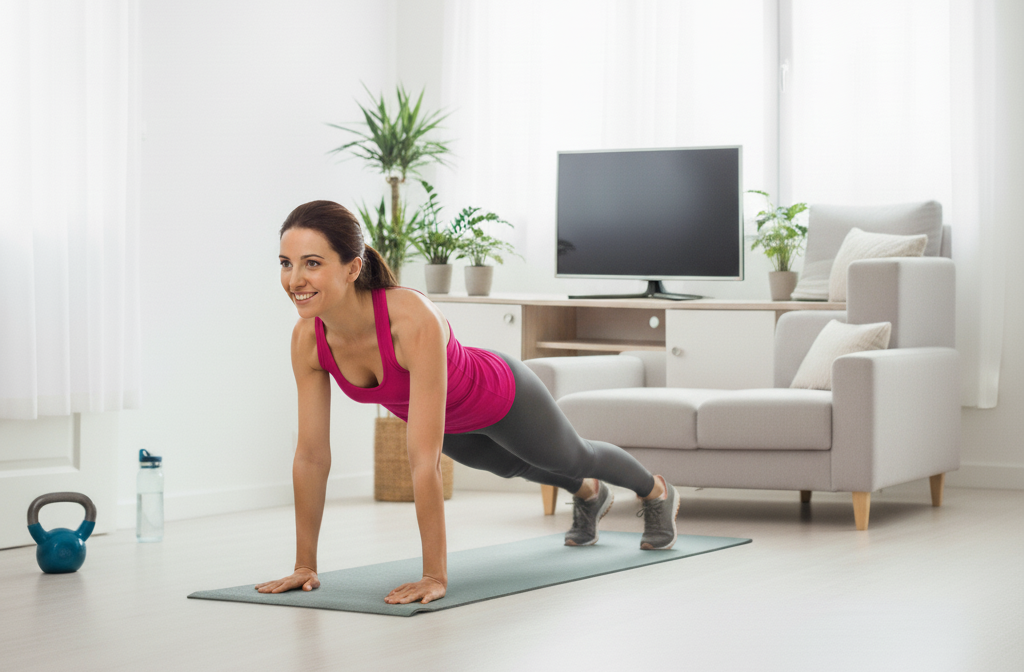
Transform your fitness with a daily 20-minute home workout plan for strength training, muscle growth, and sustainable habits—all without stepping into a gym.
Finding time for fitness can feel impossible when juggling work, family, and social life. Yet carving out just 20 minutes each day for a focused home workout can spark real change. In this guide, you’ll discover practical, expert-backed workouts for biceps, chest, legs, and full-body strength training. You’ll learn proper form cues, progressive overload strategies, and recovery tools that fit your busy schedule. By the end, you’ll have a clear, motivating routine to boost performance and build sustainable habits from your living room.
Why 20 Minutes Matter: Crushing Your Home Workouts
Quality beats quantity when it comes to exercise, especially at home. A focused 20-minute session can burn calories, build muscle, and sharpen your endurance. Short workouts also reduce decision fatigue—no more debating gym visits or lengthy training splits.
High-intensity circuits, supersets, and strategic rest breaks keep your heart rate up and muscles challenged. Even if you’re tight on time, consistency with brief, intense workouts triggers the adaptive response you need for strength gains and fat loss. Ready to maximize every minute? Let’s break it down.
Home Workouts vs Gym Workouts: Adapting to Your Environment
You don’t need fancy machines to get stronger. Home workouts offer flexibility and privacy, while gym workouts provide equipment variety and social motivation. The key is tailoring exercises to your space and available tools.
- Space and Equipment: At home, use dumbbells, resistance bands, or bodyweight. Most gyms offer racks, cables, and plates.
- Consistency: A home setting removes travel barriers. Aim for daily 20-minute slots instead of waiting on gym crowd.
- Motivation: Gym-goers often thrive on community. Use online classes or a workout buddy to stay accountable at home.
To compare how many calories you burn in home circuits versus treadmill or weight machines, try the Workout Calories Comparison tool. And for hydration tips, check out the Water Intake Calculator.
External guidance from ACE Fitness and Healthline confirms that strategic home workouts deliver measurable results with proper planning.
Strength Training Fundamentals for Home Fitness
Strength training is the backbone of any 20-minute routine. Focus on multi-joint movements to maximize muscle recruitment and time efficiency. Commit to proper form, controlled tempo, and full range of motion.
- Ground your feet for stability.
- Engage your core on every lift.
- Control the eccentric (lowering) phase.
- Breathe deliberately—exhale on exertion.
Mastering Proper Form
Even light weights can stress joints if form is off. Before adding load, practice bodyweight reps in front of a mirror or record yourself. Small tweaks—like pushing knees out on squats or keeping elbows tucked during push-ups—prevent injury and improve muscle activation.
Quick Bicep Workouts to Build Arm Strength
Strong biceps not only look great but also support pulling movements and daily tasks. Here’s a fast 20-minute arm blast you can do with dumbbells or resistance bands.
- Banded Hammer Curls – 3 sets x 12 reps
- Alternating Dumbbell Curls – 3 sets x 10 reps each arm
- Isometric Hold Curls – 2 sets x 30-second holds
- Reverse Grip Curls – 2 sets x 12 reps
Form Cues for Bicep Curls
- Keep elbows pinned to your sides.
- Avoid swinging—use a slow 2-second lift and a 3-second lower.
- Pause briefly at the top for full contraction.
By pairing these exercises with supersets (e.g., hammer curls immediately followed by reverse curls), you’ll maintain a high heart rate and amplify muscle growth in less time.
Effective Chest Exercises You Can Do at Home
Your chest muscles drive pushing strength and posture. Here’s a compact chest-focused circuit:
- Standard Push-Ups – 3 sets x 15 reps
- Decline Push-Ups – 3 sets x 10 reps (feet elevated)
- Resistance Band Chest Flyes – 3 sets x 12 reps
- Plyo Push-Ups – 2 sets x 8 reps (for explosive power)
Perform each move back-to-back with 30–45 seconds rest between supersets. To progress, increase reps, slow the tempo, or add a weighted vest over time.
Implementing Progressive Overload in a 20-Minute Routine
Without increasing demands, your muscles plateau. Progressive overload means gradually raising the bar—more reps, extra weight, shorter rest, or added sets.
Why Progressive Overload Works
- Muscle fibers adapt to external stress.
- Small, consistent increments prevent burnout.
- Tracking workouts highlights your improvements.
- Record weight and reps for each exercise.
- Aim to increase one variable weekly (e.g., +1 rep or +2.5 lbs).
- Adjust rest intervals—shaving off 5–10 seconds ups intensity.
- Cycle deload weeks every 4–6 weeks to recover and prepare.
For precise recovery tracking, explore the Recovery Time Estimator. Pair overload with proper rest to avoid overtraining.
Intense Leg Day Routine in 20 Minutes
Leg workouts challenge your largest muscle groups, spiking metabolism and supporting total-body strength. Try this quick but brutal sequence:
- Goblet Squats – 3 sets x 12 reps
- Reverse Lunges – 3 sets x 10 reps each leg
- Single-Leg Romanian Deadlifts – 3 sets x 8 reps each leg
- Calf Raises – 3 sets x 20 reps
Rest 30 seconds between sets and perform exercises in a circuit to keep your heart rate elevated. If you lack dumbbells, use household items or resistance bands to maintain tension.
Recovery Tools and Techniques for Consistent Gains
Recovery is as important as the workout itself. It’s during rest that muscles repair and grow stronger. Incorporate these essentials:
- Active Recovery: Light walking or yoga on rest days helps blood flow.
- Foam Rolling: Ease tight spots with self-myofascial release.
- Sleep: Aim for 7–9 hours. Reference Mayo Clinic for sleep hygiene tips.
- Hydration: Water flushes out metabolic waste. Track with our Water Intake Calculator.
Additionally, consider stretching major muscle groups post-session to preserve flexibility and reduce soreness.
Building Muscle Growth with Short, Intense Sessions
Even 20-minute routines can deliver muscle growth if you target volume and tension effectively. Here’s how to optimize results:
- Time Under Tension: Slow down each rep to increase muscle fiber engagement.
- Nutrition: Fuel workouts with balanced macros. Use the Protein Intake Calculator to hit your daily targets.
- Consistency: Daily stimulus, whether strength or mobility, signals your body to adapt.
- Variation: Swap exercises every 4–6 weeks to challenge muscles in new ways.
Nutrition for Muscle Growth
Lean protein, healthy fats, and complex carbs support recovery and hypertrophy. Spread protein intake evenly across meals and snacks. For personalized macro planning, check out our Macros Split Planner.
Conclusion
Twenty focused minutes each day can reshape your fitness trajectory. By blending strength training, progressive overload, and recovery tools, you’ll build muscle, torch calories, and feel energized—no gym required. Commit to consistency, track your progress, and celebrate every win. Your best self is just one short workout away.