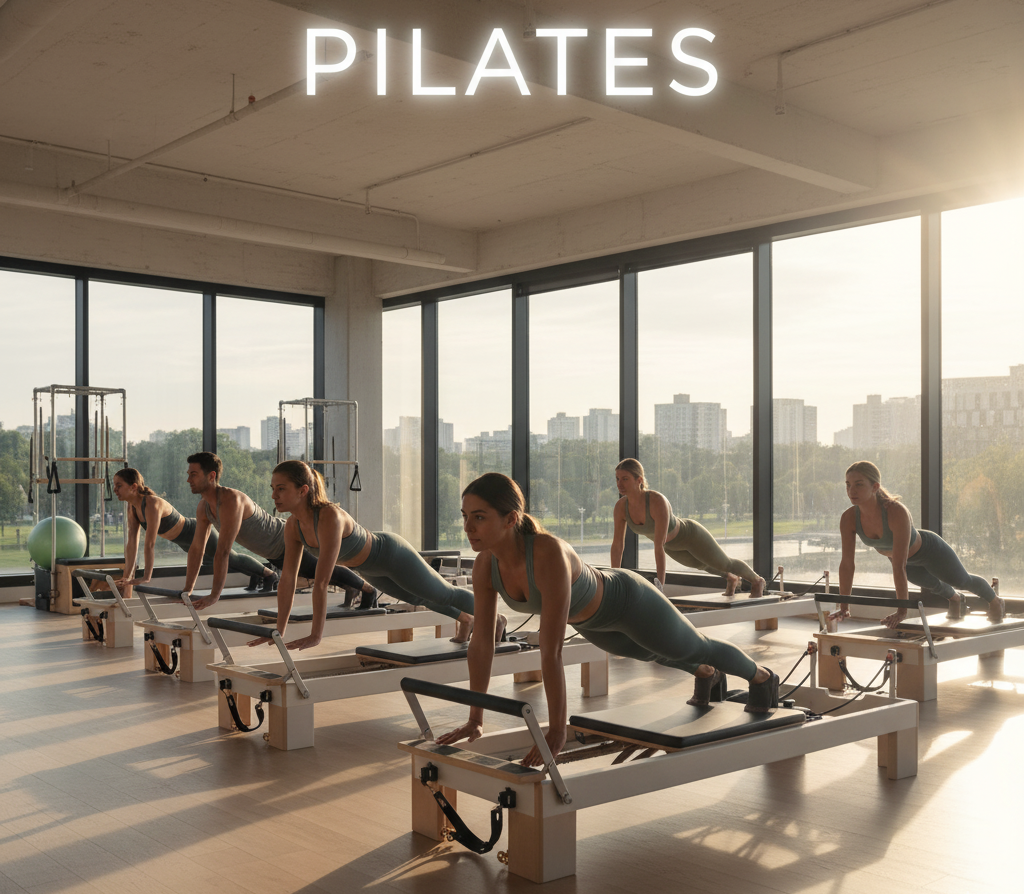
Enhance your flexibility and strength with this guided home Pilates routine—no equipment needed, ideal for all levels seeking lean muscle and core stability.
Struggling to find a home-based workout that balances flexibility and strength? You’re not alone. Many fitness enthusiasts crave routines that tone muscles without bulky weights or crowded gym floors. Enter Pilates: a versatile method that builds core stability, muscle strength, and mobility—all from the comfort of your living room. In this guide, you’ll discover a progressive home Pilates routine that addresses bicep workouts, chest exercises, leg day essentials, and recovery tools. Get ready to level up your strength training, boost muscle growth, and embrace sustainable, injury-free fitness habits.
Why Pilates Works for Strength Training and Flexibility
Pilates isn’t just “floor stretching.” Originating from Joseph Pilates’ holistic approach, this discipline focuses on controlled movements, breath, and alignment. It targets muscle imbalances, enhances posture, and improves joint mobility. When combined with strength training principles—like progressive overload—Pilates can deliver lean muscle gains without heavy gym workouts. Plus, it’s adaptable for all levels: beginner, intermediate, and advanced.
Core Benefits of Pilates
- Full-body muscle engagement with emphasis on deep stabilizer muscles
- Improved flexibility and joint range of motion
- Low-impact design reduces injury risk
- Accessible home workouts requiring minimal equipment
- Enhanced mind-body connection and posture awareness
Ready to get started? Let’s jump into a structured routine that integrates specific muscle group focuses—like bicep workouts and chest exercises—while maintaining the essence of Pilates.
Home Workouts: Pilates Essentials Setup
Before diving into exercises, set up your home workout station:
- Non-slip yoga or Pilates mat
- Light resistance bands (optional for progression)
- Small Pilates ball or towel
- Water bottle and towel within reach
- Dedicated 10–15 feet of clear space
Creating a clutter-free environment not only boosts motivation but also prevents accidents. A mirror or camera helps with form checks, ensuring you reap full benefits and minimize injury.
Beginner-Friendly Home Pilates Warm-Up
Warming up primes muscles for a focused session. Spend 5–8 minutes on dynamic stretches and mobility drills:
- Cat-Cow Stretch – 10 reps
- Arm Circles – 10 forward, 10 backward
- Pelvic Tilts – 12 reps
- Leg Swings (front-to-back and side-to-side) – 10 each leg
- Shoulder Rolls – 10 reps each direction
These moves awaken your spine, hips, and shoulders—setting the stage for smooth, aligned Pilates exercises. Need a more detailed warm-up? Check reliable sources like Verywell Fit for joint mobility tips.
Core Pilates Sequence for Flexibility & Strength
Focus your routine on stability and control. Perform each exercise for 12–15 reps, or 30–45 seconds, with minimal rest. Repeat the circuit 2–3 times based on your fitness level.
1. The Hundred
- Lie on your back, legs in tabletop position or extended for more challenge
- Lift head and shoulders, engaging your core
- Pump arms up and down, inhaling for 5 counts, exhaling for 5 counts (total 100 pumps)
2. Roll-Up
- Start lying flat, arms extended overhead
- Exhale, peel your spine off the mat, reaching for your toes
- Inhale at the top, exhale rolling back down with control
3. Leg Circles
- Lie on back, one leg extended toward the ceiling, the other bent or on the ground
- Circle your raised leg clockwise, then counterclockwise
- Keep hips stable, core engaged
4. Single-Leg Stretch
- Lie on your back, head lifted, shoulders off mat
- Alternate pulling one knee toward the chest while extending the other leg
- Perform slowly, emphasizing the core squeeze
5. Swan Dive
- Lie on your stomach, hands under shoulders
- Inhale to lift chest off mat, exhale to lower
- Focus on opening the chest and lengthening the spine
6. Swimming
- Remain on stomach, arms and legs lifted slightly
- Alternate lifting opposite arm and leg like a swimmer
- Maintain steady breathing and a long spine
Incorporating Bicep Workouts into Your Pilates Routine
While many Pilates moves engage arms, targeted bicep workouts can be layered with resistance bands. Add these at the end of your core circuit:
- Seated Band Bicep Curls – 3 sets of 12–15 reps
- Standing Single-Arm Curl (anchor band under foot) – 3 sets each arm
- Isometric Hold Curls – curl halfway and hold for 20–30 seconds
These variations respect Pilates’ emphasis on control but introduce enough resistance to stimulate muscle growth. Over time, increase band tension or reps to maintain progressive overload.
Chest Exercises with a Pilates Twist
Don’t skip upper body strength. Pilates-based chest exercises blend stability with muscle activation:
- Push-Up Prep on Mat – 3 sets of 8–12 reps
- Chest Expansion with Band – stand, hold band behind back, lift arms up and back
- Modified Plank to Triceps Dip – 3 sets of 8 reps
These moves improve posture by engaging the upper back and chest while maintaining that familiar Pilates flow. For proper push-up cues, explore form guides on Healthline.
Strength Training Progression & Progressive Overload
Strength gains require gradual increases in resistance or volume—this is the principle of progressive overload. Here’s how to apply it in a home Pilates setup:
- Increase Reps – add 2–5 reps per set every week
- Elevate Legs or Arms – challenge balance and load
- Use Heavier Bands – swap to medium or heavy resistance
- Reduce Rest Time – cut 10–15 seconds between sets
- Combine Moves – supersets or mini-circuits for intensity
Track your progress in a workout journal or use digital trackers. When you push just outside your comfort zone, muscles adapt and grow stronger, improving both strength training and flexibility.
Leg Day Routine with Pilates Foundations
Who says leg day needs a squat rack? Include these Pilates-inspired moves:
- Squat with Band at Thigh – 3 sets of 15 reps
- Lunge Clamshell – 3 sets of 12 reps each side
- Leg Press on Wall (Pilates ball or towel) – 3 sets of 15 reps
- Side Leg Lifts – 3 sets of 12 reps each leg
- Bridge with March – lift hips, alternate lifting heels off mat
These exercises emphasize glute, hamstring, and quad engagement while promoting hip mobility—a key component of a balanced leg day routine.
Integrating Gym Workouts and Home Pilates
If you have occasional access to a gym, combine heavier resistance training with your home Pilates sessions:
- Barbell or Dumbbell Deadlifts – 3 sets of 8–10 reps
- Bent-Over Rows – 3 sets of 8–12 reps
- Smith Machine Hip Thrusts – 3 sets of 10 reps
- Pilates Flow Cool-Down – 10 minutes of mat work post-lift
This hybrid approach maximizes muscle growth and strength while preserving the mobility and core benefits of Pilates. It also prevents plateaus by varying stimulus.
Recovery Tools and Sustainable Habits
Recovery underpins performance—don’t skip it. Use these tools:
- Foam Rolling – target quads, IT bands, thoracic spine
- Dynamic Stretch Bands – 5–10 minutes post-workout
- Contrast Showers – 30 seconds warm, 15 seconds cold, repeat
- Sleep & Nutrition Tracking – aim for 7–9 hours and balanced macros
Track your rest needs with the Recovery Time Estimator. Proper recovery stimulates muscle repair and flexible joints, reinforcing your strength training progress.
Nutrition Tips for Muscle Growth and Flexibility
Fueling your body is critical. Follow these guidelines:
- Protein Target – 0.7–1g per pound of body weight (use our Protein Intake Calculator)
- Complex Carbs – whole grains, fruits, and vegetables for sustained energy
- Healthy Fats – avocados, nuts, olive oil support joint health
- Hydration – aim for 0.5–1oz per pound of body weight (Water Intake Calculator)
- Anti-Inflammatory Foods – turmeric, berries, leafy greens
Balanced nutrition not only supports muscle growth but also aids tissue repair and flexibility.
Avoid Common Pilates Mistakes
Even experienced practitioners slip up. Watch for these pitfalls:
- Overarching the Lower Back – maintain a neutral spine
- Holding Breath – sync inhale/exhale with movement
- Rushing Reps – prioritize control over speed
- Skipping Warm-Up or Cool-Down – increases injury risk
- Ignoring Muscle Imbalances – address both sides equally
Correcting these errors ensures you harness Pilates safely and effectively.
Tracking Progress: Tools & Metrics
Monitoring results keeps motivation high. Consider these measurements:
- One-Rep Max Estimates – test on bodyweight moves or use One-Rep Max Calculator
- Flexibility Tests – sit-and-reach or shoulder mobility drills
- Weekly Workout Logs – track reps, sets, resistance levels
- Body Composition Metrics – tape measurements or bioelectrical scales
Regular check-ins highlight achievements and guide programming tweaks.
Home Pilates Routine: 4-Week Action Plan
- Week 1 – Establish baseline: master form on core circuit and warm-up
- Week 2 – Add resistance bands for bicep workouts and chest exercises
- Week 3 – Increase circuit rounds and reduce rest intervals
- Week 4 – Incorporate hybrid gym workouts or advanced Pilates variations
By the end of month one, you’ll notice improved posture, lean muscle tone, and greater flexibility. Then, repeat the cycle, steadily intensifying for ongoing gains.
Conclusion
Your path to flexibility and strength doesn’t require a fancy studio or heavy weights. With this home Pilates routine, you’ll engage every muscle group—biceps, chest, legs, and core—while building sustainable habits. Embrace progressive overload with simple tools, prioritize recovery, and track your progress. Before long, you’ll feel stronger, more flexible, and confident in your body’s capabilities.