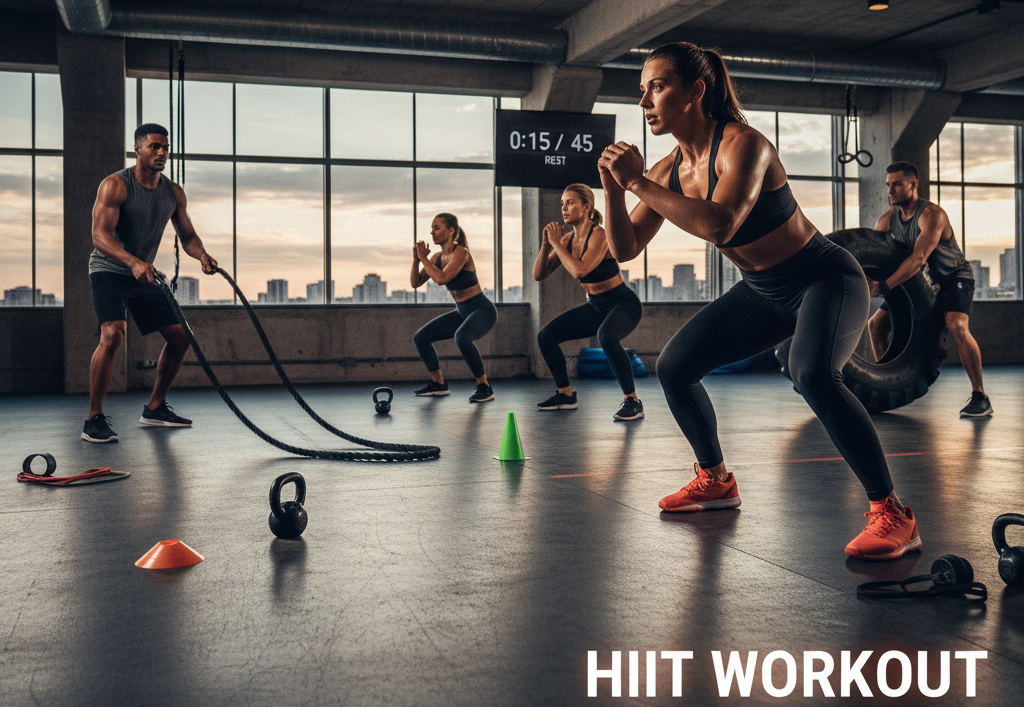
Burn fat fast with a 15-minute home HIIT workout. Get expert tips, proper form cues, and recovery tools for effective fat loss.
15-Minute Home HIIT Workout for Fat Loss
Ready to torch calories and boost your metabolism in just a quarter hour? A well-structured Home HIIT Workout combines bursts of high-intensity moves with short recovery periods—perfect for busy schedules. In this friendly guide, you’ll discover why HIIT is a game-changer, how to set up your workout space, proper form cues, progression strategies, and recovery tools to keep you on track. Let’s turn your living room into a fat-burning zone!
Benefits of 15-Minute Home HIIT Workouts
High-Intensity Interval Training (HIIT) packs heart-pumping cardio and strength training into a compact session. Here’s why it works:
- Maximized Fat Burning: Alternating intense work with rest spikes your heart rate and ramps up calorie burn long after you finish [afterburn effect].
- Time-Efficient: No commute, no equipment hassles—ideal if you only have 15 minutes between meetings or family duties.
- Muscle Engagement: Moves like squat jumps and push-up variations build lean muscle while torching fat.
- Adaptable & Scalable: Tailor intensity to your fitness level and gradually increase complexity for ongoing results.
Maximizing Fat Loss with Progressive Overload
To continue seeing improvements, challenge your muscles over time by increasing reps, shortening rest, or adding a plyometric twist. This principle of progressive overload helps you avoid plateaus and keeps your workouts fresh.
Time-Efficient Fitness Strategy
For those juggling work, family, and life’s demands, HIIT offers a research-backed solution. According to Verywell Fit, HIIT protocols can improve cardiovascular health and reduce body fat faster than steady-state cardio (source: Verywell Fit).
Understanding HIIT and Fat Burning
HIIT leverages short, all-out effort periods to deplete muscle glycogen and trigger growth hormone release, which aids in fat metabolism. Incorporating strength moves—like lunges or plank rows—further stimulates muscle-building pathways for a dual benefit of muscle growth and fat loss.
Healthline explains that HIIT increases your VO2 max, a measure of cardiovascular fitness, and can burn up to 30% more calories than other forms of exercise in the same time (Healthline).
Equipment & Space Setup at Home
Good news: you don’t need a lot of gear. A small cleared area, a yoga mat for joint comfort, and optional props—like resistance bands or dumbbells—are enough to boost your routine.
- Yoga or exercise mat for floor exercises
- Resistance bands for extra tension (optional)
- Light dumbbells (5–15 lbs) for added challenge
- A timer or interval app on your phone
Warm-Up and Mobility
Skipping a proper warm-up increases injury risk. Spend 5 minutes on dynamic moves to prime muscles and joints:
- Arm circles & shoulder rolls (30 seconds each)
- Leg swings front-to-back, side-to-side (30 seconds each leg)
- Bodyweight squats with focus on hip hinge (10 reps)
- World’s Greatest Stretch: lunge twist combo (5 reps per side)
This dynamic prep boosts blood flow, enhances flexibility, and sets you up for higher performance.
Your 15-Minute HIIT Workout Routine
Perform each exercise for 45 seconds, then rest for 15 seconds. Complete all eight moves in order, rest one minute, and repeat once. Total time: 15 minutes.
- Squat Jumps: Land softly, drive hips back, explode up, and lightly tap toes on the ground.
- Mountain Climbers: Keep hips low, alternate driving knees toward chest at a quick pace.
- Push-Up to Plank Jack: Do a standard push-up, then jump feet wide and back in plank position.
- Alternating Reverse Lunges: Step back knee toward floor, drive front heel into the ground for power.
- Burpee Broad Jump: Add a forward jump at the top of each burpee to engage glutes and quads.
- High Knees: Pump arms, lift knees above hip level, focus on quick turnover.
- Plank Shoulder Taps: Brace core, tap each shoulder without rocking hips side-to-side.
- Bicycle Crunches: Keep lower back on mat, rotate torso to bring elbow to opposite knee.
Modify any move by reducing range of motion or slowing down. If you’re just starting, try 30 seconds on and 30 seconds off, then build up.
Essential Form Cues for Safe Muscle Building
Proper technique prevents injury and maximizes muscle engagement. Here are quick form tips:
- Squat Jumps: Chest up, knees tracking over toes, core braced.
- Mountain Climbers: Maintain a straight line from head to heels, drive abs in.
- Push-Ups: Elbows at 45°, neck neutral, engage glutes to stabilize.
- Lunges: Front shin vertical, back knee soft, weight in front heel.
- Burpees: Land gently, roll through the ball of your foot, keep hips in line.
For more detailed testing, try our Pushup-Pullup-Squat Fitness Test to gauge your baseline strength.
Progressive Overload in Home Workouts
To continuously progress, tweak one variable at a time: increase duration, add resistance bands, or reduce rest. Track your efforts in a workout journal or app to stay accountable.
Examples of progression:
- Increase exercise interval from 45 to 50 seconds.
- Add light dumbbells to lunges or squat jumps.
- Shorten rest from 15 to 10 seconds.
Tracking progress not only fuels motivation but also ensures you’re consistently challenging your body for optimal gains.
Read also: “Test Your Strength with Our One-Rep Max Calculator”
Recovery Tools for Optimal Fat Loss
Recovery is as important as the workout itself. Incorporate these strategies to help muscles rebuild and prepare for your next session:
- Foam rolling major muscle groups (quads, hamstrings, back)
- Contrast showers: alternate warm and cool water to boost circulation
- Use a massage ball to release tight spots in calves and glutes
- Apply our Recovery Time Estimator to plan rest days effectively
Adequate rest and proper nutrition accelerate muscle repair, reduce soreness, and support stronger future workouts.
Nutrition Tips to Fuel Your HIIT Routine
You’ll need a balanced intake of protein, carbs, and healthy fats to power through high-intensity sessions:
- Pre-Workout Snack (30–60 minutes before): banana or whole-grain toast with nut butter
- Post-Workout Meal: lean protein (chicken, tofu), complex carbs (sweet potato, brown rice), and colorful veggies
- Stay Hydrated: sip water throughout the day and consider an electrolyte drink if you sweat heavily
- Track Macronutrients: use our Calorie & Macro Calculator to ensure you’re in a slight calorie deficit for fat loss
Balanced nutrition supports performance and helps preserve lean muscle during fat loss phases. Remember, extreme restriction can hamper recovery and lead to burnout.
Conclusion
In just 15 minutes a day, your Home HIIT Workout can deliver real fat-burning results, improved strength, and better cardiovascular fitness. Use proper form, apply progressive overload, fuel your body wisely, and embrace recovery tools to sustain progress. Stay consistent, track your workouts, and celebrate every small win. Your journey to a fitter, stronger you starts now—grab that timer and let’s crush it!