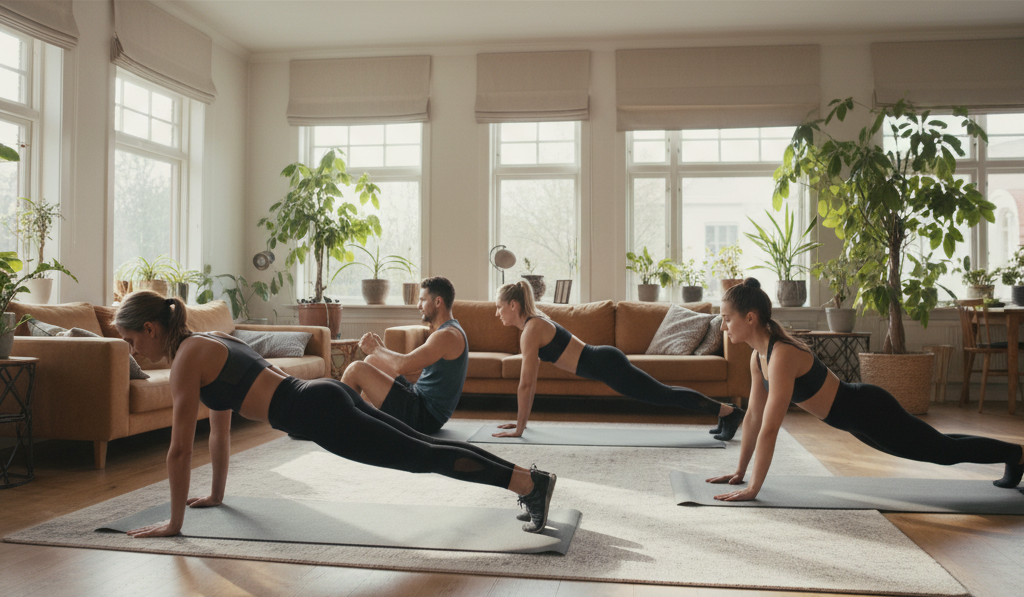
Achieve a rock-solid midsection at home with no equipment. Follow our motivational, expert-guided core workout routine for strength, form tips, and recovery advice.
Ready to level up your fitness game without gym tools or fancy machines? This motivational guide will walk you through an effective core workout routine you can do at home, no equipment needed. You’ll learn proper form, smart progression tips, and recovery strategies to build strength, improve posture, and feel confident every day.
Why Focus on Core Strength?
Your core is the foundation of nearly every movement, from picking up groceries to crushing a full-body strength training session. A strong midsection enhances balance, reduces back discomfort, and boosts athletic performance. Plus, a rock-solid core improves posture and supports muscle building across your entire frame.
Key Principles of a Home Workout Routine
To transform your abs and obliques, follow these guiding principles:
- Consistency: Aim for three to four sessions weekly to see real progress.
- Progressive Overload: Gradually increase reps, duration, or difficulty.
- Proper Form: Quality always trumps quantity—focus on alignment and control.
- Balanced Training: Incorporate warm-up, main work, and cool-down each session.
- Recovery: Prioritize rest, hydration, and nutrition for muscle building.
Essential Core Workout Exercises Without Equipment at home
Here are eight no-equipment moves to target every angle of your midsection. Perform each with control and aim for 2–4 sets based on your fitness level.
1. Basic Plank
- Start on forearms and toes, body in a straight line.
- Engage glutes and draw belly button toward spine.
- Hold for 20–60 seconds, rest 30 seconds between sets.
2. Side Plank
- Lie on one side, prop on forearm, legs stacked.
- Lift hips, forming a straight diagonal line.
- Hold 20–45 seconds each side for oblique focus.
3. Glute Bridge March
- Lie on back, knees bent, feet hip-width apart.
- Lift hips into a bridge, then raise one knee toward chest.
- Alternate legs, 10 marches per side for stability and core.
4. Dead Bug
- Lie on back, arms straight up, knees bent to 90°.
- Slowly lower opposite arm and leg without arching back.
- Return and switch sides, 8–12 reps each.
5. Reverse Crunch
- Lie on back, hands at sides or under glutes.
- Pull knees toward chest, lifting hips off the floor.
- Lower with control, 12–15 reps for lower abs.
6. Bicycle Crunch
- Lie on back, hands behind head, knees lifted.
- Bring right elbow to left knee, extend opposite leg.
- Alternate in a controlled “pedal” motion, 15 reps each.
7. Hollow Body Hold
- Lie face-up, arms overhead, legs straight.
- Lift shoulders and legs off floor, pressing lower back down.
- Hold 15–30 seconds, focusing on tension through the core.
8. Mountain Climbers
- Start in high plank, hands under shoulders.
- Drive one knee toward chest, switch quickly.
- Perform 20–30 seconds for dynamic core and cardio.
Structuring Your Core Workout Routine at home
Creating a balanced session maximizes muscle building and reduces injury risk. Follow this blueprint for each workout day:
- Warm-Up (5–7 minutes): Dynamic stretches, torso twists, hip circles.
- Main Circuit (20–25 minutes): Pick 4–6 exercises, perform 2–4 sets each.
- Rest Intervals: 30–60 seconds between sets for recovery.
- Cool-Down (5 minutes): Gentle yoga poses, deep breathing, hamstring stretch.
Proper Form and Technique Tips
Maintaining correct form ensures you target the right muscles and stay injury-free. Here are key cues for common moves:
- Planks: Keep neck neutral, avoid sagging hips—ACE Fitness shows detailed alignment tips.
- Crunches: Lift with abs, not neck. Place hands lightly behind ears.
- Leg Raises: Control descent. Don’t arch low back—pause at bottom if needed.
- Side Planks: Stack hips and shoulders. Avoid leaning forward or backward.
For more on plank variations and alignment, visit Verywell Fit.
Incorporating Progressive Overload
Even without weights, you can make each session more challenging:
- Increase hold times by 5–10 seconds per week.
- Add reps or slow down eccentric (lowering) phase.
- Try advanced variations (e.g., single-leg plank, weighted backpack).
- Shorten rest intervals to keep your heart rate up.
Learn more about progressive overload from the ACE Fitness experts.
Recovery and Rest for Muscle Building
Recovery is where you actually build strength. Incorporate these habits to recharge:
- Schedule rest days or active recovery (walking, yoga).
- Track sleep quality—use our Sleep Recovery Calculator to optimize rest.
- Hydrate throughout the day—our Water Intake Calculator helps set targets.
- Fuel your body with protein and balanced macros—see our Calorie & Macro Calculator.
Tracking Progress and Nutrition
Pairing your core sessions with smart nutrition keeps muscle building on track. Here’s how to monitor your intake:
- Record daily protein—use our Protein Intake Calculator.
- Check body composition changes, not just the scale.
- Adjust macros based on energy levels and workout intensity.
- Log completed workouts to celebrate milestones.
Advanced Core Workout Challenges
After mastering the basics, these moves will take your midsection strength even higher:
Hollow Rock
- Start in a hollow body hold.
- Gently rock back and forth, keeping tension.
- Perform 8–12 rocks for advanced stability work.
Plank to Push-Up
- Begin in forearm plank, then push up to high plank.
- Alternate leading arm, 8–10 reps each side.
- Builds core, shoulders, and chest strength.
Windshield Wipers
- Lie on back, arms outstretched for support.
- Lift legs to 90°, rotate hips side-to-side.
- Perform 10–15 taps each side for obliques.
Integrating Core Work into Full-Body Strength Training
For holistic fitness, weave core exercises into your broader strength training plan. Engaging abs during squats, lunges, and push-ups enhances stability and muscle building all around. Refer to the Mayo Clinic’s guide on safe exercise techniques to ensure you’re moving correctly.
Source: Mayo Clinic
Read also: “One-Rep Max Calculator”
Conclusion
Building a strong core at home without equipment is not only possible—it’s empowering. By following a consistent routine, focusing on form, and prioritizing recovery, you’ll see noticeable gains in strength, posture, and overall fitness. Lace up your sneakers, roll out your mat, and get ready to transform your midsection—one rep at a time!