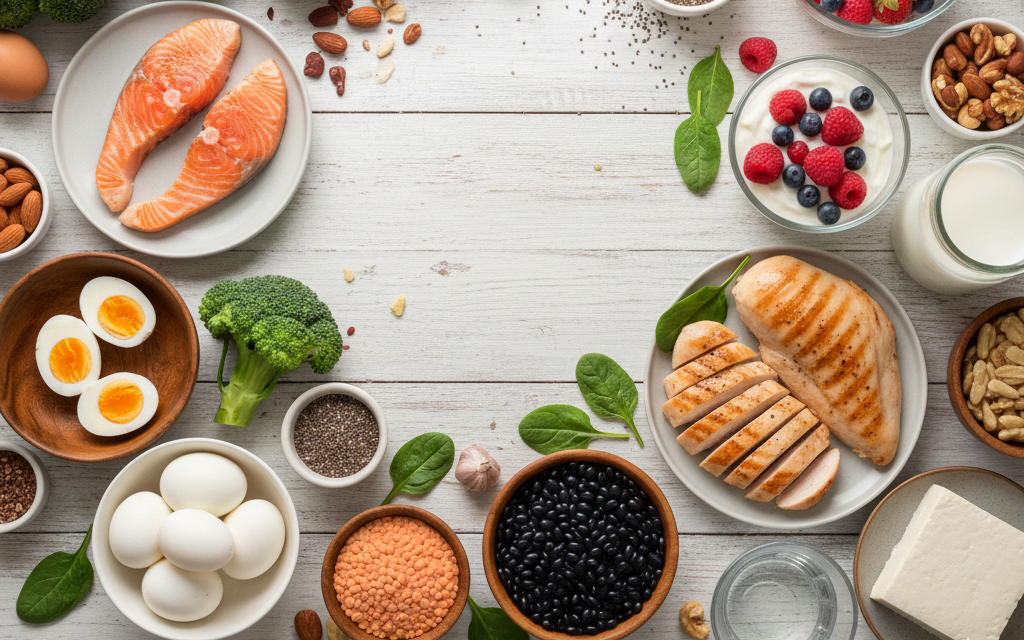
Discover strategies to meet your daily protein without supplements using smart meal plans, and recovery tactics. Boost muscle growth without powders.
Whether you’re just starting your fitness journey or you’re a seasoned gym-goer, hitting your daily protein targets can feel challenging—especially if you prefer natural foods over powders and pills. In this guide, we’ll cover practical, whole-food strategies to fuel muscle growth, support recovery, and enhance strength training. From smart meal planning to pairing nutrition with workouts like bicep exercises, leg day routines, and chest workouts, you’ll learn step-by-step how to boost your protein intake without supplements.
Why Prioritize Protein in Your Fitness Journey?
Protein is the building block of muscle tissue. Every time you push through a tough squat, bench press, or resistance-band curl, microscopic tears form in your muscle fibers. Adequate protein intake promotes repair, stimulates hypertrophy (muscle growth), and enhances recovery.
Research shows that balanced protein consumption spaced throughout the day may optimize muscle protein synthesis. A study in NCBI highlights the importance of distributing protein evenly across meals for maximal benefit. Prioritizing protein also helps with satiety, energy stability, and supporting a lean physique.
Top Protein-Rich Whole Foods to Include Daily
Loading up on high-quality, whole-food sources is the cornerstone of eating enough protein naturally. Here are some go-to picks to rotate into your meals:
- Eggs: A complete protein with all nine essential amino acids.
- Greek Yogurt: Creamy, tangy, and 15–20g of protein per serving.
- Chicken Breast: Lean, versatile, and about 25g of protein per 3 oz.
- Salmon & Tuna: Rich in protein and heart-healthy omega-3s.
- Lean Beef: Iron-rich and great for post-workout recovery.
- Lentils & Beans: Plant-based protein that pairs well with grains.
- Tofu & Tempeh: Soy-based complete proteins, perfect for vegans.
- Quinoa: A pseudo-grain with all essential amino acids.
- Cottage Cheese: Slow-digesting casein protein for nighttime recovery.
- Nuts & Seeds: Great for snacks; combine with other foods for a protein boost.
Crafting a Protein-Packed Meal Plan
Building a meal plan around protein doesn’t mean every dish needs to taste like plain chicken. The key is balancing lean proteins with complex carbs, healthy fats, and colorful veggies.
First, determine your daily requirements. Use our protein intake calculator to pinpoint your target based on your body weight and training level. Then, track overall energy with the calorie & macro calculator to ensure you hit carbs and fats, too.
Breakfast Strategies for Muscle Building
- Veggie omelet with 3 eggs, spinach, bell peppers, and a side of cottage cheese.
- Greek yogurt parfait with mixed berries, chia seeds, and a sprinkle of almonds.
- Protein-packed oatmeal: roll oats mixed with milk or fortified soy milk, topped with sliced banana and hemp seeds.
- Avocado toast on whole-grain bread with smoked salmon or turkey slices.
Lunch and Dinner Ideas
- Grilled chicken salad with quinoa, mixed greens, chickpeas, and a lemon-tahini dressing.
- Salmon bowl: roasted sweet potato, broccoli, edamame, and flaked salmon with teriyaki glaze.
- Beef and vegetable stir-fry over brown rice, flavored with ginger and garlic.
- Lentil bolognese over whole-wheat pasta, topped with parmesan.
Snacks to Boost Your Protein Throughout the Day
- Hard-boiled eggs or egg muffins.
- Cottage cheese with pineapple chunks.
- Greek yogurt mixed with peanut butter.
- Homemade trail mix: almonds, pumpkin seeds, and dried fruit.
- Whole-grain crackers with canned tuna or sardines.
Read also: “How to Split Your Meals for Optimal Energy”
Pairing Protein with Effective Workout Routines
Nutrition is only one side of the coin; action is the other. Blending a protein-rich diet with a targeted workout routine accelerates muscle gain and strength improvements.
Here are sample routines that align with your new meal plan:
Bicep Workouts with Bodyweight and Resistance Bands
- Chin-ups: 3 sets of 6–8 reps (use a band assist if needed).
- Resistance-band curls: 4 sets of 12–15 reps.
- Hammer curls (dumbbells or bands): 3 sets of 10–12 reps.
- Isometric hold at 90° elbow flexion: 3 × 30 seconds.
Leg Day Routine for Maximum Growth
- Barbell squats: 4 sets of 6–10 reps (prioritize form, depth, and progressive overload).
- Walking lunges: 3 sets of 12 reps per leg.
- Romanian deadlifts: 3 sets of 8–10 reps.
- Bulgarian split squats: 3 sets of 10–12 reps per leg.
Chest Exercises to Stimulate Growth
- Bench press (barbell or dumbbell): 4 sets of 6–8 reps.
- Push-ups (standard, decline, or weighted): 3 sets of 12–15 reps.
- Cable flyes or resistance-band flyes: 3 sets of 10–12 reps.
- Incline dumbbell press: 3 sets of 8–10 reps.
For more form cues and exercise demonstrations, check out ACE Fitness’s resources on proper lifting technique.
Recovery Tools and Smart Progression
Consistently increasing volume or weight without adequate recovery can stall progress and risk injury. Integrate rest days and track sleep quality to keep your body primed for the next workout.
- Use the sleep & recovery calculator to gauge nightly rest needs.
- Monitor soreness with the recovery time estimator to adjust your training frequency.
- Add mobility work and dynamic stretching on off-days for improved range of motion.
- Stay hydrated—use the water intake calculator to set daily goals.
Optimizing Absorption and Timing
Strategic timing can amplify protein’s effects. Eating 20–30g of protein within 30–60 minutes post-workout helps shuttle amino acids to muscles for repair. Combine fast-digesting sources (e.g., Greek yogurt) with slower-digesting options (e.g., cottage cheese) to sustain muscle protein synthesis.
Explore our protein timing & absorption tool to tailor intake windows around your workouts and sleep schedule.
Vegetarian and Vegan Considerations
Plant-based athletes can meet protein needs by combining complementary proteins (e.g., rice & beans) and focusing on higher-protein plant foods.
- Pair grains with legumes (quinoa & lentils, bulgur & chickpeas).
- Include soy products daily: tofu, tempeh, edamame.
- Use nutritional yeast (adds 8g protein per 2 tbsp) in sauces and dressings.
- Add spirulina powder to smoothies (7g protein per 2 tbsp).
For more vegan-friendly nutrition tips, check out this guide from Healthline.
Weekly Protein-Packed Meal Plan Template
Here’s a sample week to get you started. Feel free to swap proteins or veggies based on taste and availability.
- Monday: Breakfast egg scramble • Lunch turkey quinoa bowl • Dinner baked salmon & sweet potato.
- Tuesday: Greek yogurt & berries • Chickpea salad wrap • Beef stir-fry with broccoli.
- Wednesday: Protein oatmeal • Lentil soup & whole-grain toast • Grilled chicken & roasted veggies.
- Thursday: Tofu veggie scramble • Tuna salad casserole • Shrimp taco bowls.
- Friday: Cottage cheese pancakes • Turkey chili • Steak fajitas with peppers.
- Saturday: Smoothie bowl w/ peanut butter • Black bean burrito • Baked cod & quinoa.
- Sunday: Avocado toast & egg whites • Hummus & veggie platter • Roast pork tenderloin & green beans.
Tracking Your Progress and Adjusting
Use metrics beyond the scale: strength gains, workout consistency, energy levels, and body composition. Tools like the TDEE calculator and BMI calculator can help you fine-tune calories and macros over time.
Review your meal logs weekly and adjust portions, swap protein sources, or increase volume in your workouts with progressive overload to keep making gains.
Conclusion
Eating enough protein without supplements is entirely possible with a bit of planning, variety, and consistency. By leveraging whole foods, pairing nutrition with targeted workouts, and using recovery tools, you’ll build strength and muscle effectively. Keep tracking your intake, stay motivated, and watch your fitness goals become reality—no powder required!