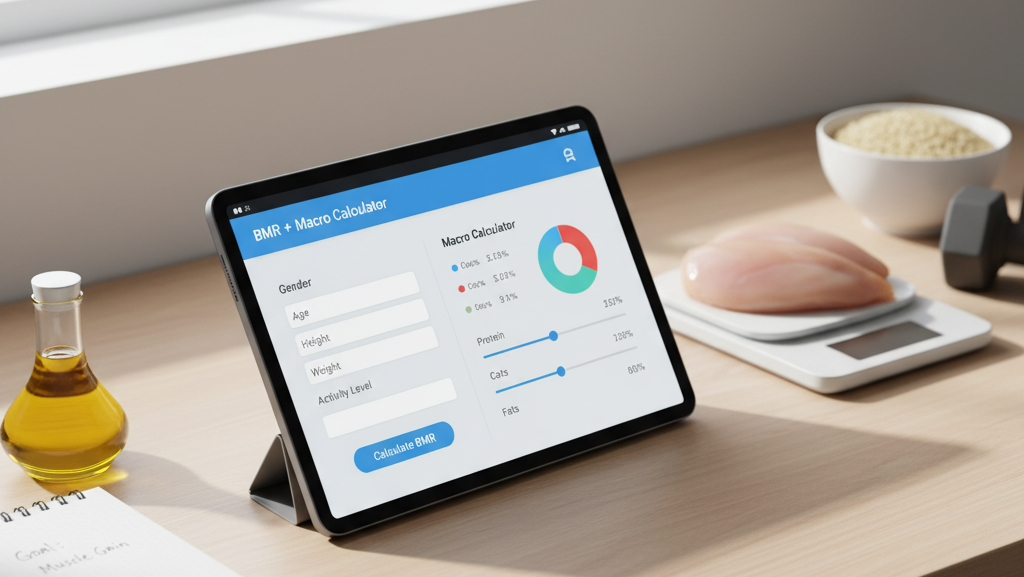
Use a BMR + macro calculator to design the right calorie and macro plan for muscle growth. Practical tips on workouts, form, progressive overload, and recovery.
Want to gain quality muscle without spinning your wheels in the gym? Start with numbers that actually match your body. Your Basal Metabolic Rate (BMR) and a smart macro plan act like a blueprint — they tell you how many calories to eat, how much protein to target, and when to tweak for progress. In this guide I’ll show you how to use a BMR + macro calculator, pair it with smart workouts, and optimize recovery so each meal and session moves you closer to stronger, leaner muscle.
Table of Contents
Why BMR Matters for Muscle Growth
BMR is the energy your body needs at rest. Knowing it gives you a baseline so you don’t under- or over-eat. When building muscle, you want to be in a slight calorie surplus so your body has the energy to repair and grow tissue without piling on excessive fat.
Start with your BMR, add activity to get your Total Daily Energy Expenditure (TDEE), then decide on a sensible surplus. Use the TotalHealthTools calculators to get accurate estimations for your starting point.
How to Set Macros for Muscle Gain
Macros — protein, carbs, fats — are the building blocks. A simple, coach-friendly approach:
- Protein: Prioritize protein for muscle repair and growth. Aim for a consistent intake across meals.
- Carbs: Fuel your workouts and recovery. Higher-intensity sessions need carbs to perform and recover well.
- Fats: Support hormones and general health; keep them moderate and consistent.
Need help turning calories into macros? Use a calorie and macro calculator to split totals based on your goals and activity level.
Read also: “Calorie & Macro Calculator”
Sample Macro Split for Muscle Growth
This is a starting point you can adjust after monitoring progress:
- Protein: 25–35% of calories (spread evenly)
- Carbs: 40–55% of calories (focus around workouts)
- Fats: 20–30% of calories (include healthy sources)
Designing Workout Routines That Match Your Macros
Your nutrition supports your training — your training tells you what to eat. Build a routine around progressive overload, compound lifts, and recovery. Here are practical templates for key muscle groups:
Leg Day Routine
- Squats — 4 sets of 6–8 reps (focus on depth and bracing)
- Romanian Deadlifts — 3 sets of 8–10 reps (hip hinge form)
- Leg Press or Lunges — 3 sets of 10–12 reps
- Calf Raises — 3 sets of 12–15 reps
Chest Exercises
- Bench Press — 4 sets of 6–8 reps (controlled descent)
- Incline Dumbbell Press — 3 sets of 8–10 reps
- Chest Flyes — 3 sets of 10–12 reps
- Push-ups — 3 sets to near-failure for conditioning
Bicep Workouts
- Barbell Curl — 3 sets of 8–10 reps (no swinging)
- Incline Dumbbell Curl — 3 sets of 10–12 reps
- Hammer Curls — 3 sets of 10–12 reps
Keep sessions focused: prioritize compound lifts early, then add accessory work. Track weight, reps, and how you feel. If strength and reps are steadily rising, your nutrition and training are aligned.
Progressive Overload & Tracking
Progressive overload is the simplest growth law: gradually increase stress to force adaptation. That can be more weight, more reps, better form, or shorter rest.
- Increase weight by small increments (2.5–5 lbs where possible).
- If you hit target reps for 2–3 workouts, add weight next session.
- Use a training log to track sets, reps, and RPE (rate of perceived exertion).
Adjust your calorie and macro targets every 4–6 weeks based on progress. If gains stall for several weeks, revisit your calculator and tweak intake or training intensity.
Recovery Tips That Maximize Muscle Growth
Muscle grows outside the gym. Recovery includes sleep, nutrition timing, and active restoration. Prioritize these habits:
- Sleep 7–9 hours nightly to support recovery and hormone balance.
- Distribute protein across meals to keep amino acids available for repair.
- Use light mobility work and foam rolling on off days to maintain movement quality.
- Plan deload weeks or lower volume weeks every 6–8 weeks to prevent burnout.
Hydration and micronutrients matter too — they aren’t flashy but they keep training consistent and recovery effective.
Read also: “Protein Intake Calculator”
Using a BMR + Macro Calculator the Smart Way
Tools simplify the math, but they work best when combined with consistent tracking. Here’s a quick workflow:
- Run your BMR and TDEE calculators to get baseline calories.
- Set a moderate surplus and convert calories into macros using a macro calculator.
- Track food and training for 2–4 weeks; log weight and strength.
- Tweak calories or macros if you’re gaining too fast, not gaining, or losing strength.
Remember: numbers guide decisions. Your body’s feedback — training performance, energy, and recovery — tells you whether to adjust.
Read also: “Calorie & Macro Calculator”
Common Pitfalls and Coach-Friendly Fixes
- Eating too much too fast: Aim for a modest surplus to minimize fat gain.
- Neglecting progressive overload: Without increasing stimulus, extra calories won’t build much new muscle.
- Switching plans too often: Give a plan 4–6 weeks before major changes.
- Poor form: Prioritize technique to lift heavier and stay injury-free.
Small, consistent improvements compound. Pair accurate calculators with a simple, progressive training plan and recovery routine, and you’ll be surprised how steady gains become.
Conclusion
Using a BMR + macro calculator is a powerful first step toward intentional muscle growth. Combine that data with progressive workouts, solid form, and smart recovery habits. Track consistently, adjust slowly, and keep your focus on sustainable progress. Now open a calculator, set realistic targets, and get after it — your stronger self is built one rep and one meal at a time.