Build balance and better posture with core stability workouts, practical tips, gym tools, and recovery strategies to support your fitness routine.
Strong core stability is the foundation of better posture and confident balance. Whether you train for strength, muscle growth, or daily function, targeted core work improves how you move, reduces fatigue, and complements your workout routines. This guide gives practical, coach-style workouts, form cues, and tool-based solutions you can use in the gym or at home — no complicated jargon, just simple, effective progressions.
Table of Contents
Why Core Stability Matters for Posture and Balance
Core stability isn’t just about visible abs — it’s about the deep muscles that control your spine, pelvis, and shoulder position. When these muscles work efficiently, your posture improves and balance tasks become easier.
Improved stability helps during strength training and everyday movement, from lifting weights to carrying groceries. Focusing on core stability supports safer progression in gym tools-based workouts like kettlebell swings, deadlifts, and TRX rows.
Key Core Muscles and Useful Gym Tools
Know the targets and the tools so you can train smarter.
- Primary muscles: transverse abdominis, multifidus, obliques, pelvic floor, and diaphragm.
- Supporting muscles: glutes, hip flexors, and lower back.
- Gym tools: stability ball, BOSU or balance board, resistance bands, kettlebells, dumbbells, and TRX straps.
Core Stability Workout Routine (Beginner to Advanced)
Beginner: Build the Foundation
- Dead Bug — 3 sets of 8–12 reps per side. Focus on a neutral spine and controlled breathing.
- Plank (knees if needed) — 3 sets of 20–40 seconds. Keep hips level, avoid sagging.
- Bird Dog — 3 sets of 8–10 reps per side. Reach long through fingers and toes.
Use a mat and start slow. These moves teach bracing and spinal control without heavy load.
Intermediate: Add Load and Instability
- Suitcase Carry (dumbbell or kettlebell) — 3 x 40–60 seconds per side. Walk tall and resist leaning.
- Stability Ball Rollout or TRX Fallout — 3 sets of 8–12 reps. Progress tempo for challenge.
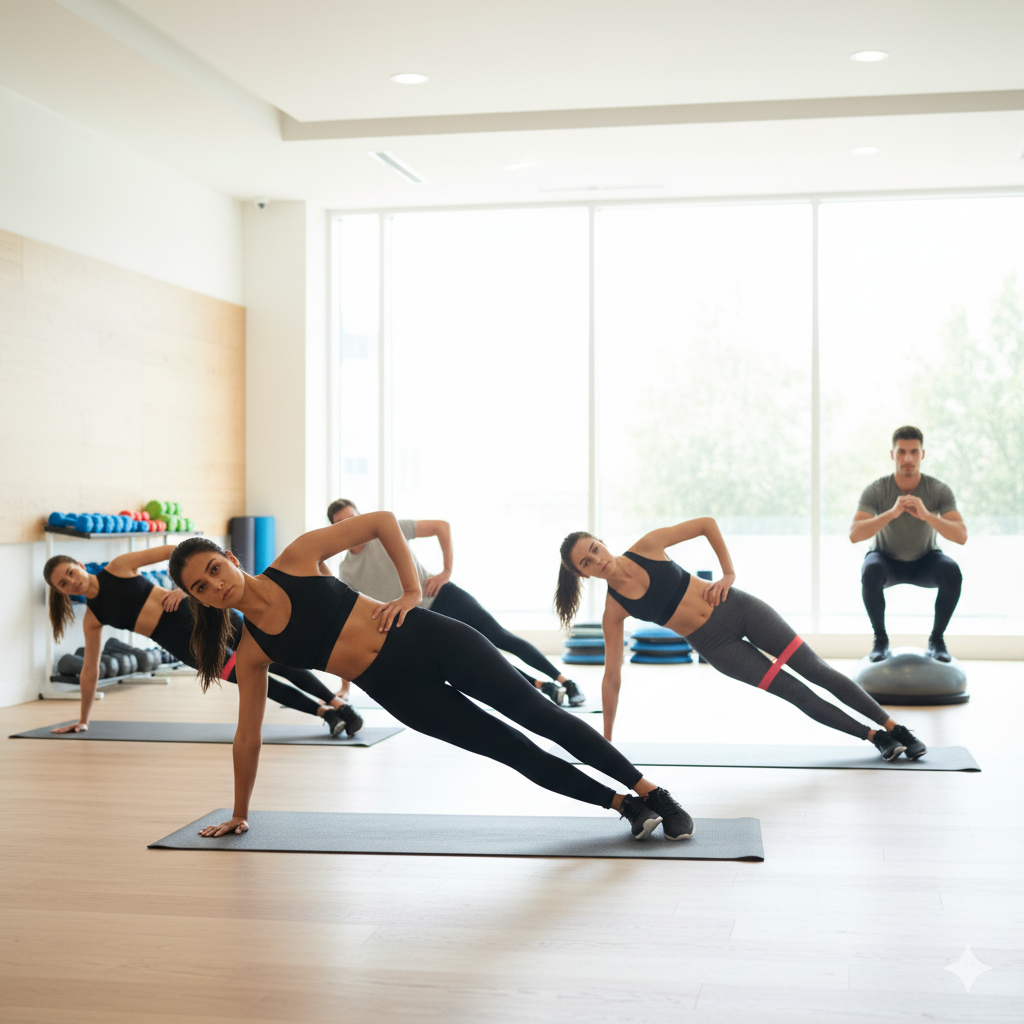
- Side Plank with Hip Dip — 3 sets of 10–15 reps per side to target obliques.
Introduce gym tools like a kettlebell or stability ball to increase demand on balance and core strength.
Advanced: Dynamic Stability and Power
- Kettlebell Swing — 4 sets of 10–15 reps. Focus on hip drive and a braced core throughout.
- Single-Leg Romanian Deadlift — 3–4 sets of 8–10 reps per leg to challenge unilateral stability.
- Standing Cable Anti-Rotation Press — 3 sets of 8–12 reps per side to build anti-rotational core strength.
Advanced work mixes load, single-leg balance, and rotational control — all essential for athletic performance and posture under stress.
Progressive Overload for Core Strength
Progression matters even for core work. You don’t need huge weights; small, consistent increases create real strength gains.
- Increase time under tension: slow down eccentric or hold longer holds (e.g., planks).
- Add small loads: hold a plate, kettlebell, or band to increase resistance on carries and anti-rotation moves.
- Introduce instability after mastering movement: move from floor planks to a stability ball or BOSU.
- Track reps, holds, and perceived difficulty in a training log to apply progressive overload to your core routine.
Proper Form and Common Mistakes
Quality over quantity keeps posture improvements reliable and reduces funky compensations.
- Neutral spine first: maintain a natural curve — don’t over-arch or flatten the lower back.
- Breathe and brace: inhale to fill the belly, brace like you expect a light punch to the stomach, and exhale on effort.
- Avoid holding your breath; tension without breathing increases fatigue and impairs balance.
- Don’t rush progressions: if you lose form, regress the exercise or reduce load.
Recovery Tips and Mobility
Recovery is part of strengthening posture. Mobility, sleep, and hydration help muscles perform and adapt.
- Daily mobility: 5–10 minutes of thoracic rotations, hip flexor stretches, and foam rolling improves movement patterns.
- Scheduled rest: include easy days after heavy strength sessions to let core and stabilizers recover.
- Hydration and protein: support muscle repair with consistent hydration and protein intake as part of your fitness plan.
- Sleep matters: aim for regular sleep to support recovery and muscle growth.
Read also: “Calorie & Macro Calculator”
Read also: “Fitness Tools & Gear”
Putting It Together: Weekly Sample Plan
Mix core stability into your week without overdoing it. Here’s a simple approach you can slot into your workout routines:
- Day 1: Strength training + 10 minutes of core stability work (planks, dead bugs).
- Day 3: Lower-body lift + 3 sets of suitcase carries and single-leg RDLs.
- Day 5: Upper-body day + anti-rotation presses and TRX rollouts.
- Daily: 5–10 minutes mobility and breathing practice to support posture.
Conclusion
Core stability workouts are practical, scalable, and highly transferable to better posture and balance. Use progressive overload, prioritize proper form, and leverage simple gym tools like kettlebells, stability balls, and resistance bands to accelerate progress. Start with the basic drills, track small wins, and build a routine that supports your strength training and daily life — your posture will thank you.