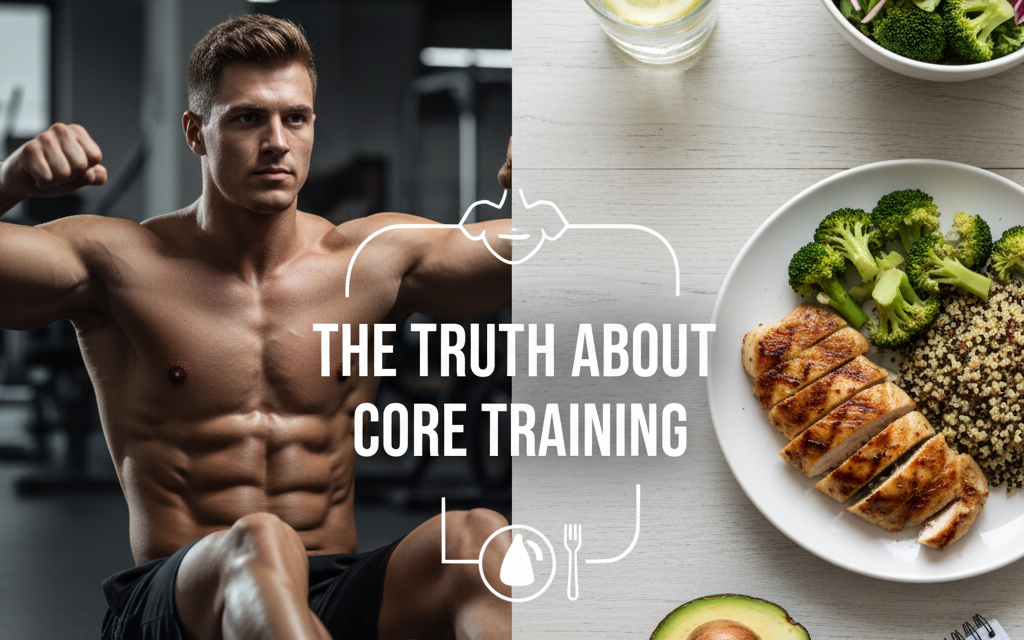
Learn the real path to visible abs with smart core training, proper form, progressive overload, recovery tips, and tool-based routines.
Table of Contents
Build Visible Abs: Real Core Training
Want abs that show up when you take your shirt off — but tired of endless crunches and quick-fix promises? Building visible abs is a blend of targeted core training, overall strength work, consistent nutrition, and smart recovery. This guide gives you coach-style, practical steps: effective exercises, proper form cues, progressive overload strategies, and gym tools that accelerate results. No hype — just straightforward, sustainable advice so you can train smarter and see progress over weeks, not months of wasted effort.
Why Abs Aren’t Just About Sit-Ups
Visible abs are the product of two things: developed core muscles and low enough body fat to reveal them. That means your training must include strength training for muscle growth across the whole body and a sensible approach to nutrition and recovery.
Core training improves posture, athletic performance, and functional strength — not just aesthetics. When you train the core with progressive overload and variety, the abs adapt and grow. Combine that with overall fat loss strategies and you’ll get the reveal you’re after.
Core Exercises for Strength and Definition
Effective core work targets the rectus abdominis, obliques, transverse abdominis, and the posterior chain. Rotate exercises to hit all planes and to avoid plateaus.
- Dead Bug — great for anti-extension and motor control.
- Hanging Knee Raises / Toes-to-Bar — intensive for the rectus abdominis and hip flexors.
- Plank Variations — front, side, and weighted planks for stability under load.
- Cable Woodchoppers — build rotational power and oblique strength.
- Ab Rollouts (wheel or barbell) — excellent for progressive overload of the anterior core.
- Farmer Carry — anti-lateral flexion and full-body tension practice.
Sample Core Workout (Perform 2–3x/week)
- Plank Hold — 3 sets of 45–90 seconds
- Hanging Knee Raises — 3 sets of 8–12 reps
- Cable Woodchopper — 3 sets of 10–12 reps per side
- Ab Rollouts — 3 sets of 6–10 reps
- Farmer Carry — 3 rounds, 30–60 seconds each
Keep rest 60–90 seconds between sets. Choose a rep range that challenges you while allowing perfect form.
Progressive Overload for Muscle Growth
Progressive overload isn’t just for chest or legs — it’s how abs grow too. Increase demands over time by adding weight, increasing reps, extending time under tension, or advancing the movement.
- Add a plate to weighted planks or use a weight belt for hanging leg raises.
- Increase range of motion with ab rollouts or perform single-leg farmer carries.
- Track sets, reps, and difficulty in a training log so your sessions are intentionally harder week to week.
Small, consistent increases lead to steady muscle growth and better definition.
Proper Form: Quality Over Quantity
Poor form wastes time and increases injury risk. For core work, prioritize control and breathing. Brace your midline like you’re about to take a light punch — that engages the transverse abdominis and protects the spine.
Common form cues:
- Exhale on each exertion (e.g., crunch, rollout, press).
- Avoid excessive lumbar extension during rollouts and leg raises.
- Keep shoulders pulled back during hanging movements to avoid shrugging.
Recovery Tips for Faster Results
Muscle grows outside the gym. Prioritize recovery so your core adapts and strengthens. Recovery practices also help sustain consistent training, which is the real key to visible abs.
- Sleep 7–9 hours nightly to support muscle repair and hormonal balance.
- Include mobility and foam rolling sessions 2–3 times per week to keep hips and thoracic spine mobile.
- Rotate heavy core sessions with lighter activation days to avoid overuse.
- Hydrate and support recovery with balanced protein and carbohydrate intake.
Tool-Based Solutions: Gym Tools That Help
Using the right gym tools makes progressive overload and variety easier. Here are favorites that provide measurable gains:
- Ab Wheel — scalable by distance and tempo.
- Cable Machine — perfect for controlled rotational work (woodchoppers).
- Weighted Vest or Belt — add resistance to planks and leg raises.
- Stability Ball — introduce instability for deeper core activation.
- Farmer Carry Handles — build anti-lateral strength and grip.
Combine tools with conventional strength training for best effects. Use them progressively and log load increases to track progress.
Nutrition & Tools: Track What Matters
Nutrition supports visible abs — not by quick fixes but consistent calorie control and sufficient protein to support muscle growth. Track key metrics with simple tools to stay on course.
Read also: “Calorie & Macro Calculator”
Read also: “Protein Intake Calculator”
Weekly Training Example: Combine Strength & Core
Here’s a compact weekly structure that balances big lifts and core work to maximize muscle growth and fat loss.
- Day 1 — Upper strength (bench, rows) + 2 core exercises
- Day 2 — Lower strength (squats, deadlifts) + carries
- Day 3 — Active recovery or mobility work
- Day 4 — Push/Pull hypertrophy + ab-focused circuit
- Day 5 — Full-body strength + heavy weighted plank
- Day 6 — Optional conditioning + light core activation
- Day 7 — Rest
This structure uses progressive overload across main lifts for systemic muscle growth, which helps reveal the abs when paired with smart nutrition.
Conclusion
Visible abs come from consistent core training, progressive overload, full-body strength work, proper form, and smart recovery — not endless crunches. Use the right gym tools, track progress with calculators and logs, and prioritize sleep and nutrition. Start with a realistic plan, stay consistent, and celebrate the small wins. Your best abs are built one smart workout at a time.