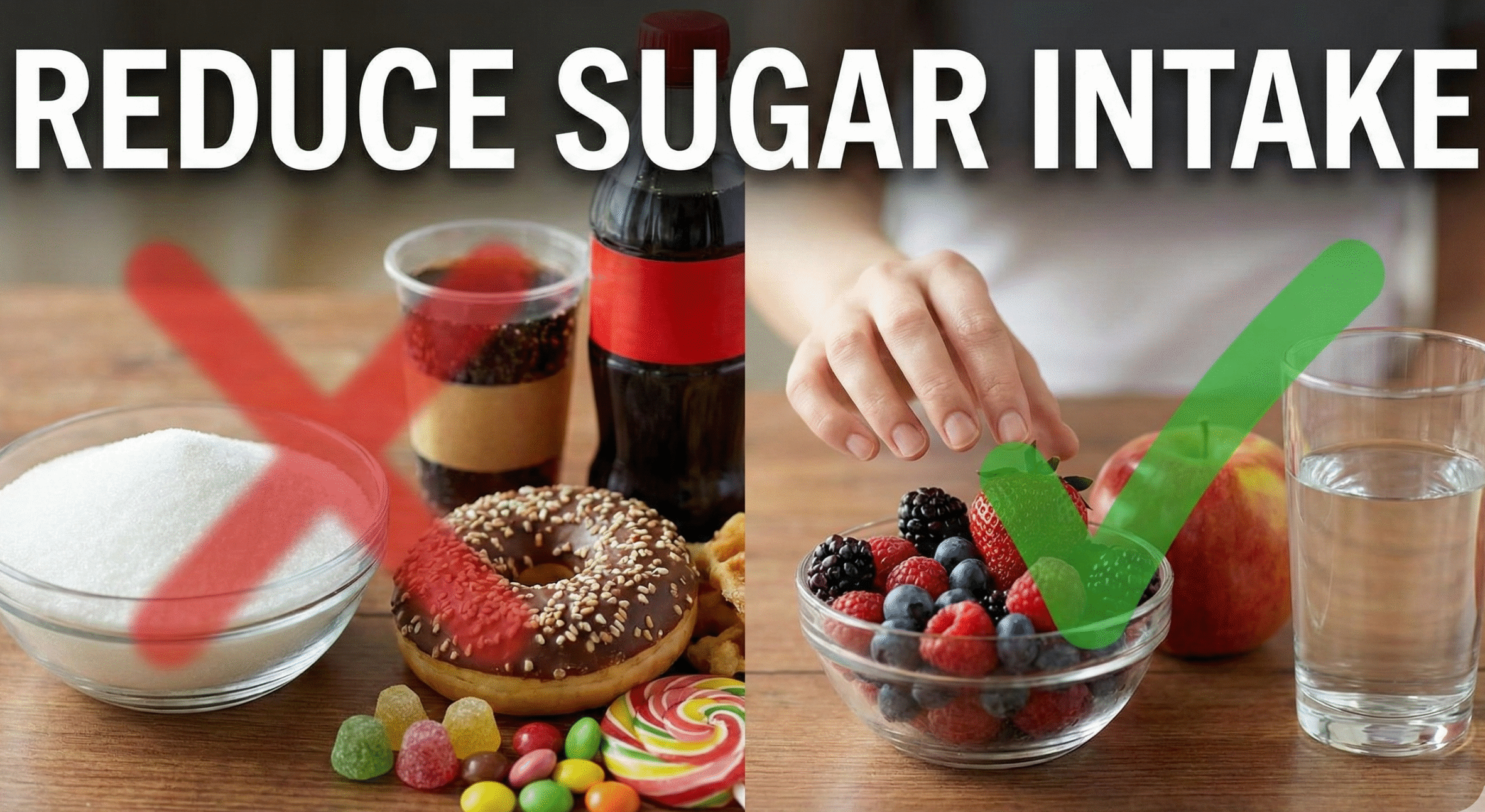
Practical, sustainable strategies to reduce sugar intake while boosting strength, workouts, recovery and muscle growth—no deprivation required.
Cutting sugar doesn’t have to mean bland meals or constant willpower battles. As a supportive coach, I’ll show you how small, smart changes can keep your workouts strong, your recovery fast, and your taste buds satisfied. This guide connects fuel and fitness — practical swaps, strength-training routines, recovery tools, and meal strategies designed to reduce sugar while improving performance and muscle growth.
Why Reducing Sugar Helps Strength Training and Muscle Growth
Too much added sugar can spike energy quickly and crash it just as fast, making a tough training session feel impossible. Reducing sugar stabilizes energy, improves recovery, helps control body composition, and supports better performance in both gym workouts and home workouts.
From a coaching perspective, lowering sugar intake often leads to clearer hunger signals and better nutrient choices. That supports progressive overload, consistent gym workouts, and smarter rest days — all essential for muscle growth.
For reliable background on sugar and health impacts, see resources from Healthline and practical guidance on limiting added sugars from the Mayo Clinic.
Practical Home Workouts & Gym Workouts That Reduce Sugar Cravings
When you train consistently and feel strong, sugar cravings often subside. Here are two short routines — one for home workouts and one for gym workouts — that boost energy, increase muscle demand, and help regulate appetite.
Home Workouts: Full-Body Strength (30–40 minutes)
- Warm-up: 5–7 minutes dynamic (arm circles, leg swings, hip hinges)
- 1. Goblet Squats — 3 sets of 8–12 reps. Cue: sit back, chest up, knees track toes.
- 2. Push-ups (or incline push-ups) — 3 sets of 8–15 reps. Cue: straight line from head to hips, squeeze shoulder blades before each rep.
- 3. Single-Leg Romanian Deadlift (bodyweight or light dumbbell) — 3 sets of 8–10 reps per leg. Cue: hinge at hips, maintain a soft knee, long spine.
- 4. Bent-Over Row (dumbbells or resistance band) — 3 sets of 8–12 reps. Cue: neutral neck, elbow close to body on the pull.
- 5. Plank Hold — 3 x 30–60 seconds. Cue: braced core, ribs down.
- Cool-down: 5 minutes mobility and breathing
Gym Workouts: Strength-Focused Split (45–60 minutes)
- Warm-up: 10 minutes light cardio + dynamic mobility
- Day A — Upper Strength: Bench press 4 × 5–6, Seated Row 3 × 8–10, Overhead Press 3 × 6–8, Bicep Workouts (barbell curl) 3 × 8–10.
- Day B — Lower Strength: Squat 4 × 5–6, Romanian Deadlift 3 × 6–8, Leg Press 3 × 8–10, Calf Raises 3 × 12–15.
- Day C — Full-Body Hypertrophy: Incline Dumbbell Press 3 × 10–12, Pull-ups or Lat Pulldown 3 × 8–10, Bulgarian Split Squat 3 × 10–12, Core circuit 3 rounds.
Consistent training like this stabilizes blood sugar and improves body composition, which reduces the physiological drivers of sugar cravings. For additional form cues and progression principles, check resources at ACE Fitness.
Reduce Sugar Intake: Bicep Workouts and Chest Exercises to Keep You Strong
Targeted work for biceps and chest not only sculpts muscle but improves functional strength and workout enjoyment. Feeling competent and seeing progress helps curb emotional eating and sweet snacking.
Effective Bicep Workouts (3 moves)
- Barbell or Dumbbell Curls — 3–4 sets of 6–12 reps. Focus: full range, avoid swinging, control the eccentric.
- Hammer Curls — 3 sets of 8–12 reps. Benefit: targets brachialis to add arm thickness and carryover to pulls.
- Incline Dumbbell Curls — 3 sets of 10–12 reps. Cue: let the arms extend behind slightly for a longer stretch and stronger contraction.
Proven Chest Exercises (4 moves)
- Barbell Bench Press — 4 × 5–8. Cue: tight scapular set, feet planted, drive through heels.
- Incline Dumbbell Press — 3 × 8–12. Cue: press diagonally, avoid flaring elbows too wide.
- Dips (assisted if needed) — 3 × 6–10. Cue: lean slightly forward to emphasize chest.
- Pec Deck or Cable Flyes — 3 × 10–15. Cue: slow eccentric, feel the stretch then squeeze.
Pairing strength sessions with smart nutrition (lower added sugar, adequate protein) makes recovery more effective and muscle growth more likely, which reduces temptation to reach for quick carbs.
Check also: “Protein Intake Calculator”
Reduce Sugar Intake: Progressive Overload and Strength Training Principles
Progressive overload is the engine of muscle growth. When you progressively increase load, volume, or intensity, you build muscle and burn energy more efficiently — making sugar feel less necessary and less appealing.
Use several methods to progress:
- Increase weight slowly (2–5% increments for most lifts)
- Add an extra set or 1–3 reps each week
- Improve technique and tempo (pause, slow eccentrics)
- Increase time under tension or reduce rest between sets
Progression Plan (12-week example)
- Weeks 1–4: Build base — moderate weights, focus on form, 3 sessions/week full-body or upper/lower split.
- Weeks 5–8: Increase intensity — add weight to main lifts, include 1 strength-focused day per muscle group.
- Weeks 9–12: Volume and specificity — more hypertrophy work, fine-tune weak points (biceps, chest), track lifts and aim for small weekly improvements.
Small consistent improvements make you feel competent and less likely to rely on sugar for confidence-boosting or energy. Track progress using objective metrics and adjust nutrition accordingly.
Leg Day Routine That Fights Sugar Slumps
Leg day is a powerful metabolic and hormonal stimulus — it helps regulate appetite and improves insulin sensitivity, which makes it easier to reduce added sugar.
Sample Leg Day (Strength + Hypertrophy)
- Warm-up: 5–10 min bike + mobility
- Back Squat — 4 × 5–6 (heavy)
- Romanian Deadlift — 3 × 6–8
- Walking Lunges — 3 × 10–12 per leg
- Leg Press — 3 × 10–12
- Hamstring Curl — 3 × 12–15
- Core finisher: Farmer carry or heavy suitcase carry — 3 rounds x 30–60 seconds
Key form cues: keep a neutral spine on all hinges, drive through midfoot on squats, ensure knees track toes on lunges. Training legs hard increases glycogen demand in large muscle groups which encourages smarter carbohydrate timing instead of constant sugary snacks.
Recovery Tools: Sleep, Hydration, and Mobility
Recovery is where gains happen. When you prioritize recovery tools you reduce stress-driven sugar cravings and support muscle growth. Recovery isn’t glamorous, but it wins championships.
Essential Recovery Tools
- Sleep: Aim for consistent 7–9 hours. Poor sleep increases cravings and impulsive eating.
- Hydration: Start each day with water and sip throughout training to reduce false hunger signals.
- Mobility & Soft Tissue: Short mobility flows post-workout reduce soreness and keep you consistent.
- Planned Rest Days: Include active recovery like walking, light cycling, or yoga to keep blood flow and mood elevated.
Use tools to quantify recovery and guide adjustments. For sleep and recovery metrics, consider tracking with a sleep and recovery calculator or a dedicated recovery tool.
Check also: “Sleep Recovery Calculator”
Simple Swaps & Meal Strategies to Reduce Sugar Without Feeling Deprived
Cutting sugar is easier when you replace rather than restrict. Swap for nutrient-dense foods that satisfy texture, sweetness, or convenience — and plan around workouts to feel energized.
Swap Ideas (Quick, Effective)
- Soda → Sparkling water with citrus and a sprig of mint
- Sweetened yogurt → Plain Greek yogurt with berries and a sprinkle of cinnamon
- Breakfast cereal → Oatmeal topped with nuts, banana, and cinnamon
- Candy bar → Dark chocolate (70%+) in controlled portions or a small date stuffed with almond butter
- Sweetened coffee drinks → Black coffee or coffee with milk and a dash of vanilla extract
Pre- and Post-Workout Fueling
Strategic carbs around training reduce the need for constant sugary snacks while supporting performance and recovery.
- Pre-workout (30–90 minutes): small, balanced snack — banana and peanut butter, or a small Greek yogurt with berries.
- Post-workout (within 60 minutes): prioritize protein + carbs — whey or plant protein shake with a banana, or grilled chicken with sweet potato.
Sufficient protein and some carbs help refill glycogen and support muscle protein synthesis. For exact protein needs tied to your training, use the internal tool below.
Check also: “Protein Intake Calculator”
Why Fiber, Protein, and Fats Matter More Than You Think
Foods rich in fiber, protein, and healthy fats slow digestion and keep blood sugar stable. That lowers the physiological drivers of cravings and makes it easier to say no to added sugars without feeling deprived.
- Fiber: legumes, whole grains, vegetables — fills you up and stabilizes glucose.
- Protein: keeps muscle building on track and reduces snacking. Aim for protein at each meal.
- Fats: avocados, nuts, olive oil — slow gastric emptying and create satisfaction.
Want to monitor your fiber or sugar trends? Try a tracking tool to see the patterns and make adjustments.
Check also: “Fiber Intake Calculator”
Check also: “Sugar Intake Tracker”
Common Mistakes When Cutting Sugar (And How to Fix Them)
Many people fail not because they lack willpower but because they use extremes or ignore structure. Here are common traps and simple fixes.
- Mistake: Going cold turkey with no plan. Fix: Start with swaps and reduce one sugary habit at a time.
- Mistake: Cutting carbs entirely. Fix: Time carbs around workouts to maintain performance and mood.
- Mistake: Replacing sugar with processed “diet” foods. Fix: Focus on whole foods, more protein and fiber.
- Mistake: Not tracking progress. Fix: Use a sugar intake tracker and training logs to spot patterns.
How Strength Training Helps Reduce Cravings (Science-Backed Tips)
Lifting weights improves insulin sensitivity and increases muscle mass, both of which help the body use glucose more efficiently. That means fewer blood sugar swings and fewer energy crashes that drive you to sugary snacks.
Practical tips:
- Prioritize compound lifts (squats, deadlifts, presses) to recruit large muscle groups and burn more glycogen.
- Use progressive overload — as muscles grow, basal metabolic rate and glucose clearance improve.
- Schedule workouts at consistent times to stabilize appetite and meal timing.
Research on exercise, insulin sensitivity, and appetite regulation is available through resources like the National Library of Medicine for deeper reading.
Sample 7-Day Action Plan to Reduce Sugar Without Sacrifice
This week-by-week starter plan blends nutrition, strength training, and recovery so sugar reduces naturally over time.
- Day 1 — Audit: Track everything you eat for one day, note added sugar sources. Use the sugar tracker link above.
- Day 2 — Swap: Replace one sugary drink or snack with a higher-protein or fiber-rich alternative.
- Day 3 — Strength: Do Home Workout routine (listed above). Pre-workout snack: banana + small scoop protein.
- Day 4 — Plan: Build a simple grocery list focused on whole foods, lean protein, vegetables, healthy fats.
- Day 5 — Training: Gym Workout (Upper Strength). Post-workout meal: protein + complex carb.
- Day 6 — Recovery: Active recovery, extra sleep focus, reduce screens 60 minutes before bed.
- Day 7 — Reflect: Review tracking, celebrate wins, set two small goals for next week (e.g., reduce soda by half; add two more servings of vegetables daily).
Repeat this cycle, gradually cutting more added sugar and increasing training quality through progressive overload.
Snack Ideas That Feel Indulgent but Keep Sugar Low
Satisfaction is about flavor, texture, and ritual — not just sugar. Try these options to get the rewarding experience without the crash.
- Cottage cheese or Greek yogurt with cinnamon and a few chopped nuts
- Apple slices with almond butter and flaky sea salt
- Roasted chickpeas with smoked paprika or cinnamon for a sweet version
- Dark chocolate square with a handful of roasted almonds
- Frozen grapes or berries for a chilled, sweet bite
Monitoring & Accountability: Tools That Keep You Honest
Use trackers and calculators to make decisions without emotion. Tracking sugar intake shows trends; measuring performance (rep counts, weights, recovery) provides feedback that rewards consistency.
Recommended internal tools:
- Sugar Intake Tracker — see what you consume and where to cut.
- Workout Calories Comparison — see energy expenditure for different routines.
- Protein Intake Calculator — ensure recovery fuels match training.
Check also: “Healthy Grocery List”
Mistakes to Avoid in the Gym While Reducing Sugar
Some people think less sugar means less energy, so they push training too hard or skip recovery. That backfires. Avoid these errors:
- Skipping pre-workout carbs for heavy sessions — instead, choose light, low-sugar carbs
- Overtraining while under-fueling — prioritize protein and planned carbs around intense lifting
- Neglecting mobility and sleep — these increase stress hormones that prompt sugar cravings
Balance intensity and recovery. If strength drops for more than a week, reassess nutrition and sleep before cutting more calories or sugar.
Long-Term Habits for Sustainable Sugar Reduction
Quick fixes rarely stick. Build repeatable habits that support fitness and make sugar less appealing:
- Routine meal prep: cook once, eat lean, keep snacks ready
- Consistent training schedule: same days/times each week
- Sleep routine: consistent bed/wake times
- Progress tracking: log workouts and food weekly
- Reward system: non-food rewards for milestones (new workout gear, a massage)
As habits strengthen, cravings become less powerful and more manageable. You’ll find energy is steadier, workouts are better, and muscle growth is more consistent.
When to Seek Extra Help
If sugar cravings feel uncontrollable or you suspect an underlying issue with mood, sleep, or hormonal health, seeking professional guidance from a registered dietitian or certified fitness professional can help. They’ll tailor strategies to your goals and training plan without resorting to extreme measures.
For trusted health information and when to talk to providers, refer to resources at the Mayo Clinic and research summaries on PubMed.
Conclusion
Reducing sugar doesn’t mean deprivation — it’s about smarter swaps, strategic fueling around workouts, and building strength training habits that stabilize appetite and improve performance. Use progressive overload, prioritize recovery tools, and rely on tracking to make slow, sustainable changes. Keep training, sleep well, and enjoy food that fuels your gains — not your cravings.