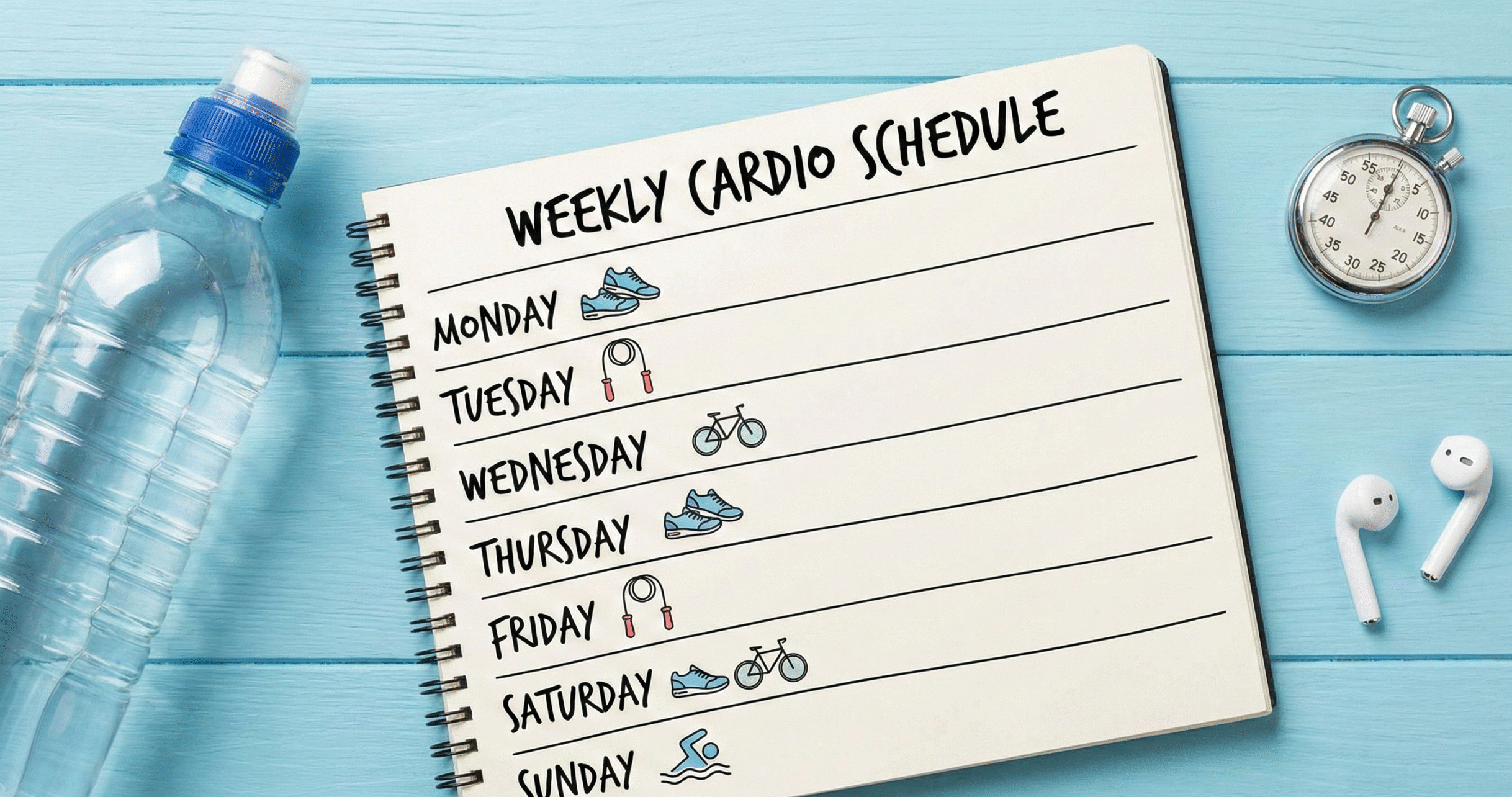
Build a balanced weekly cardio schedule with workouts, recovery, strength pairing, and progression tips for sustainable fitness and performance.
Stuck in the “run more” loop or unsure how to mix sprints, steady runs, and rest without burning out? You’re not alone. Building a weekly cardio schedule that improves fitness, supports muscle growth, and fits your life is easier than it seems. This guide walks you through practical choices, sample weekly plans, strength pairings, form cues, and recovery strategies so you can train smarter, not harder.
Why a Structured Weekly Cardio Schedule Matters
Random workouts can get results, but a plan gives you consistency, measurable progress, and fewer plateaus. A weekly schedule balances intensity, volume, and recovery so your aerobic capacity improves while preserving energy for strength work and life.
Think of it as crafting your training week like a coach: some days push the limits, other days rebuild. That rhythm is what creates long-term gains without injury.
Benefits of a balanced cardio plan
- Improves heart and lung efficiency
- Helps manage weight and body composition
- Enhances endurance for other sports or strength training
- Reduces injury risk by avoiding single-mode overuse
How to Set Weekly Goals and Priorities
Start by being clear about your main goal this month: endurance, fat loss, performance, or recovery. That drives how you structure intensity and frequency.
Ask yourself:
1) How many days per week can I realistically commit?
2) Do I want to prioritize running, cycling, or mixed cardio?
3) How will cardio interact with my strength training or leg day routine?
Sample weekly priorities
- Endurance focus: more steady-state sessions and one long session
- Performance/Speed: more interval/HIIT work and sprint drills
- Fat loss: mix moderate-intensity steady-state (MISS) with resistance training
Heart Rate Zones and How to Use Them
Training by heart rate zones ensures you’re hitting the right intensities. Use easy days to stay in low zones, and reserve high zones for structured intervals.
Check also: “Heart Rate Zone Calculator”
External resources like the Mayo Clinic outline safe exercise intensity choices and how to check exertion. For deeper how-to training by zones, ACE Fitness has excellent practical guides on using heart rate for targeted training.
Use this simple framework:
- Zone 1-2 (easy): conversation pace, recovery
- Zone 3 (moderate): tempo runs, steady cardio
- Zone 4-5 (hard): intervals, sprints, HIIT
Weekly Cardio Schedule Frameworks by Goal
Here are three reliable templates you can adapt to your schedule and equipment. Each plan assumes 3–6 training days and pairs well with strength training on alternate days.
Beginner (3 cardio sessions / week)
- Day 1 — LISS 30–40 min (fast walk, light jog, or easy cycling)
- Day 3 — Intervals: 6 x 1 minute hard, 2 minutes easy (20–30 min total)
- Day 5 — Moderate steady-state 30–45 min (Zone 3)
- Other days — light mobility, optional short walk
Intermediate (4–5 cardio sessions / week)
- Day 1 — Short HIIT (20–25 min incl. warm-up/cool-down)
- Day 2 — Light strength or active recovery
- Day 3 — Endurance ride/run 45–60 min (Zone 2–3)
- Day 5 — Tempo run or longer intervals
- Day 6 — Optional LISS or sport (swim, hike)
Advanced (5–6 sessions, sport-specific)
- Day 1 — VO2 max intervals or hill sprints
- Day 2 — Recovery spin or very light jog
- Day 3 — Threshold intervals or tempo
- Day 4 — Strength training emphasis (legs/power)
- Day 5 — Long aerobic session (75–120 min for cyclists/runners)
- Day 6 — Active recovery or technique work
Progressive Overload for Cardio
Progressive overload isn’t only for strength. Gradually increasing volume, intensity, or frequency drives aerobic and performance gains. The trick is small, structured changes to avoid injury and fatigue.
How to progress safely
- Increase one variable at a time: either minutes, intensity, or intervals.
- Follow a 10% rule for volume: add no more than ~10% weekly to total minutes.
- Periodize: 3 weeks build, 1 week easier for recovery.
- Track metrics: RPE, heart rate, perceived recovery.
Combining Cardio With Strength Training
Cardio and strength should complement, not compete. Plan your week so hard cardio and heavy strength sessions are separated by 24–48 hours when possible.
For strength training progression and muscle growth, prioritize compound lifts on dedicated days, then add cardio either later in the day (if you must) or on separate days.
How to sequence workouts
- Strength priority: Lift heavy, then do easy cardio later or on alternate days.
- Cardio priority (race prep): Do hard cardio first; keep strength shorter and focused on maintenance.
- Concurrent training: Use low-impact cardio (bike, swim) when doing heavy legs to reduce joint stress.
For tailored nutrition to support this work, use tools like a protein calculator to make sure recovery and muscle growth are supported.
Check also: “Protein Intake Calculator”
Home Workouts vs Gym Workouts for Cardio
You can get effective cardio at home with minimal equipment. Mixing modalities keeps training fresh and reduces injury risk from repetitive actions.
Home workouts (low-equipment)
- Bodyweight HIIT circuits: jumping jacks, burpees, high knees, mountain climbers
- Stair climbs or hill repeat simulations
- Jump rope intervals: 30–60 seconds on, 30–60 seconds off
- Low-impact options: rowing machine if available, air bike, brisk walking
Gym workouts
- Treadmill intervals or incline walks
- Spin classes or structured group rides
- Rowing or SkiErg sessions for full-body cardio
- Track sprints or treadmill tempo sessions
Tip: Alternate modalities to reduce repeated impact on the same joints. If you’re running a lot, throw in a cycling or rowing day once a week.
Leg Day Routine and Cardio Balance
Leg day can be intense. Placing heavy lifting and intense cardio on separate days prevents performance drop and reduces injury risk.
Sample split to protect leg performance
- Day A — Heavy leg strength (squats, deadlifts, lunges) + light upper-body accessory work
- Day B — Easy cardio or active recovery (20–40 minutes Zone 1–2)
- Day C — Moderate cardio or interval work if energy is available
When combining both on the same day:
- Do strength first if strength is the priority (maintain technique).
- Limit cardio after heavy legs to 20–30 minutes easy, or do low-impact work.
- If you must do both intense sessions same day, separate by several hours and refuel between sessions.
Bicep Workouts and Cardio: Complementary Pairing
Short arm-focused sessions can be added after light cardio without much interference. Small-muscle training like biceps or triceps recovers quickly and won’t hamper your aerobic sessions.
Quick bicep routine to pair with cardio
- 3 sets barbell curls — 6–10 reps
- 3 sets hammer curls — 8–12 reps
- 1–2 sets concentration curls — 10–12 reps
Keep form strict: elbows locked at sides, controlled eccentric lowering, no momentum. Finish with a brief cool-down or stretching to return to baseline before the rest of your day.
Chest Exercises That Don’t Kill Your Cardio
Chest workouts are typically upper-body heavy and don’t normally compromise cardio capacity if scheduled wisely. Use them on separate days from long runs or intense leg sessions.
Simple chest workout for cardio-focused weeks
- Bench press or push-ups: 3–4 sets of 6–10 reps
- Incline dumbbell press: 3 sets of 8–12 reps
- Chest flyes or cable crossovers: 2–3 sets of 10–15 reps
Prioritize compound lifts and maintain solid core/bracing to protect the spine. If chest session follows hard cardio, reduce volume to avoid excessive fatigue.
Practical Form Cues for Running, Cycling, and Rowing
Good form reduces inefficiency and injury risk. Keep these cues top-of-mind during every session, especially when tired.
- Running: relaxed shoulders, quick cadence (170–190 steps/min for many), slight forward lean from ankles, midfoot strike if comfortable.
- Cycling: neutral spine, relaxed grip, avoid locked knees in the top of the pedal stroke, steady breathing.
- Rowing: powerful leg drive, hinge at hips, then torso finish, arms last — reverse the order on recovery.
Recovery Tools to Keep You Consistent
Recovery is the secret sauce of sustainable progress. Tools and strategies that support rest matter as much as the workouts themselves.
- Active recovery: easy walks, mobility flows, light cycling
- Sleep: aim for consistent, quality sleep to benefit cardiovascular and muscular adaptations
- Nutrition: adequate protein and carbs to replenish glycogen and build/maintain muscle
- Soft tissue work: foam rolling or targeted massage for tight calves, quads, hip flexors
Check also: “Recovery Time Estimator”
For practical recovery guidelines, Healthline has great summaries on sleep, hydration, and active recovery strategies. The science behind recovery and exercise prescription is well-covered on PubMed for deeper reading.
Sample 7-Day Cardio + Strength Week (Balanced Approach)
Below is a balanced weekly plan that blends cardio, strength, and recovery. Adjust minutes and intensity to your level.
- Day 1 — Strength day (Upper body focus: chest & biceps) + 20 min easy bike
- Day 2 — Interval cardio: 8 x 2 min hard / 2 min easy (total 35–40 min incl. warm-up)
- Day 3 — Active recovery: mobility + 30 min walk or easy swim
- Day 4 — Leg day routine (heavy lifts) + short 10–15 min low-impact spin
- Day 5 — Tempo run or threshold ride 30–45 min
- Day 6 — Long LISS session: 60–90 min easy pace (hike, long bike, long run)
- Day 7 — Rest or light mobility; plan next week and reflect on progress
Common Mistakes When Building a Weekly Cardio Plan
Awareness prevents setbacks. Avoid these frequent errors to keep training consistent and enjoyable.
- Doing too much high-intensity work without sufficient recovery.
- Skipping warm-ups and cool-downs — these prevent injury and aid recovery.
- Neglecting strength training, which supports longevity and performance.
- Failing to progressively overload — staying in the same comfort zone stalls gains.
Tracking Progress: What to Measure
Tracking lets you know if your plan works. Monitor a few consistent metrics and avoid overloading on data.
- Weekly mileage or total cardio minutes
- Heart-rate response for similar sessions over weeks
- Perceived exertion (RPE) and recovery trends
- Performance markers: faster interval times or longer steady efforts
Check also: “VO2 Max Estimator”
Recovery Nutrition and Muscle Growth
Cardio burns calories and depletes glycogen. Pairing cardio with strength training for muscle growth requires attention to protein intake and timing.
Use a protein intake calculator to estimate daily needs based on training load and goals. Pair meals or snacks around training with carbs and protein to refuel and repair.
Check also: “Protein Intake Calculator”
Key guidelines:
- Aim for 20–40g of protein after training for muscle protein synthesis.
- Refuel with carbohydrate-rich meals after long or intense cardio to restore glycogen.
- Hydration matters: replenish fluids and electrolytes after heavy sweat sessions.
How to Modify When Life Gets Busy
Consistency beats perfection. If a full session isn’t possible, opt for a focused 20-minute workout rather than skipping entirely.
- Do a quick HIIT circuit (15–20 minutes) to maintain stimulus
- Break cardio into two 10–15 minute walks or bike rides across the day
- Scale intensity: when tired, choose LISS instead of HIIT
Tips for Staying Motivated
Motivation waxes and wanes. Build systems to keep going:
- Schedule workouts like appointments
- Use a training buddy or group class for accountability
- Mix up routes and modalities to avoid boredom
- Celebrate small wins — faster splits, fewer post-workout aches
When to Seek Professional Guidance
If you’re preparing for a race, returning from injury, or juggling complex goals, a coach or certified trainer can tailor a plan that balances cardio, progressive overload, and strength training sensibly.
ACE Fitness and similar organizations provide guidelines for exercise professionals and are good starting points to verify credentials and methodologies.
Action Plan: Build Your First Weekly Cardio Schedule
Here’s a simple 5-step action plan you can implement today to create a personalized weekly cardio schedule.
- Identify your primary goal for the next 8 weeks (endurance, fat loss, speed).
- Pick 3–5 workout days you can commit to reliably each week.
- Choose modalities: a mix of 1 low-intensity day, 1 interval day, 1 long/endurance day.
- Slot strength days around hard cardio days to prioritize heavy lifts or explosive work.
- Plan recovery: one full rest day and one active recovery day; track sleep and nutrition.
Useful External Resources
Looking for more depth on training methods and recovery science? These are trusted sources:
- Healthline — practical fitness and recovery articles
- ACE Fitness — evidence-based training and certification resources
- Mayo Clinic — exercise safety and health guidelines
Common Questions Answered Quickly
How often should I do HIIT? Limit to 1–2 quality HIIT sessions per week for most people to avoid overtraining.
Can I do cardio every day? Yes, if most sessions are low-intensity and you prioritize sleep and nutrition. Avoid stacking consecutive high-intensity sessions.
Will cardio hinder muscle growth? Not if you manage volume, fuel appropriately, and maintain strength training. Short, targeted cardio can coexist with muscle-building programs.
Conclusion
Creating a weekly cardio schedule is about balance: mixing intensity, preserving recovery, and aligning workouts with your goals. Start simple, track progress, and adjust gradually. With consistency and smart pairing of cardio and strength work, you’ll see sustainable improvements in fitness, performance, and how you feel day to day.