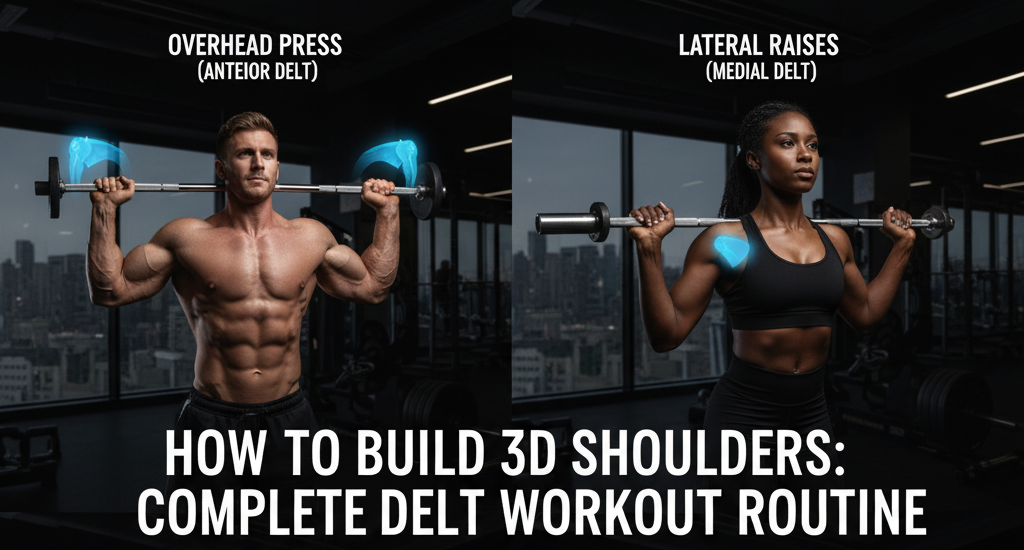
Build 3D shoulders with a complete delt workout routine, proper form, progressive overload, and recovery tips for muscle growth and strength training.
3D Shoulders: Complete Delt Workout
Your shoulders make a statement — broad, rounded delts create that three-dimensional look most lifters chase. This guide gives you a clear, practical routine to build stronger, fuller shoulders using gym tools like dumbbells, cables, and bands. No gimmicks, just proven exercises, form cues, and recovery strategies to help you progress safely. Whether you’re new to strength training or looking to refine your shoulder day, these steps will help you build balanced, powerful delts and support overall upper-body development.
Why 3D Shoulders Matter
Strong shoulders improve posture, boost pressing strength, and give a balanced aesthetic to the upper body. Developing all three heads of the deltoid — anterior, medial, and posterior — is key to a round, 3D appearance. Training the delts with intention translates into better performance in bench presses, overhead lifts, and functional movements.
Anatomy of the Delts: Train All Three Heads
Understanding the deltoid heads helps you program better workouts. The anterior delt helps with pressing and front raises, the medial (side) delt creates width, and the posterior delt handles horizontal pulling and posture. A complete routine targets each head with specific exercises and rep ranges to stimulate muscle growth and strength.
Complete Delt Workout Routine (Gym Tools Focused)
Use dumbbells, barbells, cables, and resistance bands to hit the delts from every angle. Choose weights that allow clean form for the prescribed reps. Rest 60–90 seconds between sets for hypertrophy-focused work.
- Warm-up (5–10 minutes): Band pull-aparts, arm circles, light dumbbell presses — 2 rounds.
- 1. Seated Dumbbell Overhead Press (4 sets × 6–10 reps): Focus on a full range of motion and tight core. This builds strength and targets the anterior and medial heads.
- 2. Dumbbell Lateral Raises (4 sets × 10–15 reps): Slight bend in the elbow, lead with the elbow, and pause at the top for peak contraction to emphasize the medial delt.
- 3. Cable Face Pulls (3 sets × 12–15 reps): Use a rope attachment, pull to forehead level with external rotation to hit the posterior delt and improve shoulder health.
- 4. Incline Rear Delt Flyes (3 sets × 10–15 reps): Done on an incline bench or bent-over if preferred; strict form to avoid lat involvement.
- 5. Single-Arm Cable Front Raise (3 sets × 10–12 reps): Smooth motion, control on the descent to work the anterior head without momentum.
- 6. Finisher — Drop Set Lateral Raises (2 rounds): Start heavy for 8–10 reps, drop weight and continue to failure for metabolic stress and hypertrophy.
Exercise Form Tips
Quality over ego. Keep these cues in mind:
- Maintain a neutral spine and braced core on presses.
- Avoid swinging on lateral and front raises; use strict tempo.
- Keep shoulders down and back on face pulls to protect the joint.
- Use progressive overload — add weight, reps, or sets gradually.
Progressive Overload and Tracking for Muscle Growth
Progressive overload is the engine of muscle growth. Track your weights, reps, and perceived exertion each session. Aim to increase volume or intensity every 1–3 weeks. Small, consistent gains beat sporadic big jumps.
Read also: “Calorie & Macro Calculator”
Programming Notes
Structure your training week so shoulders get hit directly once or twice with accessory work on push days. Allow 48–72 hours between heavy shoulder sessions for optimal recovery. If shoulders feel beat up, swap a heavy pressing day for a lighter technique or mobility session.
Recovery Tips and Gym Tools to Support Progress
Recovery is where gains happen. Combine smart rest, nutrition, and tools to keep shoulders healthy and progressing.
- Sleep: Aim for 7–9 hours per night to support muscle repair and hormone balance.
- Nutrition: Prioritize protein and a slight caloric surplus for growth. Use the calorie and macro calculators to dial in targets.
- Mobility: Incorporate banded shoulder distractions, thoracic rotations, and doorway stretches to maintain range of motion.
- Tools: Resistance bands, cables, and light dumbbells are great for prehab and activation work; kettlebells and barbells help build strength.
- Deload weeks: Every 6–8 weeks consider reducing volume to let the body recover and consolidate gains.
Preventing Common Shoulder Issues
Work rear delts and scapular stabilizers regularly to balance shoulder development. Avoid excessive heavy pressing volume without adequate pulling and posterior chain work. If pain persists, consult a qualified professional.
Sample 6-Week Shoulder Progression
Progress progressively across six weeks by manipulating load and reps:
- Weeks 1–2: Focus on technique, moderate weight — 3×8–12 for main lifts.
- Weeks 3–4: Increase intensity — 4×6–10 on presses, 4×10–15 on isolations.
- Weeks 5–6: Add volume or intensity techniques like drop sets or slow eccentrics for 2 weeks, then take a deload week.
Log your workouts and adjust based on recovery and performance. If a lift stalls for multiple weeks, reduce intensity or volume slightly to break the plateau.
Conclusion
Building 3D shoulders takes focused training, consistent progressive overload, and smart recovery. Use a balanced routine that targets anterior, medial, and posterior delts with proper form, track your progress, and leverage tools like cables and resistance bands for complete development. Commit to the plan for several weeks, respect recovery, and you’ll notice stronger, rounder shoulders that support both strength and aesthetics.