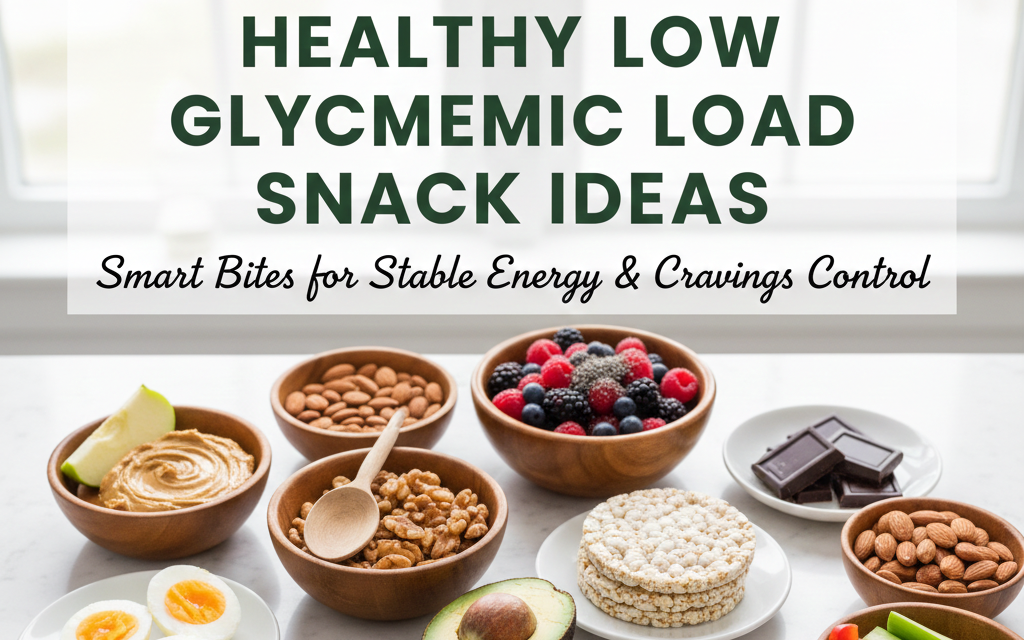
Smart low glycemic load snacks to fuel workouts, support muscle growth, and stabilize energy with tasty, practical options for home and gym routines.
Feeling drained between workouts or craving something that won’t spike your blood sugar? You’re not alone. As a coach, I see athletes and everyday gym-goers struggle with snack choices that leave them sluggish or undo recovery. This guide gives you realistic, delicious low glycemic load (GL) snack ideas that support strength training, progressive overload, and muscle growth—whether you’re at home, hitting leg day, or dialing in recovery. Read on for actionable pairings, timing tips, and quick recipes that keep energy steady and performance high.
Bicep workouts: Low Glycemic Load Snacks that power arm sessions
Bicep-focused sessions are often short and intense — think curls, hammer curls, chin-ups. For those workouts you want a snack that supplies steady fuel without causing a mid-set crash. Low glycemic load snacks give slow-burning carbohydrates paired with protein and fat to sustain focus and power.
Pre-bicep workout snacks (30–60 minutes)
- Greek yogurt (plain, 3/4 cup) with a small handful of walnuts and a few fresh berries — protein + healthy fat + low GL carbs.
- Half an apple with 2 tablespoons of almond butter — fiber and fat slow sugar absorption.
- Rice cake topped with mashed avocado and a sprinkle of hemp seeds — light, easy on stomach, moderate GL.
Post-bicep workout recovery snacks (within 60 minutes)
- Cottage cheese (1/2 cup) with sliced cucumber and black pepper — protein for repair, minimal glucose spike.
- Protein shake blended with a small banana and a scoop of nut butter — keeps glycemic load low when portion-controlled.
- Hard-boiled eggs (2) and a small pear — protein first, fruit for a touch of fast carbs if needed.
Chest exercises: fueling push workouts
Chest days—bench press, push-ups, dips—tend to be strength- and power-focused. You want snacks that support muscle recruitment and keep your nervous system primed without bloating or sugar crashes.
Best Low Glycemic Load Snacks picks for chest day
- Oatmeal made with water, stirred with chia seeds, cinnamon, and a scoop of collagen protein — slow oats are lower GL than instant varieties.
- Small serving of hummus with bell pepper sticks — fiber-rich veg and protein-packed chickpeas in moderation.
- Turkey roll-ups: slices of turkey wrapped around avocado and spinach — portable, high-protein, minimal carbs.
Snack timing and portion cues
- Eat a small, low GL snack 45–60 minutes before lifting if you train fasted; otherwise, 90–120 minutes for larger meals.
- Post-set recovery: prioritize 20–30 grams of protein within an hour, paired with a small low-GL carb if the session was very long or glycogen-depleting.
- Hydration matters—pair snacks with water or an electrolyte drink to optimize performance and recovery.
Progressive overload: Low Glycemic Load Snacks that support steady gains
Progressive overload—the gradual increase of stress placed on muscles—is the engine of muscle growth. Low GL snacks can help you train consistently by preventing energy dips and minimizing inflammatory swings that impair recovery.
Snack strategies to support progressive overload
- Prioritize protein at each snack (15–25g) to maintain a positive muscle protein balance across the day.
- Include soluble fiber (e.g., chia, oats, legumes) to blunt glucose spikes and keep energy steady for longer progressive sessions.
- Align snack timing with heavier sessions: slightly more carbs the day before or after an intense overload session—choosing low GL sources to reduce rapid insulin swings.
Weekly action plan
- Day of heavy lifts: add a slightly larger low GL carb snack 1–2 hours pre-workout (e.g., small sweet potato + turkey).
- Light days: keep snacks protein-forward with fibrous veg to maintain recovery without surplus calories.
- Track how snacks affect performance and recovery—adjust portion size before your next heavier session.
Strength training: Low Glycemic Load Snacks to lifting goals
Strength training asks for maximal force. That requires neuromuscular readiness and muscle glycogen for repeated sets. Low GL snacks can supply steady carbohydrates coupled with protein to maintain strength across sets.
Snack templates for strength-focused training
- Lean beef jerky + a small handful of almonds — savory, high-protein, portable.
- Ricotta with cinnamon and chopped pistachios — creamy, flavorful, lower in sugars than many yogurts.
- Chilled edamame with sea salt — plant protein and fiber with minimal glycemic impact.
Common mistakes and how to avoid them
- Overloading on fruit: whole fruit is healthy, but large portions before strength work can raise GL; pair with protein or fat.
- Relying on sugary bars/drinks: they cause quick energy but lead to fatigue mid-workout and suboptimal focus.
- Ignoring hydration: dehydration compounds perceived exertion and can ruin heavy lifts. Sip water or an electrolyte beverage with your snack.
Home workouts: quick low Glycemic Load Snacks
Home workouts are convenient and sometimes unpredictable. Keep a small stash of low GL snacks that don’t require refrigeration, and you’ll be ready for anything from a quick AM circuit to an evening strength session.
Pantry-friendly low GL snacks
- Roasted chickpeas (seasoned) — crunchy, fiber-rich, and easy to portion.
- Macadamia nuts or Brazil nuts — high in healthy fats and very low GL per serving.
- Whole-grain crackers with a thin spread of hummus — choose portion-controlled servings.
Quick, no-prep combos
- String cheese + a small apple (or half apple) — protein paired with modest carbs.
- Protein powder mixed with water + cinnamon — fast digesting when needed but keep portions measured to control GL.
- Avocado toast on a low-GI slice of sprouted bread — satisfying and stable energy.
Gym workouts: portable low Glycemic Load Snacks that travel well
When you leave the house for the gym, choose snacks that are easy to carry, don’t spoil quickly, and support your session. Low GL options are ideal because they keep your energy steady throughout travel and training.
Gym bag staples
- Single-serve nut butter packets + whole-grain crispbreads.
- Protein bar with minimal added sugars (check label for glycemic contributors).
- Beef or turkey sticks (look for nitrate-free) + a small clementine—clementines have lower GL vs many sweet fruits.
Snack pairings for optimal performance
- Protein + fat to maintain focus: e.g., Greek yogurt and walnuts if you can refrigerate.
- Protein + fiber to sustain: e.g., cottage cheese and raw veggies.
- Small, controlled carbs if training endurance or long circuits: e.g., half a banana with peanut butter.
Leg day routine: snacks that fuel heavy lifts and recovery
Leg day is often the most glycogen-demanding session—squats, deadlifts, lunges. You may benefit from slightly higher carbohydrate within a low GL framework: quality carbs, timed well, and portion-controlled.
Pre-leg day snack ideas (1–2 hours before)
- Small baked sweet potato with cottage cheese — naturally low GL portion when kept small and paired with protein.
- Quinoa salad (1/2 cup) with chickpeas and chopped vegetables — high-fiber and moderate GL when portioned.
- Oats with cinnamon, a scoop of protein powder, and ground flaxseed.
Post-leg day recovery snacks
- Chocolate milk alternative (low-sugar) with a scoop of protein — effective mix of carbs and protein for glycogen resynthesis.
- Greek yogurt parfait with seeds and a drizzle of nut butter — protein-rich and satiating.
- Lean turkey and avocado wrap on a whole-grain low-GI tortilla.
Recovery tools: snacks that speed repair and reduce soreness
Recovery is where gains happen. Low GL snacks that combine anti-inflammatory foods, protein, and micronutrients help reduce soreness and support restoration between sessions.
Top recovery snack ingredients
- Omega-3s: chia seeds, walnuts, and certain fish help modulate inflammation.
- Antioxidants: berries and dark leafy greens support cellular repair—pair them with protein to moderate GL.
- Magnesium-rich foods: pumpkin seeds and almonds help relaxation and muscle recovery.
Easy recovery snack recipes
- Turmeric yogurt dip: plain Greek yogurt mixed with turmeric, black pepper, and lemon; dip carrot sticks or cucumber slices.
- Berry-nut smoothie: small serving frozen mixed berries, spinach, unsweetened almond milk, protein powder, and a tablespoon of flaxseed.
- Salmon salad on cucumber rounds: canned salmon mixed with a touch of Greek yogurt, dill, and lemon on cucumber slices.
Check also: “Protein Intake Calculator”
Muscle growth: snack tactics that support hypertrophy
For muscle growth, total daily protein and calorie balance matter most. Snacks are the tactical tools that fill protein gaps and provide steady fuel for frequent training. Low GL snacks help you avoid unnecessary fat gain while delivering the building blocks for hypertrophy.
Snack guidelines for hypertrophy
- Aim for 20–30 g of protein per snack if you’re consuming multiple snacks a day.
- Distribute snacks around workouts—pre-workout for energy, post-workout for repair, and evening snacks if you struggle to meet protein goals.
- Include a small amount of carbohydrates after heavy sessions to aid glycogen recovery; keep portions controlled to maintain low GL impact.
High-protein, low GL snack ideas
- Skyr or thick Greek yogurt with ground flax and a few raspberries.
- Protein mug cake made with protein powder, egg, almond flour, and a dash of cinnamon (microwave for 60–90 seconds).
- Canned tuna mixed with mustard on a bed of lettuce or with a low-GI cracker.
How glycemic load works and why it matters
Glycemic load (GL) estimates the blood sugar impact of a standard portion of food. It blends the glycemic index with portion size—so a food with a high GI can have a low GL if consumed in small amounts. For athletes and fitness-focused people, GL is useful for choosing snacks that keep energy steady without causing insulin spikes that interfere with recovery and performance.
Practical GL rules of thumb
- Low GL = better for steady energy and fewer crashes. Aim for snacks that result in a low GL per portion.
- Combine carbs with protein and fat to lower the effective GL of a snack.
- Portion control matters: even low GI foods can produce a high GL if you overeat them.
Want to calculate GL for a specific snack? Use an online glycemic load tool to plug in portion sizes and get personalized numbers. Monitoring GL helps you tailor pre- and post-workout fueling to your training style without guesswork.
Practical meal and snack plans (sample day)
Below are two sample snack plans—one for a strength athlete focused on hypertrophy and one for someone prioritizing steady energy for high-frequency training.
Strength-focused sample day
- Mid-morning snack: Cottage cheese (1/2 cup) + 6 almonds + cinnamon.
- Pre-workout (60–90 min): Small baked sweet potato (1/2 cup) + turkey slice.
- Post-workout: Protein shake (20–30g) + half a banana.
- Afternoon snack: Roasted chickpeas + small apple (half) or berries.
- Evening snack: Greek yogurt (plain) with chia seeds or a small handful of walnuts.
High-frequency training (steady energy) sample day
- Mid-morning: Hard-boiled eggs (2) and cucumber slices.
- Pre-circuit: Oats (1/3 cup) with protein powder and a few blueberries.
- Between sessions: Edamame and a small piece of cheese.
- Post-evening workout: Small salmon salad with mixed greens and pumpkin seeds.
Portion control, tracking, and smart swaps
Snacking successfully with low GL is not just about the type of food but how much you eat. Portion control ensures that you reap the benefits of slow-release carbs without tipping GL into a higher range.
Simple tracking steps
- Weigh or measure snacks for the first week to learn standard portion sizes.
- Track how you feel during workouts after different snacks—energy, focus, performance quality.
- Adjust portions up or down depending on training load and body-composition goals.
Smart swaps to lower GL
- Swap granola (often high-sugar) for plain Greek yogurt with seeds.
- Trade sugary fruit juices for whole fruit or small portions of berries paired with protein.
- Switch white crackers for sprouted grain or seed-based crispbreads to reduce GL impact.
Evidence and expert resources
Research supports the role of balanced protein and low GL carbohydrates in maintaining stable energy and supporting training consistency. For an accessible overview on blood sugar and diet, Healthline offers consumer-focused summaries that are easy to implement. For clinical perspectives about long-term metabolic effects, Mayo Clinic provides trusted guidance. If you want to dive into the science of glycemic responses and exercise, PubMed and NCBI host peer-reviewed studies on carbohydrate timing, glycemic load, and recovery strategies.
External resources:
- Healthline — practical nutrition articles and guides
- Mayo Clinic — clinical perspectives on diet and blood sugar
- NCBI/PubMed — peer-reviewed studies on glycemic load and exercise
Common questions and quick answers
Will low glycemic load snacks limit my energy during intense training?
Not if you choose the right combination of carbs, protein, and fats, and time them properly. For very long or high-intensity sessions, include a small, controlled amount of faster carbs post-session to aid glycogen resynthesis.
How often should I snack during heavy training weeks?
Every 3–4 hours is a useful rhythm for many athletes; include one snack pre-workout and one post-workout to optimize training and recovery. Adjust frequency based on hunger, total calories, and training volume.
Are low GL snacks suitable for bulking?
Yes — they help you add calories thoughtfully while minimizing frequent blood sugar spikes. To bulk, increase portion sizes and add calorie-dense, low-GL items like nuts, seeds, and full-fat dairy.
Practical grocery list for low glycemic load snacking
Keep your kitchen stocked with staples that make assembling low GL snacks effortless.
- Plain Greek yogurt, cottage cheese, skyr
- Nuts: almonds, walnuts, macadamia, pistachios
- Nut butters in single-serve packets
- Seeds: chia, flax, pumpkin
- High-fiber vegetables: carrots, cucumbers, bell peppers
- Low-sugar berries, apples, clementines
- Lean proteins: canned tuna, turkey slices, jerky
- Whole grains in measured portion sizes: rolled oats, quinoa
- Sprouted-grain crispbreads or low-GI tortillas
Find a broader list of healthy grocery options that support performance and low-GI eating on our site’s healthy grocery tool and use a glycemic load calculator to personalize portions.
Small habits, big wins
Adopting low glycemic load snacks is less about perfection and more about consistent, small choices that sustain performance. Start by swapping one high-sugar snack a day for a low GL alternative. Track how your training feels across two weeks and you’ll likely notice steadier energy, better recovery, and stronger sessions—progressive overload becomes easier when your fueling is reliable.
Conclusion
Choosing low glycemic load snacks is a practical, sustainable way to support strength training, muscle growth, and consistent performance. With simple swaps, mindful portions, and protein-focused pairings, you can keep energy steady for bicep workouts, leg day, and recovery. Start small, track what works, and build snack habits that fuel your goals—one session at a time.